By Savannah Whaley
After coming out of retirement and having not toured for six years, Frank Sinatra performed a series of shows at Madison Square Garden called “The Main Event.” It was a departure for him as he adopted a modern rock concert approach to stage it in a theatrical boxing ring, televised a live portion and released The Main Event-Live album.
If Sinatra was known as the “Chairman of the Board,” perhaps jazz singer-pianist-composer Tony DeSare should be nicknamed “Chairman of the Broad” for his multiple talents and ability to do it his way by building a widespread fan base leveraging today’s new digital opportunities.
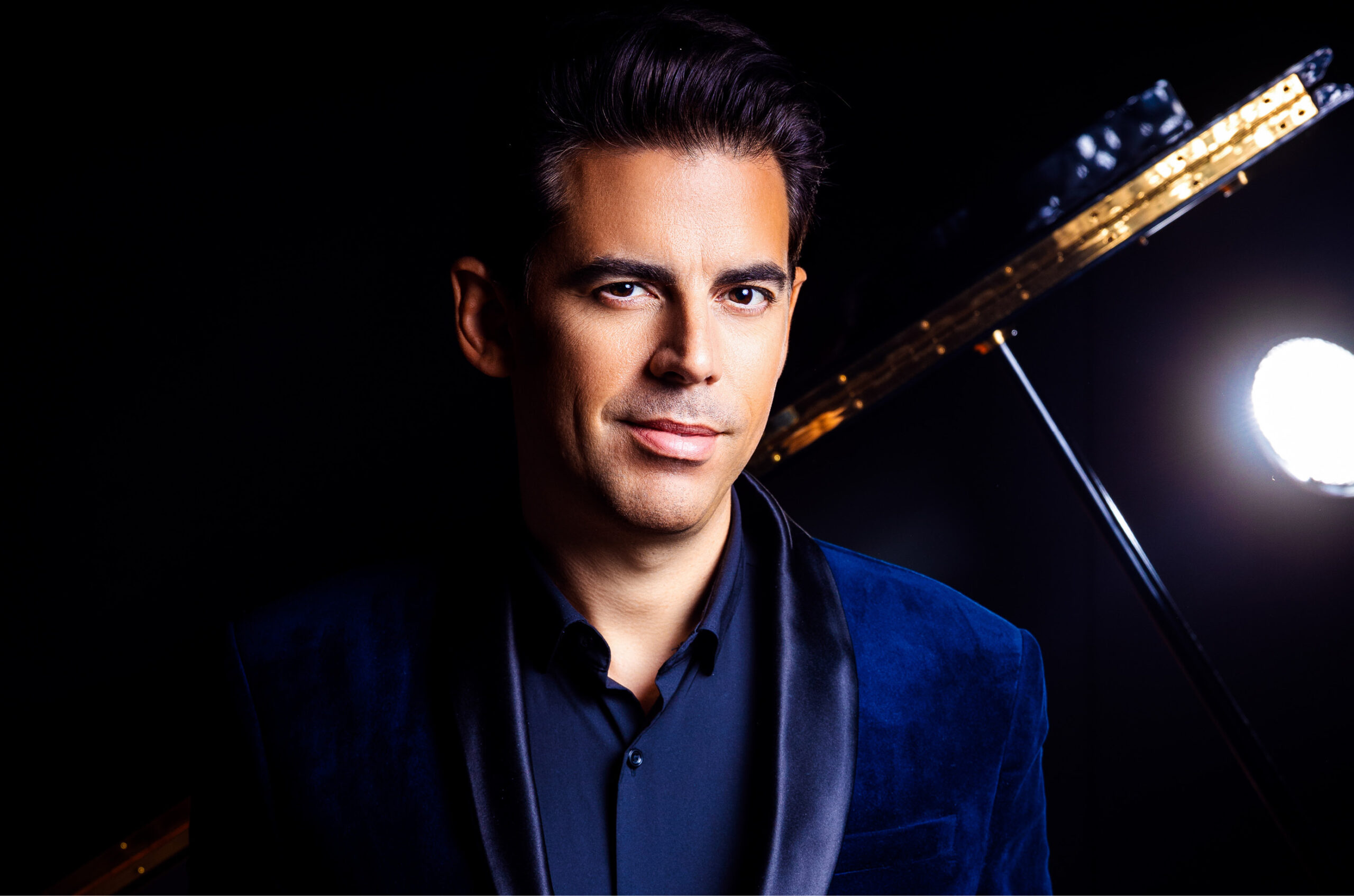
Described by the New York Times as “two parts young Sinatra to one part Billy Joel” with “dark hair, bright brown eyes and toothpaste smile that rarely fades,” DeSare will perform Sinatra & Beyond with the Tony DeSare Trio on April 16 at the Broward Center for the Performing Arts as part of the Gold Coast Jazz Society’s 33rd season.
Using a calculator while on the phone from a home he is renting in Georgia, DeSare is blown away when he estimates that the viewership of just one of the 336 videos he has released on his social media platforms would equate to 55 sold out shows at that storied venue where Sinatra made his comeback.
“That’s pretty amazing,” DeSare exclaimed when pondering the effect of social media that didn’t exist when he began his career. “It wasn’t part of your job. Now, it’s arguably the most important part of marketing yourself and it has certainly allowed independent artists to have a direct connection to the people that like their music all over the world.”
Gold Coast Jazz Society, the oldest presenter of jazz in Broward County, is bringing back DeSare by popular demand to perform with them once more. This modern crooner was named a “Rising Star” Male Vocalist in the 2009 Downbeat Critics Poll and has four top ten Billboard jazz albums.
“He’s a wonderful performer and a joy to work with,” said the Society’s Executive Director Pamela Dearden. “He’s always very engaging in his performance and he has great interaction with the audience. He plays a lot of the music they love, and people comment about how much they enjoy his performances. Those are the things that make him someone that we bring back from time to time.”
Offering a preview, DeSare said, “The whole idea of Sinatra & Beyond is to always bring it back to Sinatra even though there’s other songs, some that I’ve written and some he didn’t record. I’m not doing a Sinatra impersonation. It’s more stylistic, the phrasing and the choice of material. Those types of things I want to bring to the audience, so they feel like they’ve gotten this kind of freshened 21st century version from someone like me who didn’t really discover him until my teen years.”
Dearden noted that the Society presents a variety of jazz such as straight ahead jazz, more contemporary jazz, Latin Jazz and the Great American Songbook of standards.
DeSare’s music catalog is also varied and includes the great standards, his own compositions and popular music such as Prince’s “Kiss,” Carole King’s “I Feel the Earth Move,” and Elton John’s “Mona Lisa and Mad Hatters.”
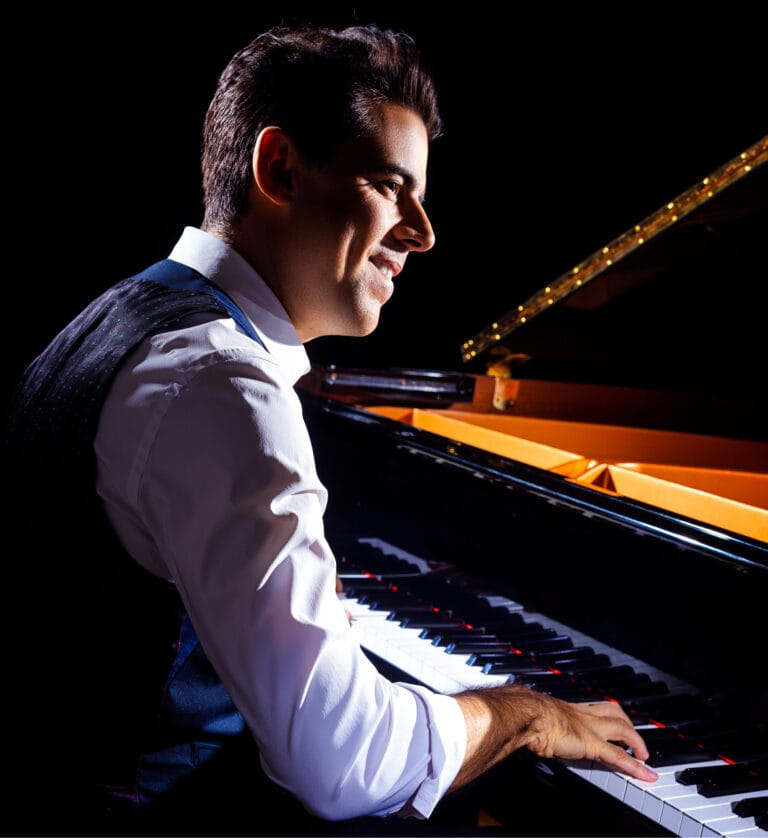
“The song is so important,” DeSare explained about how he chooses his repertoire. “Frank Sinatra knew this better than anyone. Once you have really great lyric married with a melody, there’s so much you can do with it. You can play different tempos, different styles, and there’s layers where you can interpret it. That’s what I look for.”
DeSare doesn’t believe the covers are closed on the Great American Songbook.
“It’s different now because a lot of the music that has the beautiful melodies and lyrics that comprise what I think of as a really good song aren’t on the pop charts or played on the radio,” DeSare mused. “Artists like Jacob Collier and Cody Fry are writing really great songs that I wouldn’t be surprised people will still play in 40 to 50 years.”
The divorced father of an 11-year-old son, DeSare notes that there are some modern songs that everyone, including his young son, knows which he believes will endure. DeSare became interested in music through his own father, the manager of a wholesale plumbing and heating store.
“My dad would get home from work, we’d have dinner, and then he would play the guitar,” DeSare recalled. “I started playing violin when I was in fourth grade and by the time I was in sixth I really wanted to play the piano.”
DeSare was hammering out Scott Joplin and caressing the keys with Gershwin’s “Rhapsody in Blue” when he was only 12. Yet, he didn’t consider music as a career until he was enrolled in Ithaca College and the Tony DeSare trio was one of the most popular bands in central New York playing sold out shows in clubs and showcases.
“I actually just had a big full circle moment,” DeSare reflected. “When I moved to New York with no contacts and no money, like 25 years ago, I’d walk by a place like Carnegie Hall and it just seemed like an impenetrable fortress. I couldn’t even afford to go to a show let alone get in there. Just this last weekend my own show [Let’s Misbehave: The Songs of Cole Porter] that I produced, directed and arranged most of the charts for was booked there. I played Friday night with the New York Pops at Carnegie Hall.”
In addition to the New York Pops, DeSare has been a guest artist with more than 100 symphony orchestras including the Cleveland Orchestra, The San Francisco Symphony, The Houston Symphony and the Chicago Symphony. He has also performed throughout the United States as well as in Australia, England, Japan and Hong Kong. Audiences have thrilled to his shows Off-Broadway, in Las Vegas, and such hallowed Manhattan jazz joints as Birdland, the Blue Note, and Café Carlyle.
With a sound often described as romantic, swinging, and sensual, DeSare is a songwriter and composer who has scored numerous films including those that are now synonymous with the holidays: Hallmark Christmas movies. His seasonal sounds include Christmas Home, an album of holiday hits that includes two of his own songs. He noted that songwriting has its challenges when he admits to knowing hundreds of hits from the Great American Songbook.
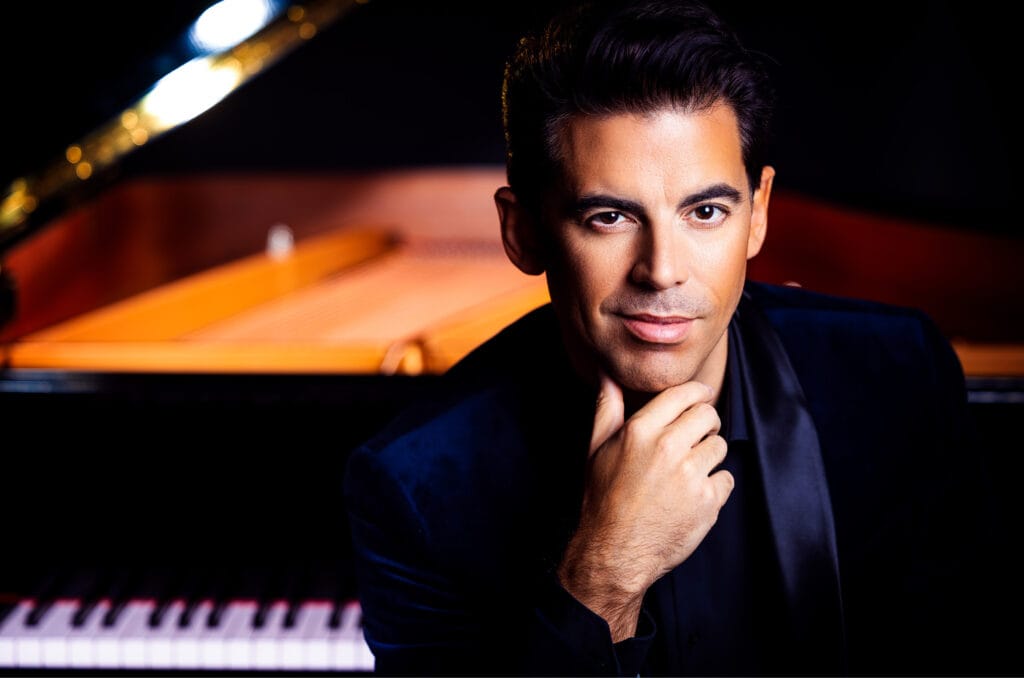
“Having that kind of library of craft that is out there definitely helps but certainly when I start writing a song and I get past the first couple of major hurdles of it, the next question I have to ask myself is ‘Is this some other song that I already know getting in there?’ Sometimes when I think this song is good, I think this has to be something else.”
An award-winning songwriter, including taking first place in the USA Songwriting Contest, DeSare now has his songs covered by other artists.
“Quite a few people have done my songs over the years, some in New York cabarets and there’s a couple of my songs arranged for barbershop quartet,” he confirmed. “It’s really cool to hear it and a lot of times there’s little things I never would have thought of doing that they add. A few times they’ve changed a lyric. I now understand why songwriters get annoyed, because there’s a good reason why I didn’t choose to do that change. In general, it’s a huge compliment and it’s a thrill to hear somebody sing a song that I wrote.”
When the COVID pandemic closed the concert halls, DeSare began posting songs and videos from his home studio where he could create a big band sound with music sent in from musicians who recorded their parts remotely.
“I describe it like going to the gym for my music brain,” DeSare said. “I’ve run out of songs that I know off the top of my head at this point so, if I do a new one, I have to learn a new song. I record it all in one take so I’m practicing my piano playing, my singing, my arranging, my video skills, mixing it as an audio engineer, and then I edit the video.”
At 49, DeSare’s marveled that he’s never had any job outside of music.
“I’ve been really fortunate to have created this career for myself,” DeSare said. “I’m always doing something different and doing music that I love whether I’m doing a solo show, a trio, big band or orchestra. The advantage of being as old as I am now, is I’ve had over 30 years experience performing for people in all different set ups and I’ve had time to get good at each one. I love them all equally.”