At the Broward Center for the Performing Arts
By John M. Hayden
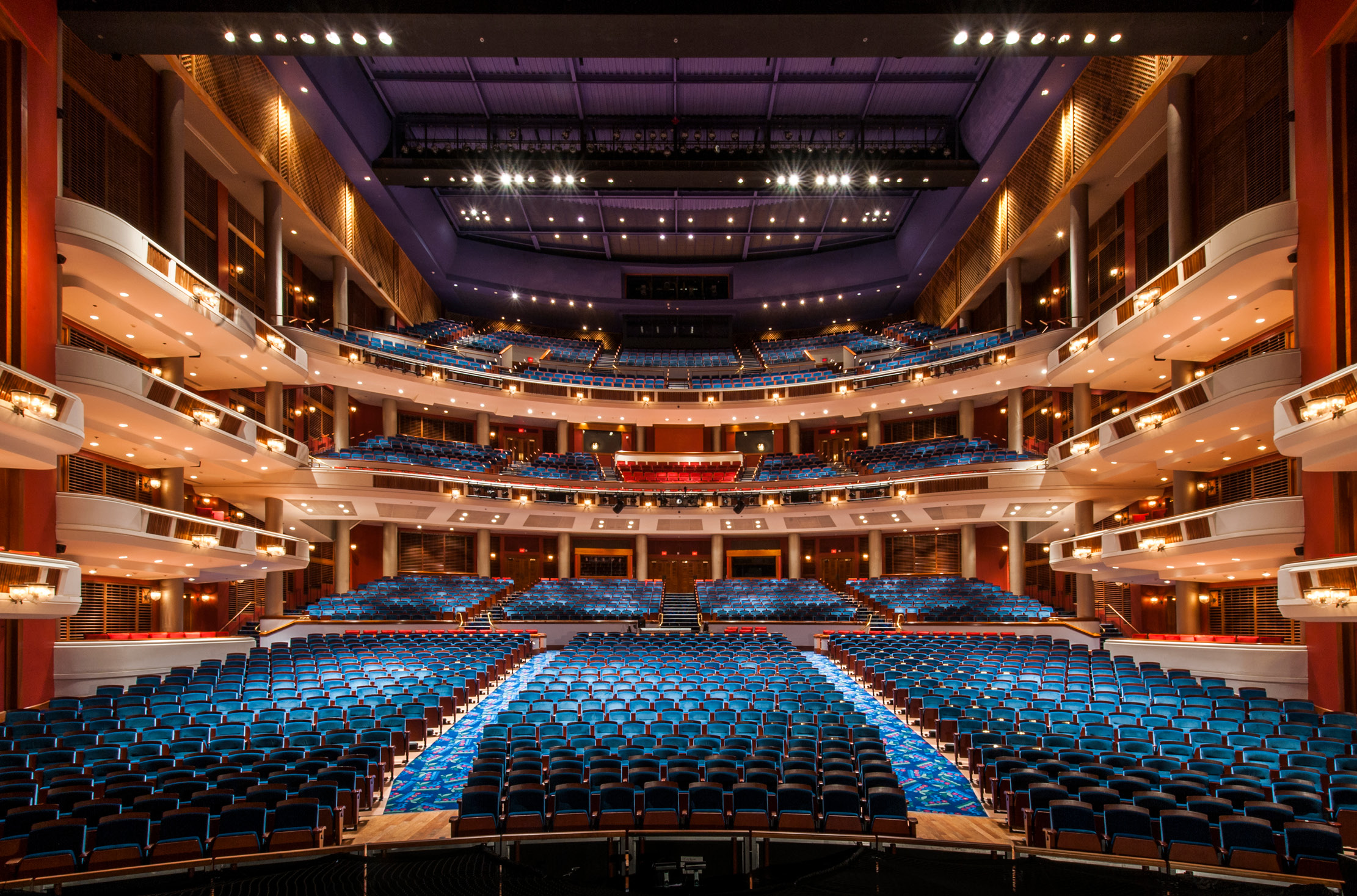
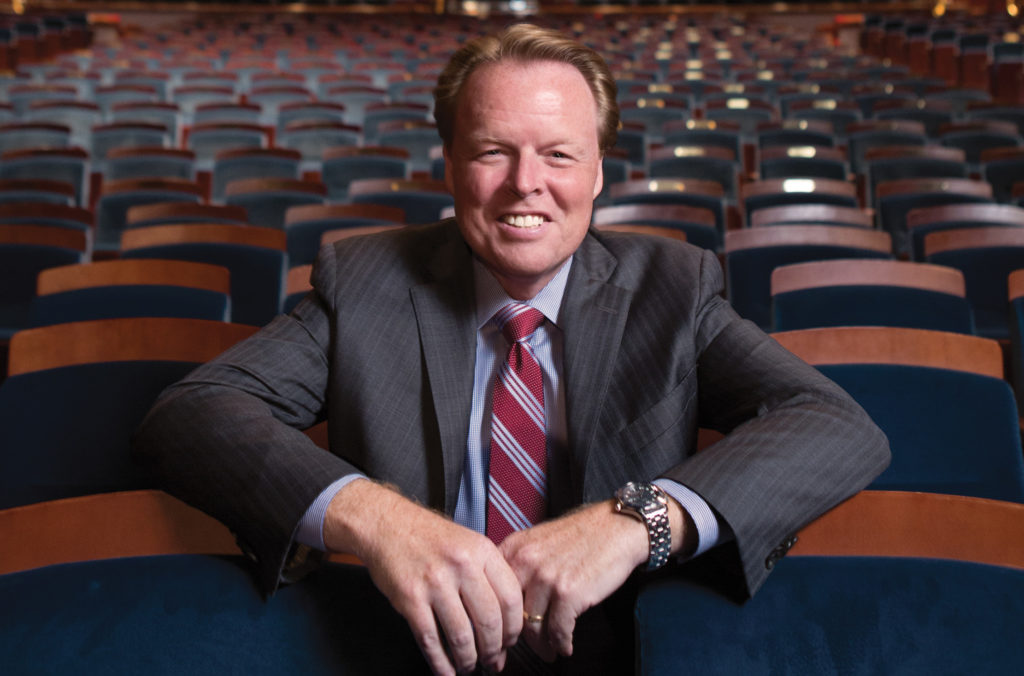
When Broadway sings and dances its way into Fort Lauderdale, the first stop is usually the impressive Broward Center for the Performing Arts. There’s more to the venue’s calendar than Broadway, and there’s more to the venue than the showcase Au-Rene Theater. OutClique recently got inside for a behind-the-scenes tour and some inside scoops on what to expect next. We talked with the President and CEO, Kelley Shanley, and Jan Goodheart, the Vice President of External Affairs.
“There are a lot of busy people at the Broward Center,” Kelley told us. “We’ve got a great team here that’s really good at what they do. They’re really dedicated to it and they do it well.” Many in our community flock to the big room for the big Broadway productions. The season kicked off with an amazing Les Miserables touring company. We were nearly run over as a rack filled with costumes moved down the hall. Plus the wigs, makeup, and lighting. To go behind-the-scenes hours before opening night is an experience in well organized chaos.
“What’s easy for us to do and what yields quick positive financial results is to put Broadway on the stage,” Kelley told us. “That audience is typically less diverse than our population here in Broward County. Yes, it’s popular and it brings in a lot of people and it is very successful financially, but there’s people that aren’t interested in that.” As hard as that is to believe, it’s true. So once Broadway is booked, Kelley and company turn their attention to filling out the rest of the schedule. “We want to be for everybody. So we have to figure out a lot of different markets and try to serve those constituencies in a variety of different ways. There are a lot of different things here and that’s by design.”
That means bringing in shows as diverse as our area. “We’ve been putting things on stage that appeal to Caribbean audiences, Hispanic audiences, African-American audiences; all up and down. Ultimately we’re here to match audiences with artists. We’re going out to find artists and match them up with an audience, put ’em together, and get out of the way.”
That means working with smaller, niche theater troupes, like Slow Burn Theater Co. They’ve made the Amaturo Theater their home. It sits right next to the main Au-Rene entrance. It seats about a quarter of the big room, and is a great venue for smaller productions that may have a more limited audience. “That’s still a bit of an undiscovered gem for a lot of people,” Kelley said. Slow Burn wowed crowds over the summer with their take on the legendary drag road trip movie, Priscilla, Queen of the Desert. The day we were there, they were meeting up for the first table read of Shrek, which just concluded its run in the Amaturo Theater.
Kelley couldn’t stop gushing about their success. “An organization that was doing some quality work out of a high school auditorium up in Boca Raton. Our programming folks saw their shows and recognized the potential that it had to reach bigger audiences and we got them in here.” For the Broward Center team, it’s about matching talent with resources. “We’re witnessing this gradual growth of a quality organization with the support of the Broward Center behind it. What we find out is there’s a lot of people who do a really good job of producing and performing art. They don’t have the resources or skill sets to make themselves successful as presenters of art, to build an audience; to make sure they’re doing things efficiently and effectively on the production side, save money on costs while still producing quality. Those are the things that we can offer. That’s how we built our relationship with Slow Burn.”
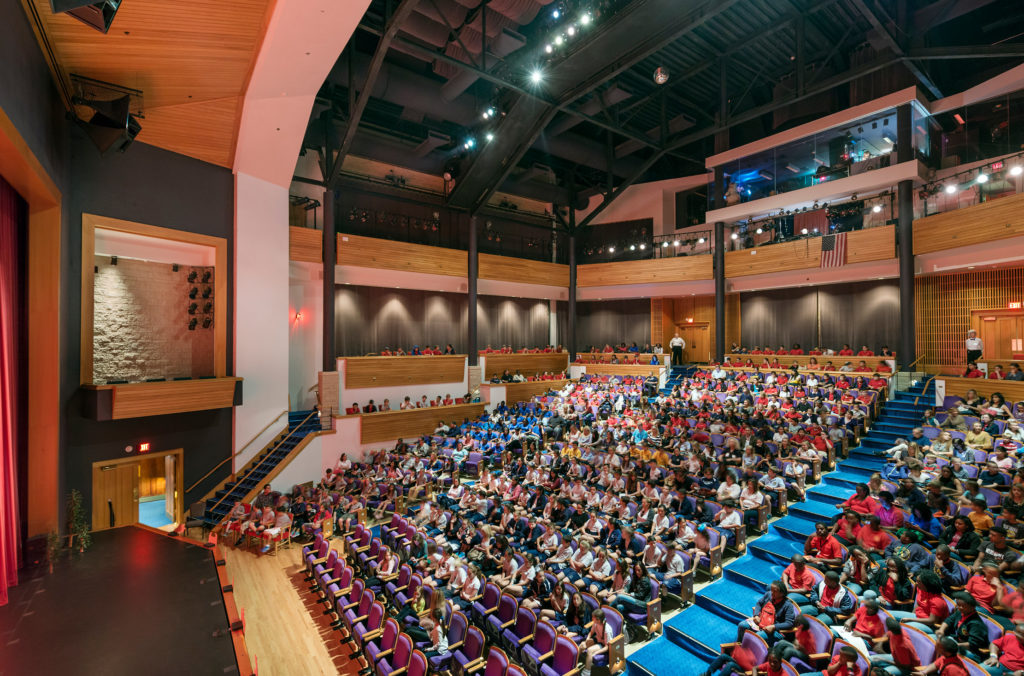
While the Au-Rene and Amaturo theaters get most of the attention, there’s a whole series of small rooms and stages out of the spotlight, but taking center stage for the next generation of actors, musicians, and theater lovers. “[We] meet a need that is not being met in the community. A lot of this comes from our work in education. Broward County schools and the Broward Center are at the table almost constantly thinking about education and their needs, and how we can use art as a tool to achieve academic objectives.”
This includes the Rose Miniaci Arts Education Center and the JM Family Studio theater that seats a couple hundred audience members. There’s also the Harlow Classroom, Thomas Learning Suites, and the Boys & Girls Club Coaching Studio. These smaller classroom-sized theaters let classes and young acting troupes come in to learn about every aspect of the process. Jan says these experiences will leave an impact even if the students don’t pursue a future in the arts. “Not only to see a show, but also actually learn about how art can help heal, how art can make a political statement, and how we as a society can use art to promote change.”
From school kids to Broadway fanatics to indie lovers of the off-beat, Kelley and his team try to reach everyone. When I asked who is underserved by the arts community, he had an answer that’s not easy to reach. “I’m trying desperately to make sure the answer is nobody.”
To check out what’s coming up this season at the Broward Center for the Performing Arts and its other theaters, head over to their website at www.BrowardCenter.org.