By Megan Fitzgerald
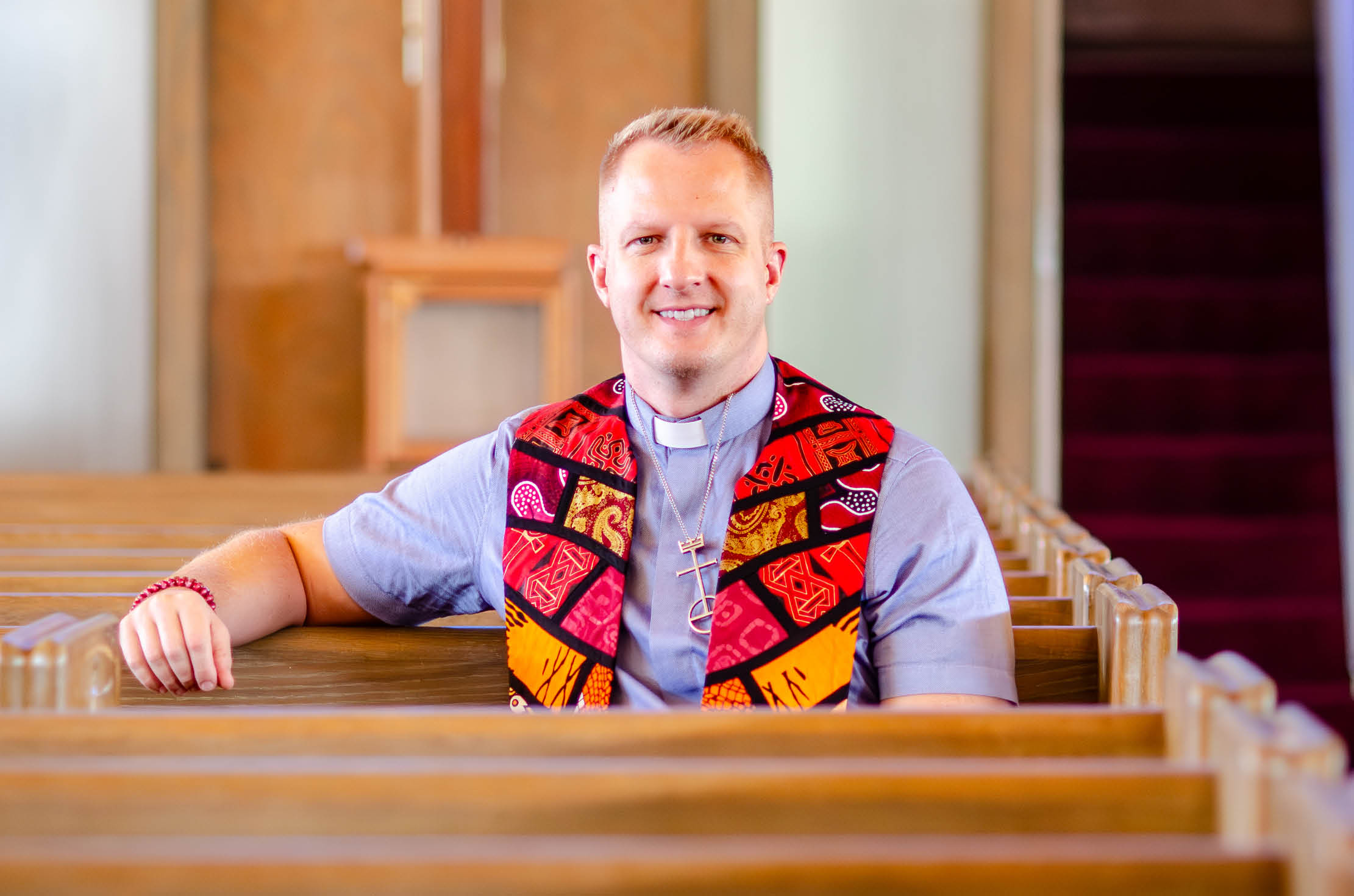
At United Church of Christ Fort Lauderdale, Sunday mornings feel more like a family reunion than a formal service—and that’s exactly how Pastor Aaron likes it. With a theology rooted in justice, creativity, and welcomeness, the Nebraska-born pastor is guiding this LGBTQ+-affirming congregation with authenticity and joy. In this conversation with OutClique, he shares the role music plays in his faith, what “open and affirming” really means, and why he believes God is still speaking.
Megan Fitzgerald: Can you share a little bit about your personal journey—what led you to ministry, and specifically how you ended up at the United Church of Christ, Fort Lauderdale?
Pastor Aaron: Of course. I was born and raised in rural Nebraska in a pretty conservative evangelical Christian home. Faith was very important to us. I loved the church—the Bible, the music. I’ve often said that music is my first faith language. We were very active, and I felt a call to leadership early. I was a leader in my youth group and sang on the praise and worship team.
As I got into middle school, I realized I was gay. Like many LGBTQ+ people of faith, I prayed for God to change me. But the older I got, the clearer it became that this wasn’t going to change. I decided to leave the church and find a life in the secular world. But I went to a progressive Presbyterian college in Nebraska, where I took a New Testament class that changed everything. The professor emphasized service and justice, and I saw for the first time that I could be gay and Christian.
Eventually, I went to United Theological Seminary in St. Paul and got my master’s degree. I thought I’d work in LGBTQ+ advocacy, but I took a job as a youth minister at a UCC church and fell in love with it. I later moved to Coral Gables Congregational Church, and after seven years, I felt called again—this time to UCC Fort Lauderdale. I had always admired their Ruth Ministry, which serves people experiencing homelessness. I started here in September 2023.
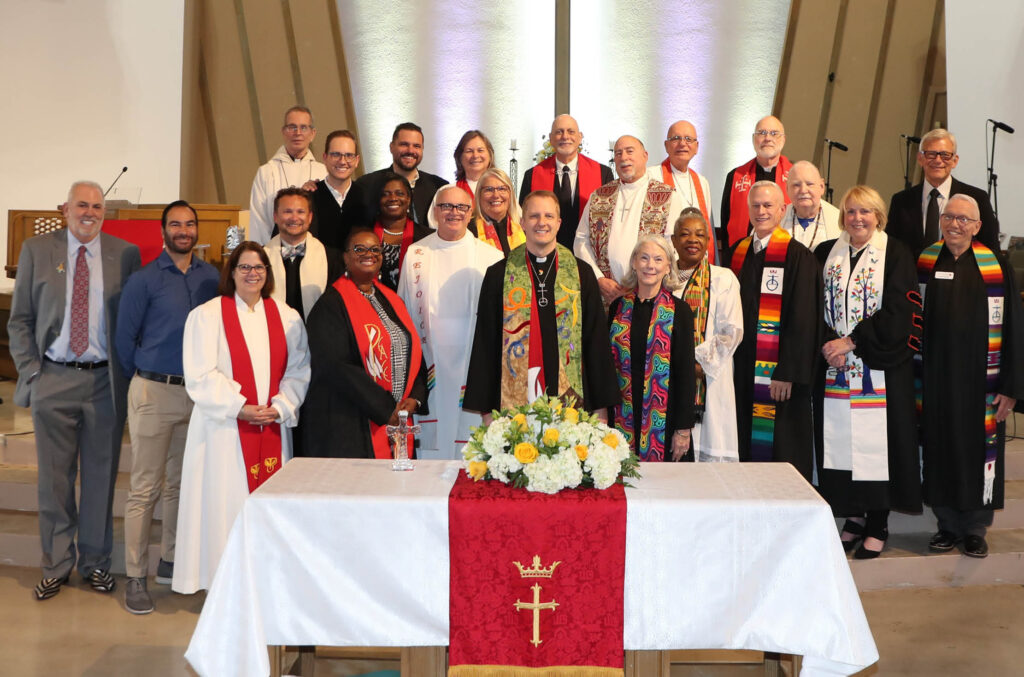
Fitzgerald: I know UCC Fort Lauderdale describes itself as an open and affirming congregation. What does that mean to you personally?
Pastor Aaron: That’s a great question. We hear a lot of churches say, “All are welcome,” but when you get inside, if you’re gay or trans, they might let you worship but not lead. An open and affirming church not only welcomes LGBTQ+ people, we celebrate and empower them. I believe being queer is a gift from God. It’s transformed how I see the world, understand God, and serve others. I don’t want people to compartmentalize their queerness. I want it to be front and center, if that feels right for them.
Fitzgerald: How do you respond to LGBTQ+ individuals who’ve been hurt or excluded by a church in the past?
Pastor Aaron: I empathize deeply because I’ve experienced that too. The church I grew up in wouldn’t let me be a pastor or even a member. But I want people to know that the church is diverse. Just because one church told you God doesn’t love you doesn’t mean that’s true. I believe God welcomes and affirms all people. Our church exists to be that kind of place.
Fitzgerald: How do you see the role of the church in today’s climate where everything feels so divided?
Pastor Aaron: I go back to my denomination’s name—the United Church of Christ. All three words matter. We believe we are called to unite despite differences, and to do the work of justice and love. Unfortunately, many churches in the U.S. have been seduced by power and control. They’re using faith to imprison rather than liberate. I want churches like mine to speak out—to show people there’s another way to be Christian: one rooted in love, welcome and justice.
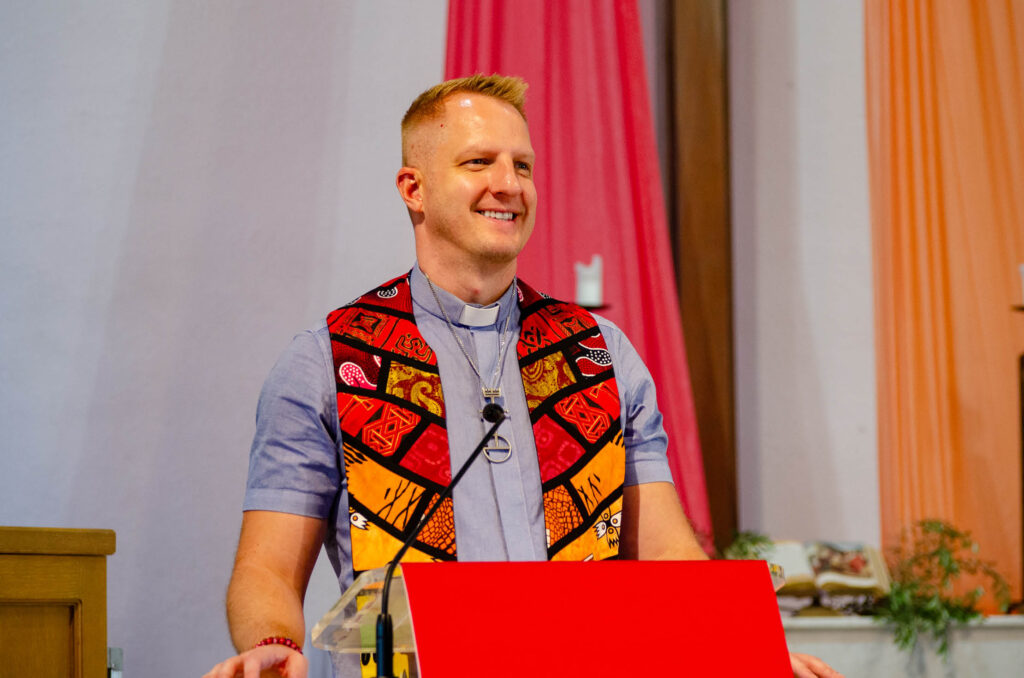
Fitzgerald: Describe a typical Sunday morning. What can someone expect the first time they walk through your doors?
Pastor Aaron: We call it one big family reunion. It’s warm, welcoming, and loving. Worship starts at 10:30, but people show up by 9:45 just to catch up. The service is largely led by the congregation. I preach and lead communion, but members do the call to worship, prayers, and ushering. We have a choir, soloists, and musicians. After the service, we gather for coffee and refreshments. It’s my favorite part because I get to connect personally—check in on people, hear their stories. Visitors always tell us how kind and welcoming everyone is.
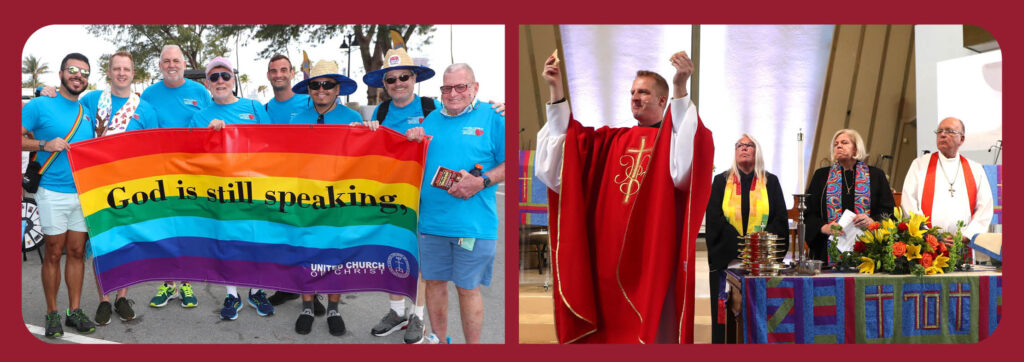
Fitzgerald: What role do the arts play in the church? Why is that important to your community?
Pastor Aaron: The arts are vital. Historically, the Congregational Church was a community hub for education, civic engagement and the arts. We carry that forward. My master of divinity is actually in theology and the arts. Whether it’s visual art, music, or theater, I believe God speaks through creativity. In a time when arts funding is under attack, we want to be a space where artistic expression is celebrated. Our denomination says, “God is still speaking”—and sometimes God speaks through a song, a painting, or a play.
Fitzgerald: What kind of legacy are you hoping to leave at UCC Fort Lauderdale?
Pastor Aaron: I tell people I could retire here and be fully happy. I want us to be seen as a church deeply invested in our city, county and state—caring for people and for creation. We have strong ministries like Ruth Ministry and pastoral care. My role isn’t to dictate, but to shepherd and empower. I hope people say I helped guide them through hard times and sent them out into the community to love and serve.
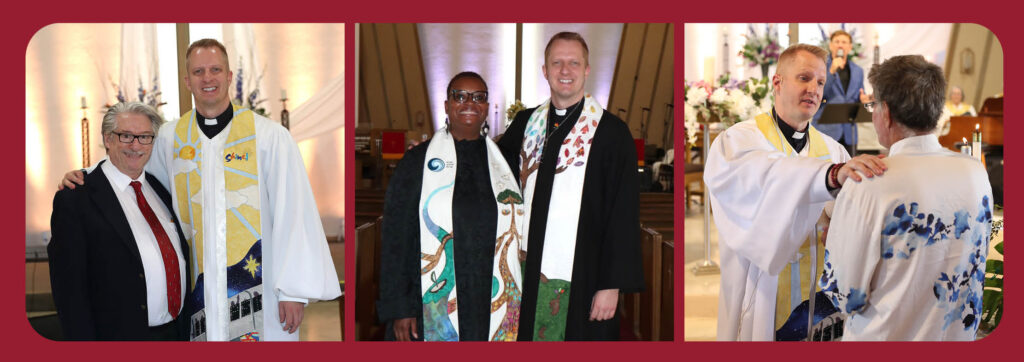
Fitzgerald: The phrase “God is still speaking” really struck me. What does that mean to you?
Pastor Aaron: I believe God is with us in all of creation—in nature, science, psychology, our prayers. God didn’t stop speaking when Revelation ended. God reveals new things all the time. We can learn from other faiths, from science, from history. Our job is to be open, seek that out, and respond.
Fitzgerald: Is there anything else you’d like our readers to know about you or the church?
Pastor Aaron: For the past five years, I’ve sung with the Gay Men’s Chorus of South Florida. That’s a big part of my life. We’re also part of Bold Justice, a local organization focused on criminal justice reform and affordable housing. I know OutClique is an LGBTQ+ magazine, but everything is intersectional—race, economics, faith, queerness. Our church doesn’t call itself a gay church, but we are a church made up mostly of LGBTQ+ people who care about all people. Every day I ask: Who will I meet today? What’s their story? How can I meet them with love, not judgment? That’s my mission—and our mission as a church.
Author: Megan Fitzgerald, PhD, Associate Professor