Mayor Dean Trantalis Talks the Future of Fort Lauderdale
By John Hayden
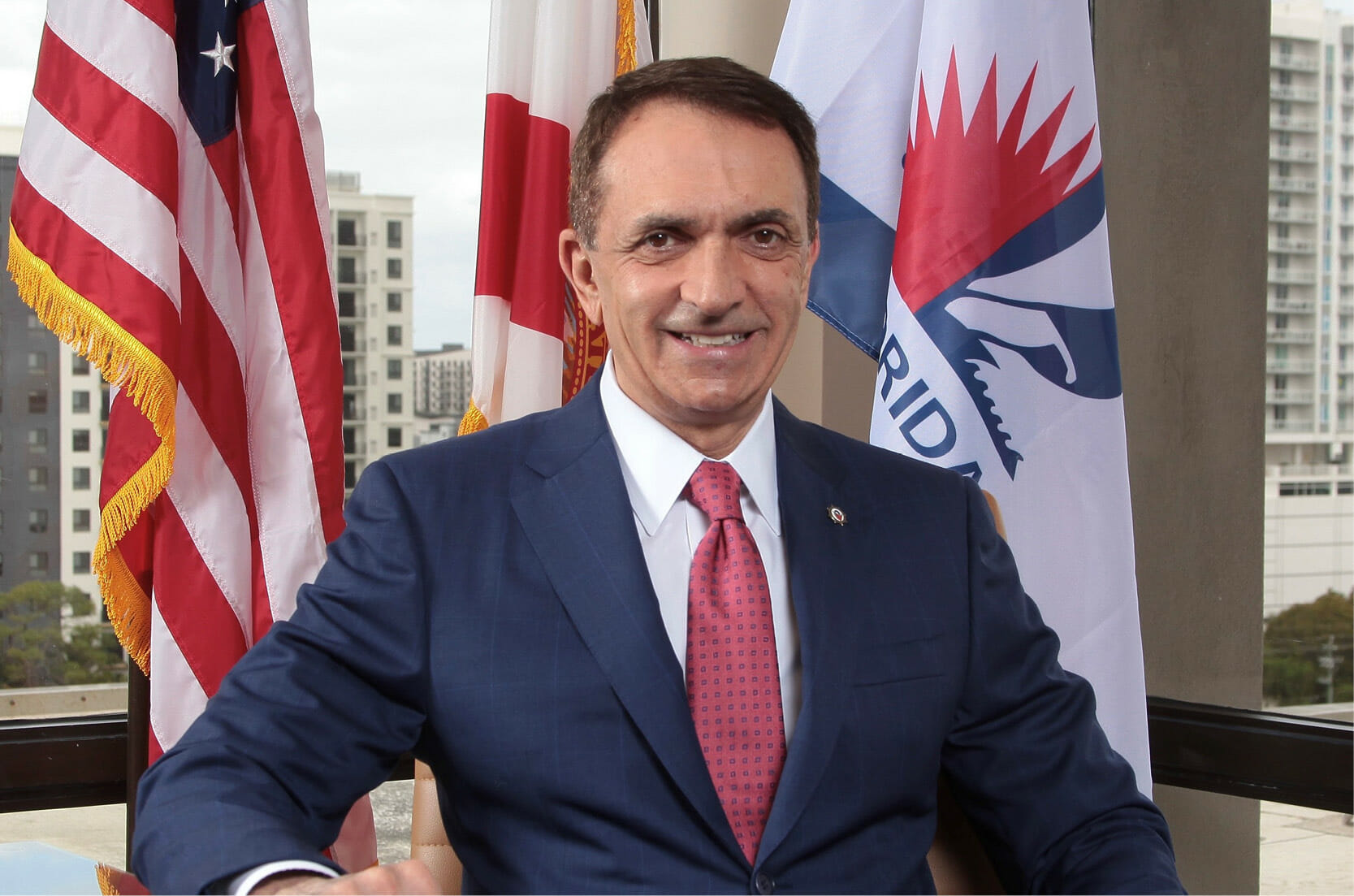
While Broward County’s two million residents are spread across dozens of municipalities, the city of Fort Lauderdale, FL is the largest and the most well-known nationally. From the skyline to events, to attitude, the past few years have seen numerous changes. Mayor Dean Trantalis talked with OutClique about current happenings, Tallahassee’s assault on equality, his views on the city, and where our LGBTQA+ community will go from here.
John Hayden: In the early 2000s, Wilton Manors was just becoming an LGBTQA+ hub. Fort Lauderdale was the home of local gay life, including clubs like Cathode Ray, Johnny’s, The Copa, and more. Now the community revolves more around the Wilton Manors area. What is Fort Lauderdale’s role in Broward’s LGBTQA+ future?
Mayor Dean Trantalis: Wilton Manors has the most visible gay population, but there are more LGBT households in Fort Lauderdale than in Wilton Manors. Wilton Manors could not survive on its own. Fort Lauderdale draws upon all communities that surround it. But the LGBTQ community has made its way to Wilton Manors. There’s something about the community taking ownership of the small-town atmosphere and opportunity to call it their own. I’ve lived here almost 40 years. We used to call Victoria Park our own. Then we cashed out and moved on to other neighborhoods. That’s how the gay community has evolved in the Broward County area.
I’d love to see [LGBTQ] clubs and restaurants in my city but it doesn’t have to be concentrated like it is now. I’d anticipate within the next five years you’re going to see a couple of gay bars open up in Fort Lauderdale again, especially in the Flagler Village area because there’s a higher concentration of members of our community moving into this area.
JH: It seems like Fort Lauderdale has almost as many cranes dotting its skyline as it does existing high-rises. What is the future for businesses and residents?
DT: Fort Lauderdale is bursting at the seams. We’ve seen so much interest in South Florida overall. In particular, Fort Lauderdale residents like the excitement, vitality, and new dynamics they’re witnessing all around. The growth is bringing a lot of excitement. New restaurants, ideas, and entertainment creates an exciting urban environment. So, my mood is one of optimism. I feel there’s a lot of excitement here in the city. Everyone’s just having a good time.
However, I know some people that have lived here for several years that are not too excited about the growth. They don’t always appreciate the new developments. What we’re learning is that housing prices are very expensive right now. The only way to balance that out is to grow and provide more opportunities for people to choose and entice housing, single family homes or condos. To do that we need more buildings. The commission and our staff came up with the idea of concentrating that growth in certain areas so it does not impact the single family home communities. What you see now is a lot of new construction but concentrated in downtown.”
JH: The LGBTQA+ community is under attack again by lawmakers in Tallahassee. What can Fort Lauderdale do to stand up against discrimination in bills like “Don’t Say Gay”?
DT: They’re offensive to everybody. Every time you try to restrict a person’s freedom of speech it’s a first step in encroaching on individual rights. The first amendment is every bit as powerful as the second amendment and all the other amendments. I doubt the Bill is enforceable to begin with. Unless you have cameras in the classrooms and monitors in the hallways, I don’t know how you’re going to prevent people from talking about it. If you have a young kid whose parents are a same-sex couple and they talk about Parents’ Day and that subject comes up, you can’t avoid it, nor should you.
It’s a black mark on who we are as Floridians. We must continue to reach out to other members of our community and connect with them. In the last 20-25 years, the gay community has achieved all of its rights. They’re whittling down our rights little by little. Don’t Say Gay is the beginning of that process. Efforts to overturn Marriage Equality is another effort to chip away at rights we’ve already gained.
JH: Economically we were hit hard by COVID-19. You say you have been addressing the issue of economic diversity. What are your goals?
DT: My goal when I first ran for Mayor was to diversify the job base here in the city. We’re too reliant on the marine and hospitality industries. While we still love both of them, COVID has taught us that relying on one or the other has a really negative impact.
Having a balance is really important. When I finish my term I hope that we have a more diverse community, not just in terms of demographics but in terms of employment so people come here feeling that their job is secure.
JH: What will we be talking about when I interview you one year from now?
DT: This time next year you’re going to see not a different Fort Lauderdale, but a more exciting Fort Lauderdale. We’re trying to continue to build institutions, resources, and infrastructure that’s going to make Fort Lauderdale a sustainable city.
We have underground infrastructure that we’re continuing to grapple with because it’s been neglected for so many decades. Stadiums, the aquatics center, and a skating rink that’s projected to open up by the end of this year. We have learning opportunities and diversification of jobs. We’re hoping to bring a major motion picture studio to Fort Lauderdale.
Mayor Trantalis’ comments have been edited for space and clarity.