By Denny Patterson
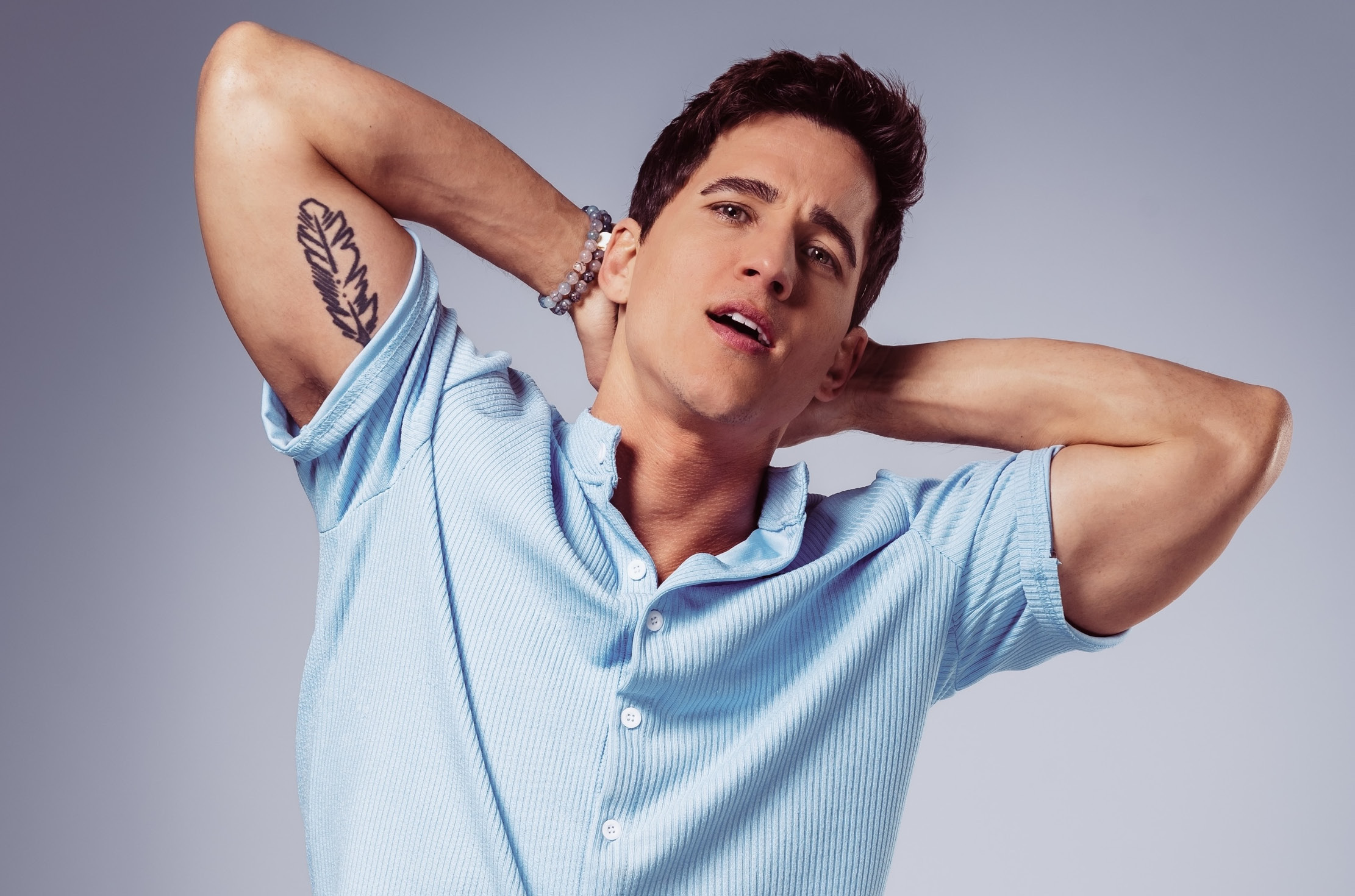
Emmy-winning actor, producer, and activist Mike Manning is no stranger to pushing boundaries – both on and off screen.
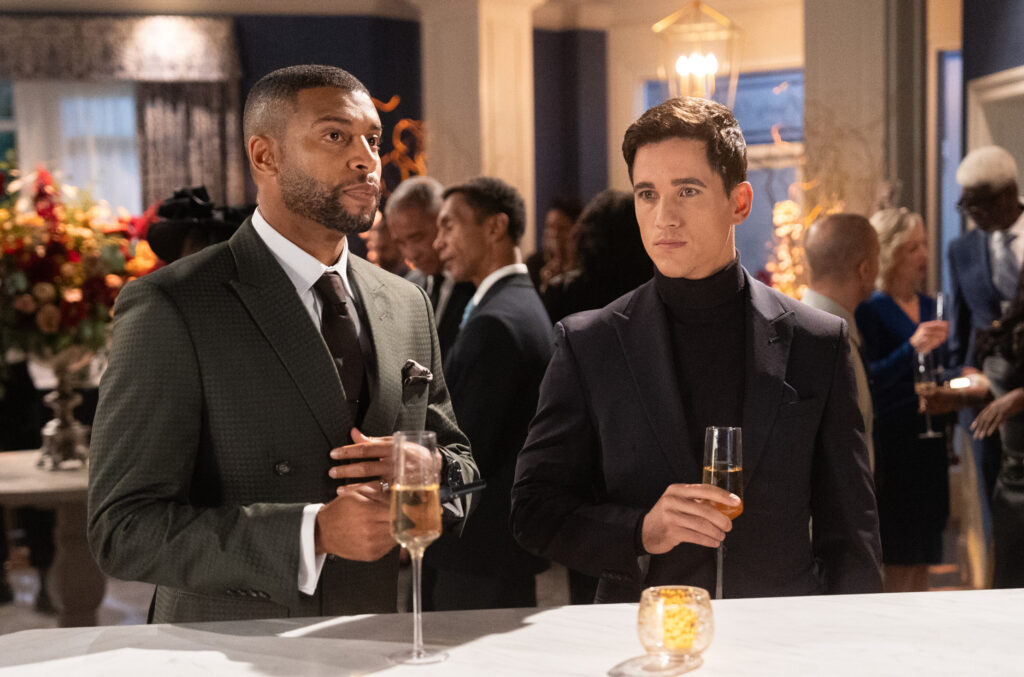
Born in Fort Lauderdale and raised between Florida and Colorado, Manning first came onto the scene in MTV’s The Real World: D.C., where his coming out journey played out in real time and sparked a passion for activism that continues to shape his career today. Now, 15 years later, he’s breaking barriers again in the new critically acclaimed soap opera Beyond the Gates as Bradley “Smitty” Smith, one half of a biracial gay couple raising two adopted children.
The show is making history as the first hour-long soap centered on a Black family, and Manning’s portrayal of Smitty brings heart, complexity, and overdue representation.
OutClique recently caught up with the actor to talk more about his role on the show and its significance, as well as his Florida roots, additional upcoming projects, and how he is using his platform to drive meaningful change.
Denny Patterson: Mike, you have been making strides in the groundbreaking series, Beyond the Gates, playing Bradley “Smitty” Smith. Let me begin by asking, what drew you to this role, and what does it personally mean to you to play one-half of a biracial gay couple raising two kids?
Mike Manning: You kind of just said it. This is the first time I’ve ever played one half of a biracial gay couple with two adopted kids, and this has been an exciting role for me. Representation matters, and the power of television is that people invite you to be a part of their lives. When you’re able to play characters that allow a wider range of people to see themselves in those characters, it’s powerful. Then for others, you’re opening them up to new ideas and new ways of thinking, and that’s also powerful. For me, I’ve been having such a blast playing Smitty. The show itself is groundbreaking – it’s the first new soap opera in 25 years, and the first hour-long soap ever that has centered around a Black family from its inception. To be a part of the show and playing this character, it’s been a wonderful experience.
Denny Patterson: Smitty is such a complex, multidimensional gay character. Was there a certain approach you wanted to go with?
Mike Manning: With Smitty, I love how he breaks expectations of gender roles. One minute he’s playing basketball or hitting the gym with his husband, more traditionally masculine activities, and then the next episode, he’s wearing an apron, having just made dinner. I love that. For a long time, especially in America, men have been assigned certain gender roles, and this show is breaking that. Smitty is also an ex-investigative journalist, so he has that layer as well. He loves being a good father and a figure at home, but he’s itching to get back to work in politics and journalism, so that’s also a fun aspect to play. I see him as a younger Anderson Cooper.
Denny Patterson: What do you ultimately hope queer audiences take away from Beyond the Gates?
Mike Manning: I hope queer audiences feel seen in the characters of Smitty and Martin. I hope they realize they are just as deserving as loving, committed, and somewhat dramatic relationships we’ve seen with straight couples on television for years. Now we’re seeing that with queer couples, and I’m just happy to be part of that.
Denny Patterson: You initially gained fame as a cast member on MTV’s The Real World: D.C. in 2009 at 22 years old. How do you reflect on that journey – from coming out on reality TV to now leading such a powerful narrative?
Mike Manning: I was cast on Real World by following a friend to a random audition. I’d never seen the show before, but I remember not being comfortable with myself and barely knowing anything about politics when I moved to D.C. Then over the course of the season, I became involved with the Human Rights Campaign, learned about politics, put myself out there, and found my voice as an activist. It was a very special time in my life, and I’m grateful for the experience I had on MTV because I don’t think I’d be where I am today – both as an entertainer and as someone who’s comfortable in his own skin.
Denny Patterson: Why did you decide to come out while on the show, and did you have any concern about the repercussions?
Mike Manning: I absolutely had concerns about the repercussions. I told my parents before going on the show, and I came out to them by writing a letter. Then I went back to them and said, hey, I’m going to be on this MTV show and there’s a chance I might come out on it. Of course, they were against it and told me not to. They said it would affect my ability to get jobs, my potential safety, and pointed out that my grandparents would see it, so they pressured me not to say anything. So, when I went into the house, I remember not being sure If I was going to be honest about who I was, because that’s a lot of pressure to put on a 22-year-old. Then a week into filming, I realized very quickly I couldn’t escape the cameras. They follow you everywhere, even if you leave the house. There were microphones in the walls, if you take your shirt off, you’re wearing a microphone in your necklace, you can’t watch TV or listen to music. I realized, if I try to live a lie for three and a half months on this show, I’d go crazy. We then had a cast dinner at Buca di Bepp, and this is in one of the episodes, and everybody’s playing the “numbers game” – how many people you’ve fooled around with. It comes to me and I’m white-knuckling it under the table. I say something like, ‘24 girls,’ and then I add, ‘and four guys.’ And you could’ve heard a pin drop. They were like, Mike, this the number game as in how many people you’ve hooked up with. I said, yeah, and that was my way of coming out on the show, and I’m not sure if I would have changed it to any other way. At that time in my life and who I was at that point, that kind of coming out experience was kind of perfect for where I was at the time.
Denny Patterson: Being born in Fort Lauderdale, how do you think your Florida roots helped shape your values, identity, career path?
Mike Manning: So, I grew up bouncing back and forth between Florida and Colorado. The early part of my childhood was in Florida, and obviously, Florida has a more conservative view – it did back then, too. Colorado, on the other hand, had a mix of everything. I’ve always considered Colorado sort of purple, at least where I lived. I had friends who looked like me and friends who didn’t. Friends who spoke English, friends who spoke Spanish. I had an eclectic upbringing, and I think that helped shape who I am today. Same with Florida. I had friends from all walks of life. Bouncing back and forth allowed me to see the experiences of people who didn’t live like me in very real and visceral ways, and I think that’s why I’ve always tried to lead with empathy and understanding when interacting with people who are different from me.
Denny Patterson: Do you ever make your way back to Florida at all?
Mike Manning: My parents live in Naples now, so I go back to visit them.
Denny Patterson: Is it true that you were also a Walt Disney World cast member?
Mike Manning: Yes! That was another life-changing experience for me. I played Buzz Lightyear, Pluto, Eeyore, and a handful of others, and that was actually the first time I started experimenting with guys. I wasn’t ready to be out yet, but I remember one of my first kisses was with Prince Charming – in costume – underneath the Magic Castle.
Denny Patterson: Wow, a fantasy for so many gay boys!
Mike Manning: Yeah, I was 19 years old and living away from home for the first time. I remember taking off my Buzz Lightyear costume when I met the woman who played Cinderella. She asked if I was new, and when I said yes, she invited me to a party. She also asked if I was straight. At the time, I said yes because that’s what I thought. She said, thank God, because most of the guys were gay. We went to this party and I ended up hooking up with her that night, but I also met the guy who played Prince Charming. We exchanged numbers, and for two weeks, I thought he was just being really nice to me. We’d go to lunch, to the movies, and I just thought I had a new friend. Then one day, he texts me and says, ‘Meet me in the tunnel underneath the Magic Castle. I just got off work.’ So, I meet him down there, and we’re talking, then all of a sudden, we start making out. I had butterflies in my stomach. I was like, what is going on? What is this? And that changed my entire life.
Denny Patterson: In addition to the HRC, you have worked closely with several other organizations including The Thirst Project and Legacy Youth Leadership. What keeps you engaged and inspired to pursue LGBTQ+ advocacy?
Mike Manning: At the end of the day, we only have a certain amount of time on this planet, and I want to leave this world knowing I did everything I could to make it a better place.
Denny Patterson: Has it been challenging to balance your love of entertainment with activism?
Mike Manning: My job is an entertainer, but who I am is an activist, so I hope people can respect my work and what I bring to the table in television shows and movies, but also respect me enough that even if they don’t agree with my opinions as an activist, it’s a big part of who I am and we can at least have a respectful dialogue. As my platform grows and I reach more people, I want to use it to do some good in this world – because God knows we need it. I don’t think I’ll ever stop being an activist, just like I don’t think I’ll ever stop being an entertainer.
Denny Patterson: Another exciting project you’re working on is Eyes in the Trees, opposite Anthony Hopkins. What can you tell us about that?
Mike Manning: It’s always been a dream to work with Anthony Hopkins, and the fact that he’s in a movie I co-wrote – one that came out of my imagination – is insane. I remember being on set standing behind the monitor, watching him say the words that I had previously only heard in my brain. It was one of those goosebumps/pinch me moments. It was incredible. I cannot wait for the world to see it. As mentioned, it’s called Eyes in the Trees, and it’s loosely based on H.G. Wells’ The Island of Dr. Moreau. The book, not the movies.
Denny Patterson: How do you hope your career – both on and off screen – impacts the next generation of LGBTQ+ actors and advocates?
Mike Manning: I hope my career on screen continues to allow people to see themselves in these different characters, feel a little less alone in the world, and maybe carve out their own careers in entertainment. Then off screen, I hope to always remain on the right side of history by fighting for equality, visibility, and fairness for marginalized communities. I hope my activism inspires others to do the same.
Denny Patterson: What are some other future goals you hope to accomplish with your career and platform?
Mike Manning: Win an Oscar, baby! [Laughs]. That’s the ultimate goal, but I also just want to be able to continue having opportunities to create different characters and tell different stories. If I can keep getting paid to do what I love, that’s everything.
Denny Patterson: Before we wrap up, are there any other upcoming projects or anything else you’d like to mention or plug?
Mike Manning: Right now, just focusing on Beyond the Gates. There’s a few films that I shot that are in post-production, but I’m not ready to talk about those yet. Until then, Smitty will keep fighting the good fight on camera, and Mike will keep fighting the good fight off camera.
Stay up-to-date and connect with Manning by following him on Instagram and TikTok @Mike_Manning_, or visit MikeManning.info.