By Luka Gotsiridze
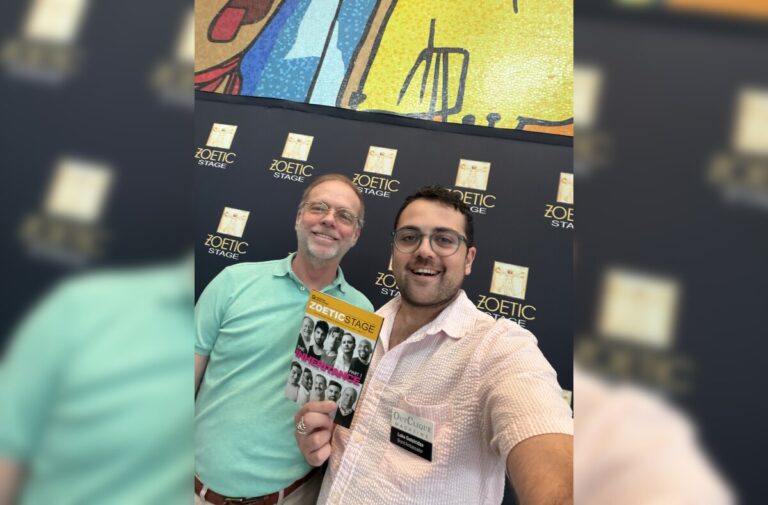
The moment I entered the Carnival Studio Theater at the Arsht Center, I felt the need to turn on a few extra brain cells – to situate myself within the oddly satisfying configuration of the space. Satisfying because it engages you immediately. No wonder the Arsht calls this the Theater Up Close series: the audience is physically close and emotionally implicated, even when a performance isn’t explicitly participatory. This play I came to see goes a step further – making sure the audience feels it, engages with it, laughs out loud, and cries along. We’re talking about The Inheritance, Part 1, by Floridian playwright Matthew López.
Despite those Floridian roots, the play is set in New York City. Inspired by E. M. Forster’s 1910 novel Howards End, the play unfolds as a metatheatrical love story in which a chorus of young men – and a figure based on Forster himself – guide the audience through lives shaped by intimacy, loss, and inheritance. At its center are Eric, steady and compassionate, and Toby, his volatile lover, whose relationship fractures under the weight of ambition, addiction, and betrayal. As Eric forms a profound bond with an older widower shaped by the AIDS crisis and the legacy of a country house, the narrative moves fluidly between present action and reflective commentary – tracing how love, memory, and chosen kinship endure beyond betrayal and death.
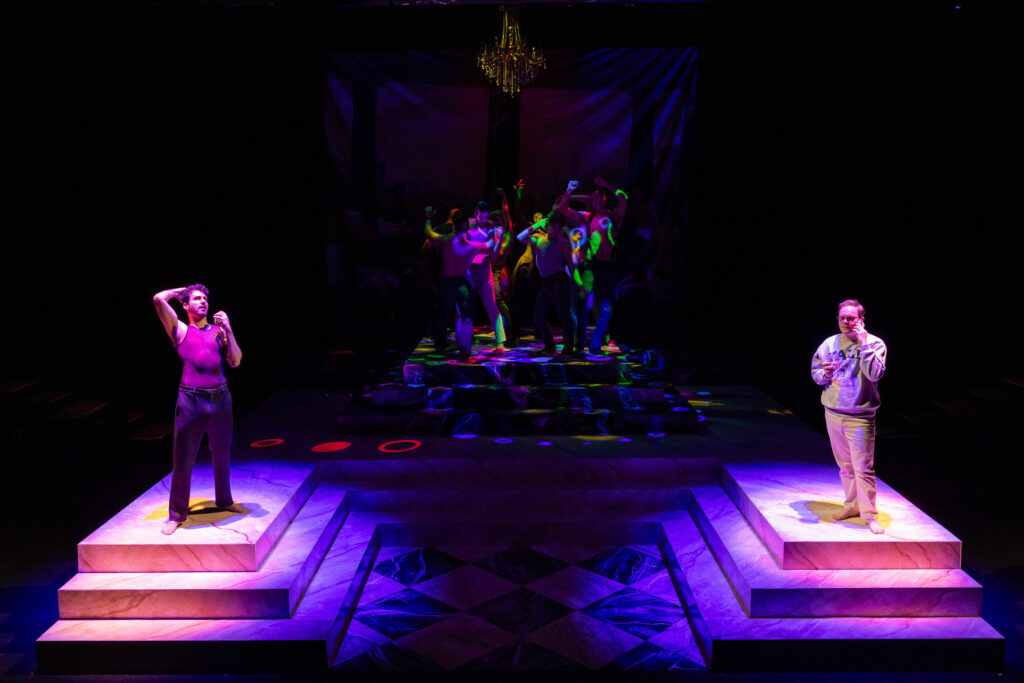
It’s a lengthy play, complete with two ten-minute intermissions, but its dynamic character more than outweighs the runtime. The vibrancy comes from many corners: lighting that enhances the storytelling magic; music that knows exactly when to come forward and when to fade into the background; meticulously intentional choreography, with actors moving through the space to serve props and deliver lines; laughter produced by subtle writing and observed, real-life gestures; and the very queer, very gay architecture of the set – minimalist yet grand in its own right.
The metatheatrical nature of the play is especially compelling. Typically, metatheater draws attention to itself by having actors address the audience directly. Here, the actors address themselves – midwifing the play as it’s being born, stepping in and out of character, while the narrator operates across three layered modes of performance. The Carnival Studio Theater is used beautifully: actors step off the stage, stand between audience members, and sometimes speak from there. Even though we aren’t directly involved, we are unmistakably part of it – through proximity, shared laughter, and emotional resonance.
After the play, as we walked toward Miami WorldCenter to dine and wine, we kept thinking about the importance of community in holding the individual. The AIDS epidemic – and the government’s violent inaction – burdened and murdered lives whose stories were cut short. These were people with names, friends, lovers. People who had favorite songs to dance to or sit with, who might have been foodies, artists, genius scientists, or even deeply flawed humans. We’ll never know. And if they weren’t held by the community, their stories would never be told, reimagined, remembered, or learned from.
If you’re interested in seeing the play, it runs through January 25, 2026 – and it’s a truly generous offering. We’re already curious about what Part 2 will bring, especially after an ending that left us suspended in a tender, almost spiritual realm. It’s no surprise that The Inheritance has been described as a spiritual successor to Tony Kushner’s Angels in America. This one has a Tony Award, too – and it earns it.