By Denny Patterson
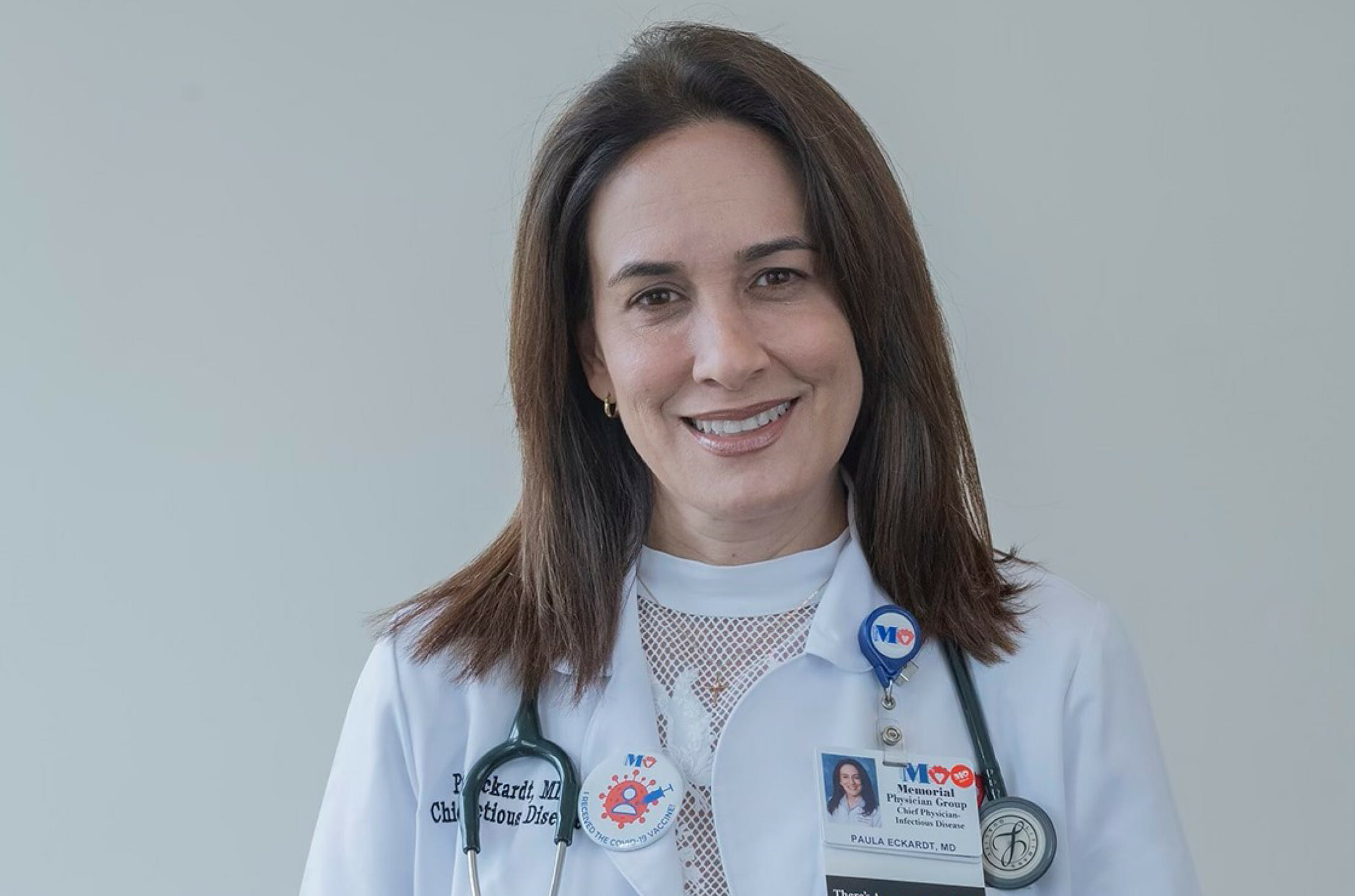
As Chief of the Infectious Disease Division within Memorial Healthcare System, Dr. Paula Eckardt specializes in caring for patients with various types of infections including HIV/AIDS. She and her team of physicians, nurses, medical assistants, and office staff all share one goal: to provide comprehensive and compassionate care to those who need it.
Eckardt is also the medical director of Memorial Healthcare System’s Ryan White Clinic, which provides services for people living with HIV/AIDS. Their multidisciplinary team works with patients to ensure they have access to medications, mental health services, and case management services.
OutClique spoke more with Eckardt about her job and HIV awareness.
Denny Patterson: Let me begin by asking, have you always wanted to pursue a career in the medical field?
Dr. Paula Eckardt: I never wanted to be a doctor when I was a young person, but after going to medical school, yes. I like helping people, and I think that’s what I’m supposed to do.
DP: As the Chief of the Infectious Disease Division, what does your job entail?
PE: I have a lot of hats. Initially, I started doing a lot of HIV care, which is what I like to do. Since COVID-19 came in, I have been doing a lot of infection control and stewardship, which means helping the hospital handle multi-drug resistant organisms by helping other providers choose the correct antimicrobials so that we don’t overuse medication. I also work with other types of infectious diseases.
DP: What is your favorite part of the job?
PE: The most rewarding part for me is seeing patients getting well after having an infection that made them very, very sick. That’s the good thing about infections. If you are able to treat them, usually, the patients do well. We do have people that died from overwhelming infections, and it was very tough when we had the COVID-19 outbreak at the beginning, but most people have overcome their infections, and that is rewarding to see.
DP: Like you said, you work with a lot of patients living with HIV/AIDS, and according to recent statistics, Broward County continues to rank in the top five counties nationally with highest rates of new HIV diagnosis. Why do you think this is?
PE: Well, there are many reasons. I think we still need a lot of testing. People need to understand that they need to know their status, having high risk or not, especially in southern areas of the U.S. A lot of it is probably cultural, so they don’t get tested or seek prevention services to prevent infections. That could be some of the reasons. Nowadays, it’s very easy to get care because we do have free access to HIV care and treatment. If you don’t have insurance, there is help for people, and people don’t know about that. I think that’s all something that we need to work on and get the word out. There are prevention services where you can prevent getting HIV, and people need to get tested to know their status. If they are high risk, they need to be tested frequently and use prevention medication.
DP: Can you touch a bit more on why it is important to get tested?
PE: Knowing if you’re infected or not is important, as well as knowing the risks. Being in the south, your possibility of acquiring HIV is higher than if you live in the middle of the country. So, just by being here in this area, your risk is higher. If you are a person that has multiple sexual partners, then your risk is probably even higher, but if you don’t, what about your partner? Just because you’re a monogamous person, you may not know if your partner is or not. Everything comes into consideration when you’re deciding about getting tested, and doctors need to understand that too. They sometimes don’t offer tests to patients because of the stigma related to HIV, and some people don’t want to ask to get tested. It’s very stigmatized. We have a special program in the ER here because a lot of people don’t seek medical attention for primary care. They just come to the ER for anything that they have, so we implemented a program where we offer HIV testing in the ER. That way, we have detected some patients and linked them to care very quickly and started medication.
DP: What is still a big misconception about HIV/AIDS?
PE: Some people think that HIV is still difficult to treat. They think of all the medications they’re going to have to take if they are diagnosed, but the reality is, most patients can be treated with a single tablet. Usually, they’re very small. Smaller than a vitamin tablet, and the side effects are mostly minimal. It is rare that somebody can’t take the medication because they have side effects. Nowadays, we have started using injectables. I hope this area becomes easier for the patients and providers because it is a little complicated to get approved right now through insurance companies. I think it’s going to get better, and injectables are something that people can think about. Not everybody qualifies for it. We have to look into their medical history, but it will be two injections every two months.
DP: We saw that there was a Facebook Live session on National HIV Testing Day. Do you do these live streams often?
PE: We actually have not done any in the past. We usually do some promoting, and sometimes radio, but the idea of doing a Facebook Live came from our directors in the marketing department. We want to be with the times because people sometimes don’t even listen to the radio anymore. People are always on their phones, so we are hoping to reach more people.
DP: What are some long-term goals you hope to achieve with your career?
PE: I want to see the cure of HIV at some point in my life. I have some patients that have been living with HIV for maybe 15 years or so, and they have kind of become friends, so I would love to see a cure before I retire.
DP: Before we wrap up, is there anything else you would like to mention?
PE: We need to understand that people living with HIV can live long, healthy lives. As long as they take their medication, the amount of time they’ll probably live will be the same amount of time as someone without HIV. That stigma is no longer cool and it needs to be stopped.
For more information, visit MHS.net, or contact Eckardt directly at (954) 276-1616.