November is asking an awful lot of us this year.
We will barely have made it through Election Day before Thanksgiving arrives, which means that after months of being inundated with advertisements telling us that everything is terrible, that civilization itself may depend upon the outcome of the county comptroller’s race, and that every third person appearing on our television is either going to save America or personally destroy it, we will suddenly be greeted by cartoon turkeys telling us to be thankful.
Uffffffff.
Gee, thanks.
This election has felt unusually heavy to me, particularly for a midterm. There are enormous questions on the ballot, candidates whose conduct has given voters plenty of reason for concern before any help from partisan spin, and promises flying around about what wonderful things might appear in our bank accounts if only we make the correct choice.
It’s a lot.
And it comes at the end of a year when nearly everything seems to cost a lot more while somehow also becoming worse. Groceries cost more. Housing costs more. Healthcare costs more. We need to keep a mental tally of what foods and brands are poison at the moment. A perfectly ordinary trip to the store can now end with you staring at the receipt like a forensic accountant trying to figure out how in the hell milk, bread, coffee, eggs, butter and a box of Milk Duds came out to $75.
Then November 26 arrives, and suddenly we are supposed to feel grateful.
I could look you squarely in the face and tell you to “just be beeping thankful.”
I could.
I could remind you that there are starving children in the developing world who would be grateful for what you have. I could tell you about the neuroscience of gratitude, and there really is fascinating research showing that practicing gratitude can be good for us. I could probably even find you a lovely leather-bound gratitude journal, preferably embossed with something inspirational, in which you could dutifully record three blessings every morning until you become a happier and more spiritually well-adjusted person.
I could do all of that.
But I’m a pastor in the real world, not the manager of a motivational Instagram account.
And sometimes telling someone who is exhausted, heartbroken, grieving, frightened, angry, or simply worn down that they ought to be more grateful is about as useful as telling someone having a panic attack that they really just ought to relax.
So perhaps, before we start talking about gratitude this Thanksgiving, we should allow ourselves to admit something that Christianity has never actually required us to deny: sometimes life just sucks. Sometimes things are not okay.
And you are still allowed to be grateful.
In fact, I wonder if those are the times when gratitude begins to mean something far more interesting.
Maybe gratitude does not always have to be a response to something good that has already happened. Sometimes it can be an expression of hope for the good we still believe is possible.
There have been times in my own life when things were going badly and I struggled to find much to thank God for. What I could hold onto was the belief that the chapter I was living through was not the final chapter of the story.
Things can get better, although sometimes, maddeningly, they have to get worse first. And getting better does not always mean getting back what we lost or somehow arriving at the ending we had imagined for ourselves. Some prayers will be answered differently than we hoped. Some relationships will end, and no matter how desperately we wish we could repair them, there may come a day when we have to let them go. People we love will pass, leaving behind an empty chair that no amount of gratitude can make feel less empty. Jobs and careers can disappear, sometimes taking with them a piece of the future we thought we were building. Even our own mistakes can leave consequences that an apology, sincere as it may be, cannot simply erase.
Christian hope has never promised us a life where everything eventually works out exactly as we wanted, nor does it promise us an unending list of things to add to our gratitude inventory.
It promises something more durable: that sorrow is never the only thing left to us, that love can survive terrible losses, that new life can emerge from places we were certain were dead, and that God is still at work even when we cannot yet see what He is doing.
Our Scriptures are full of people who knew this. The Psalms somehow make room for praise, gratitude, anger and heartbreak all within the same prayer. At the Last Supper, Jesus takes bread and gives thanks, knowing what the next hours will bring. He gives thanks, then tells His friends that His body will be broken and His blood poured out. We still call what happens at that table Eucharist, from the Greek word for thanksgiving. Christianity places the Cross at the very center of our faith, but we do so because we believe Good Friday is always followed by Easter morning.
We are, at our core, people who believe God is still writing the greatest story ever told.
That seems to me like a kind of gratitude sturdy enough for this particular Thanksgiving.
So when the election is finally over, the advertisements mercifully stop, and the cartoon turkeys begin ordering you to count your blessings, perhaps you don’t need to pretend that everything is wonderful. You don’t need to be grateful for the diagnosis, the empty chair, the hole in your heart that just won’t seem to go away, the bill you don’t know how you’re going to pay, or the fact that milk now comes with financing options.
Give thanks for what you honestly can.
For the person who stayed. For the friend who became family. For the unexpected laugh in the middle of a terrible week. For the love that remains after loss. For the possibility that what hurts today will not always hurt quite this much.
And if even that feels like too much, perhaps your Thanksgiving prayer can simply be:
“Thank You, God, that this is not the end of the story.”
I think that prayer counts too.
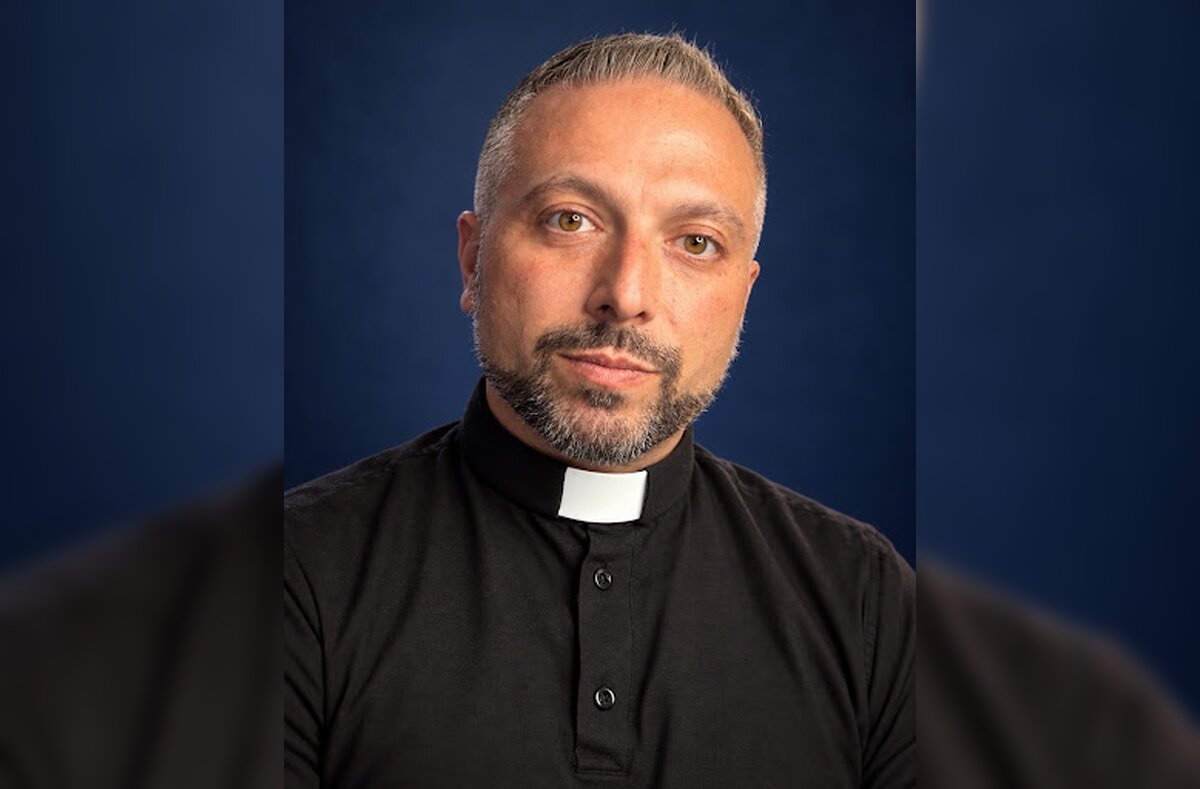
Father Rich Vitale is an Old Catholic priest, best-selling Substack writer, and podcast host whose work focuses on resilience, spiritual practice, and emotional health in a hyperconnected world. Through his publication Message from the Margins, he blends theology, psychology, and lived experience to help people stay grounded without abandoning reason.