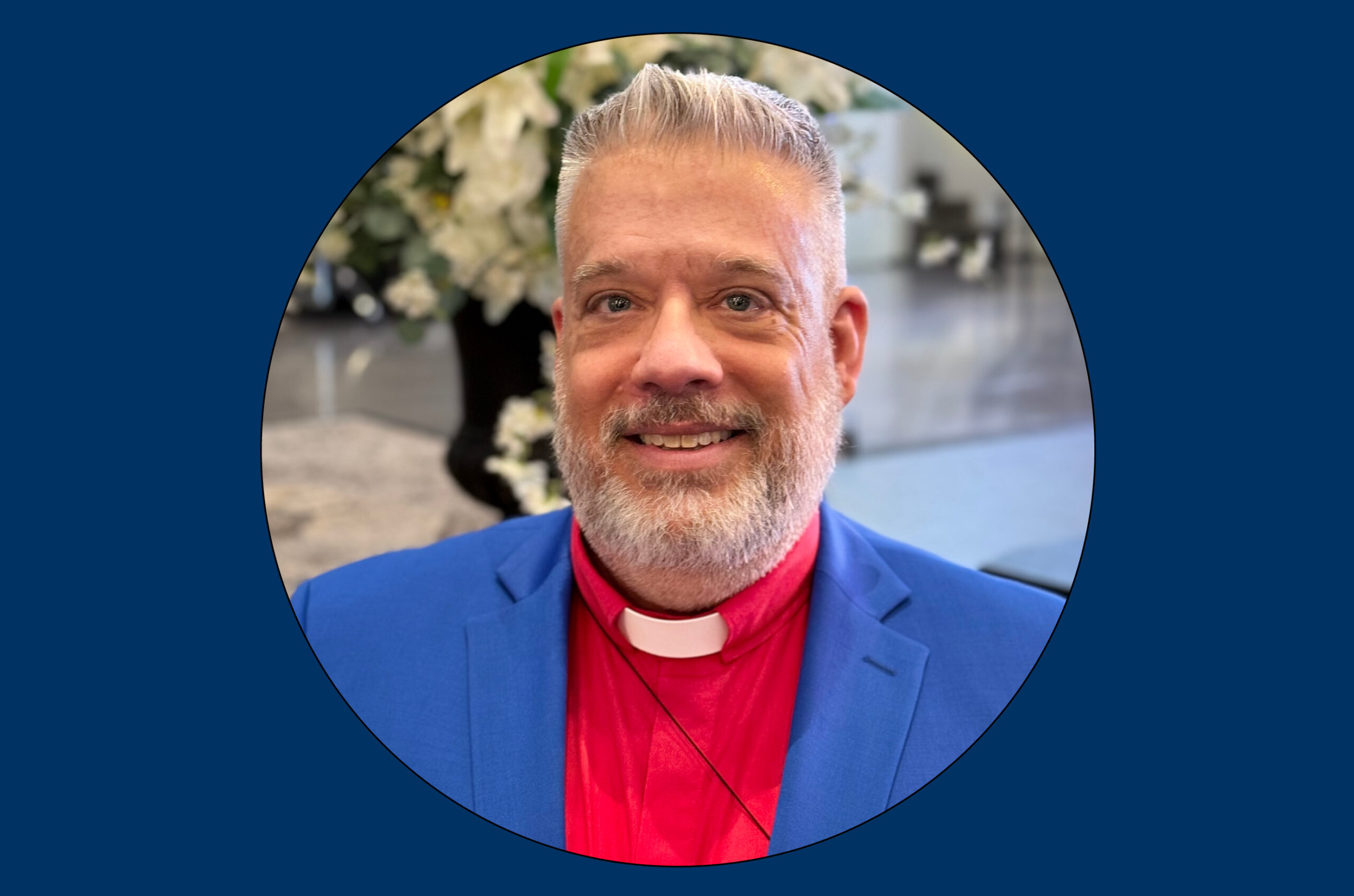
Bishop Durrell Watkins, DMin
Trinity Sunday falls this year on May 31. Trinity Sunday may lack the prominence of other major holy days, and while not explicitly codified until the 4th century and rejected by some Christians still–the symbol of the Trinity can be a useful symbol for our time. Rather than a rigid dogma, it can be viewed as a tool for navigating a fractured social climate.
The Trinity is usually considered one God experienced as, in the traditional formula, “Father, Son, and Holy Spirit.” Contemporary interpretations may make the names gender inclusive or gender-neutral, e.g., “Creator, Redeemer, and Sustainer.” I use “Love, Light, and Breath of Life” which are divine images from the New Testament.
Twentieth-century theologian Paul Tillich offered the Trinity as the “Source of Diversity,” representing the Power, Meaning, and Vitality of Being. This perspective affirms our power to live authentically.
Similarly, Seventeenth-century mystic Emmanuel Swedenborg envisioned the Trinity as Soul, Body, and Action, suggesting that the divine presence saturates every facet of our personal existence.
For me, the Trinity symbolizes Mystery, Relationship, and the Dance of Life. It is not the dancer but the dance, a divine Presence that flourishes through togetherness.
By embracing and reinterpreting this ancient symbol, I find the joy necessary to fuel my gospel work for justice and healing. It serves as a reminder that a divine power dances within and among us, blessing our collective journey.
Durrell Watkins, the senior minister of Sunshine Cathedral (SunshineCathedral.org), holds theological degrees from Union Theological Seminary in NYC (MDiv) and the Episcopal Divinity School (DMin).