By John Hayden
Most people don’t remember a time without the AIDS crisis. With breathtaking medical advances in treatment and prevention, HIV has faded from view as a major public health emergency. However, the crisis continues, especially in South Florida where new infections are among the highest in the nation.
The keys to a better future lie in knowing the past. The World AIDS Museum in Fort Lauderdale is the keeper and storyteller of that history. December 1, 2021 was World AIDS Day, and they took a lead role in marking the occasion, which remembers the victims and gives hope for what’s to come. The Galleria Mall was host to opening ceremonies, and panels from the AIDS quilt will be on display unDr. Requel Lopestil December 10, 2021. World AIDS Museum is also hosting six short documentaries done by people living with AIDS/HIV.
While they are very visible during this time of year, they are constantly curating the history of the AIDS crisis and teaching its history from their home at 1350 E. Sunrise Blvd. in Fort Lauderdale. is the Executive Director and talked with OutClique about its mission and the history of the pandemic.

“We started in 1981 because that’s when we all knew about it.” she says. “However, anyone who thinks that’s when HIV/AIDS began is very wrong. The virus itself had been around a lot longer, but we started to know the story in ’81. You get to the 90s and it’s like, where did it come from? What are the things you really need to know about it?”
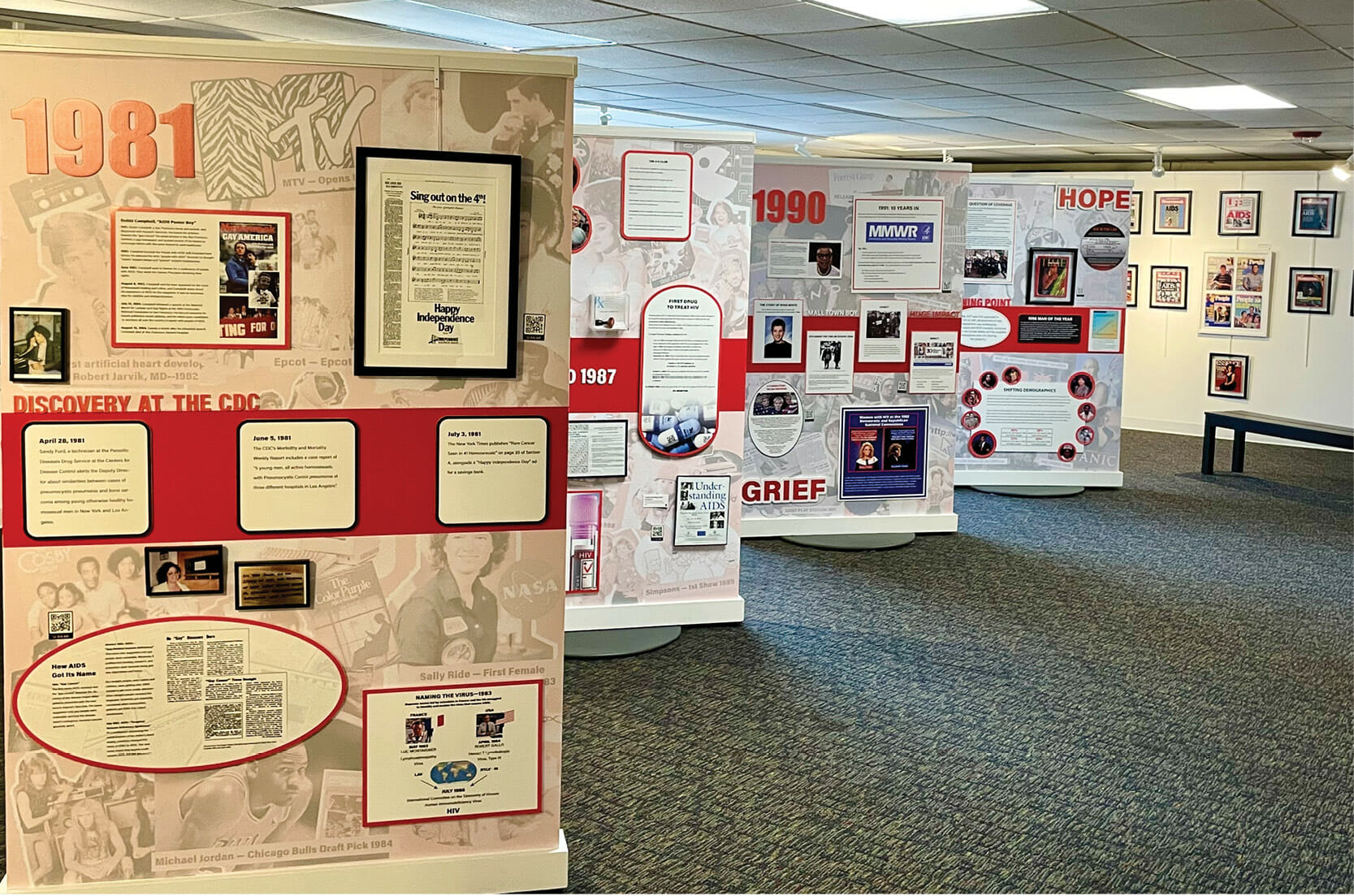
When you enter the World AIDS Museum you start a visual journey of the timeline. Newspaper clippings posit the issue of a strange, new disease affecting gay men in large cities. The language used changes from GRID (Gay Related Immunodeficiency) to AIDS to HIV. There are artifacts including a doctor’s stamp specifically for prescribing AZT and an iron lung-like device to help patients breathe.
The earliest patients didn’t even get this primitive treatment because they did not know what was wrong with them.
“We look at how the virus went from monkeys to humans,” Lopes says. “We pulled out early cases. There was a Danish doctor who was working in the Congo and realized that she died of some mysterious illness. Going back, they realized it was HIV. Most people would ask if people were having sex with them primates. No people. If you think about other cultures, they eat things Americans wouldn’t usually eat. Chimpanzees were one of them. Slaughtering them is really bloody.”
At one point, it became more prevalent in the human species,” Lopes continues. “People had mild cases of things they didn’t know. Viruses are smart. We can track HIV but it hadn’t gotten its virulence until much after.”
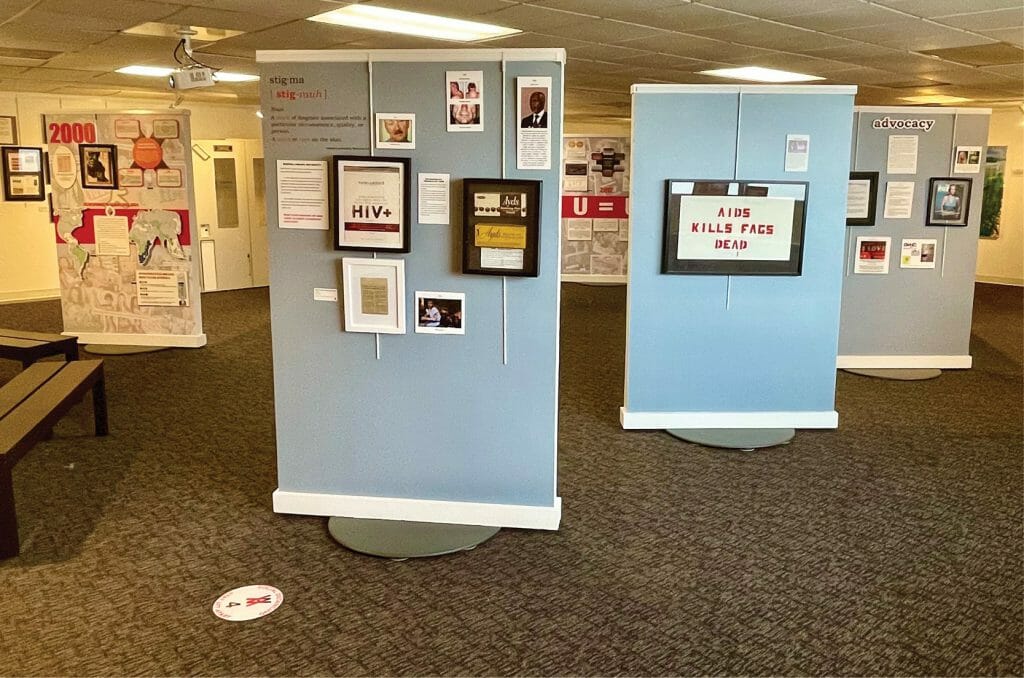
Lopes also looks at the stigmas attached to AIDS in the early days.
“For a while people were focused on the four Hs: homosexuals, Haitians, heroin addicts, and hemophiliacs,” she says. “It’s interesting when you’re looking at people, and you can’t hide it anymore and what reaction people have.”
Whatever you know about the HIV/AIDS crisis, Lopes says there is so much more to learn.
“For those of a certain age, we only knew it in 1981 or 1985,” she explains. “When we come back and take a 30,000 foot look there are lots of things to look at in a historical view.”
Next month, we will talk with Lopes about how the AIDS crisis changed the way drugs are approved and how the 1990s were a turning point in the fight.
To learn more about their exhibits or schedule a guided tour, visit WorldAidsMuseum.org.