By Denny Patterson
With 25-40 percent already lost, the worldwide coral population is in terrible danger. However, there is hope.
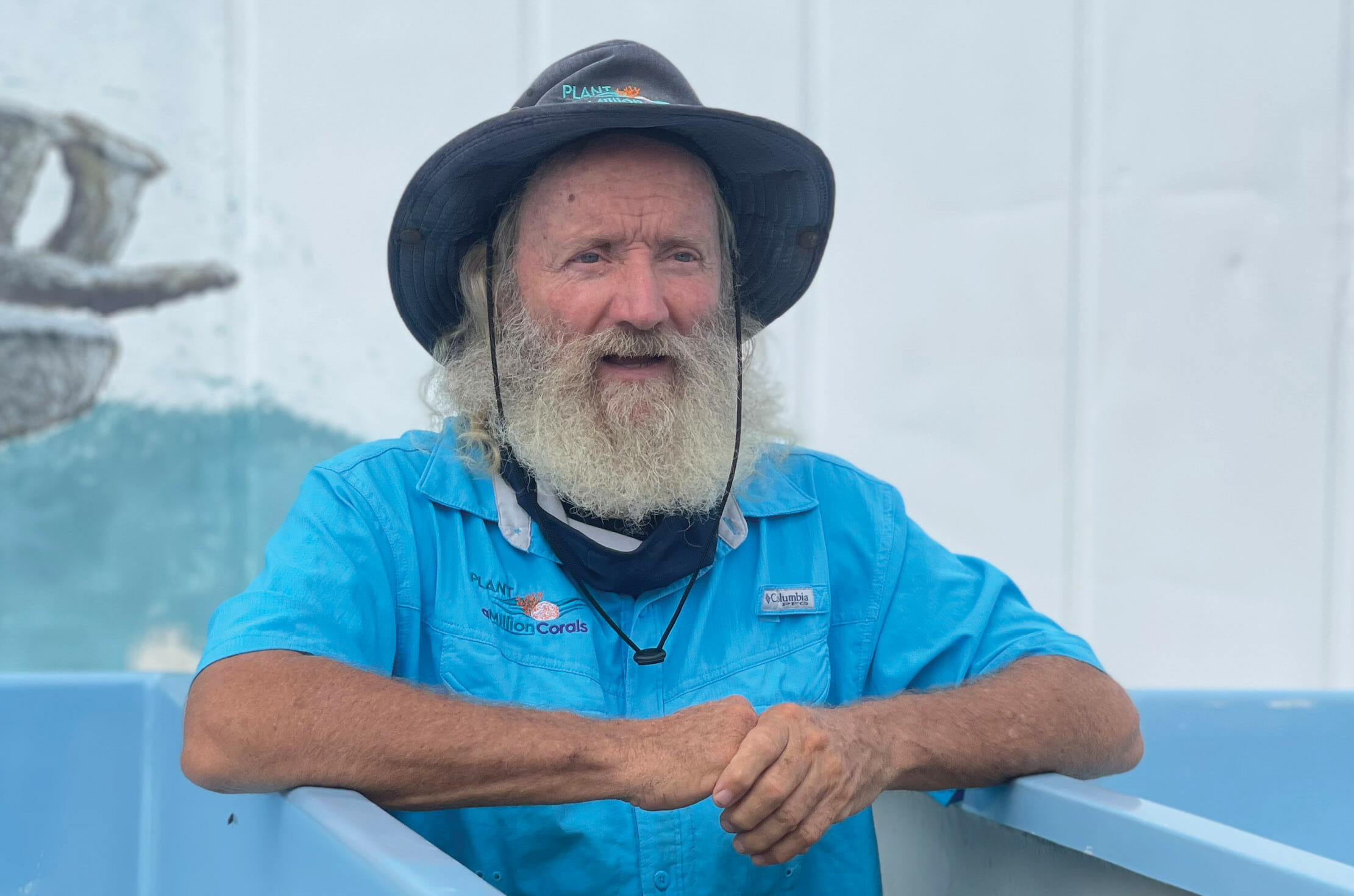
Dr. David Vaughan has been able to reproduce thousands of fast growing and resilient corals that can help to recover the lost reefs. Holding positions in aquaculture research and development for over 45 years, Vaughan has worked on coral restoration in the Florida Keys for Mote Marine Laboratory, founded and developed Oceans, Reefs, and Aquariums Inc., and is often cited for scaling up clam farming technologies. Presently, he is actively working on reef restoration as the founder of Plant a Million Corals.
OutClique caught up with Vaughan to talk about his partnership with the South Florida Symphony Orchestra for Preserving Our Coral Reefs, one of the Symphony’s signature Symphony in the Schools programs.
Denny Patterson: Hello, Dr. Vaughan! Thank you for taking some time to chat with me. Can you begin by telling us about the Plant a Million Corals Foundation’s partnership with the SFSO?
David Vaughan: Yes! I got a phone call from one of the ladies who works on producing symphonies for children’s schools, and she said they wanted to do one on corals. She did some research, and she came across Dr. Eugenie Clark, who is sometimes known as the “First Lady of Sharks,” and she was basically the founder of Mote Marine Lab. The person from the symphony decided to highlight this wonderful, iconic person. She saw how the reefs are declining, but then on the surface, there’s me on boats planting corals. She said, there is hope. So, they wrote up a coral symphony, and it was so wonderful. I got so choked up about it, and anytime they would do it at a school near me, I would go to the school and be part of the informational work. It was really great. The symphony is not just trying to do this in a couple schools, but they are trying to do it in five different counties in South Florida. We are also trying to help them write an educational curriculum because the kids really get excited about corals, learning to be citizen scientists, and have hope. We are even working with them to try and develop a transportable education unit that can be mobile.

DP: What have you enjoyed the most about working with the SFSO?
DV: I was not very musical growing up, but I was amazed at how reactive young students are to learn more about instruments. Knowing that they can have a favorite instrument and they can learn to play it, but also couple it in with a nice conservation message about saving our oceans and reefs. It really gives me goosebumps.
DP: So, you believe these educational programs are beneficial?
DV: Yes, and the only downside is that they were only able to do it for a few schools. Hopefully, they can raise some funds from Rotary International and do it in a couple more schools, which sounds great.
DP: Do you think children are more likely to focus and learn when music is involved?
DV: I think they are able to learn when they can be hands on. Whether that is listening to music, seeing musicians play, or watching artists paint, they are involved in some way. That is so much better than reading some sentences in a textbook. When you watch these kids listen to the music, they are intensively listening. That probably would not be the case if it was just a lecture.

DP: What is the number one thing you hope children take away from the educational program and symphony?
DV: From the symphony itself, that life can be beautiful with music, and they can be involved in making these wonderful sounds. Then think about the conservation message. Yes, they are probably hearing everything about woe is me, the world is heating up, our resources are running out, but this is one that gives them a glimmer of hope. They can have a career in science or engineering and make a difference for corals in the ocean.
DP: What more do you hope to accomplish with your research?
DV: Right now, I am designing what we call a coral nursery in a box. It is basically taking what everybody thinks is a coral nursery, which is pumps, filters, valves, pipes, things that people think are too expensive and too hard to put together, and I am putting one of those working systems together in a group of six tanks that can ship in a shipping container to any location around the world and will produce 10,000 corals per year in that island where it goes to. I am hoping to take a transportable unit to communities and island countries that cannot afford it and work with training the communities.
DP: Before we wrap up, is there anything else you would like to mention or add?
DV: No, I am indebted to the symphony for their talent, wisdom, including me, and being a part of the message. I love what they are doing, and I am blessed and honored to be a part of it.

For more information about Plant a Million Corals, visit PlantAMillionCorals.org. For more information on the SFSO, visit SouthFloridaSymphony.org.