By Denny Patterson
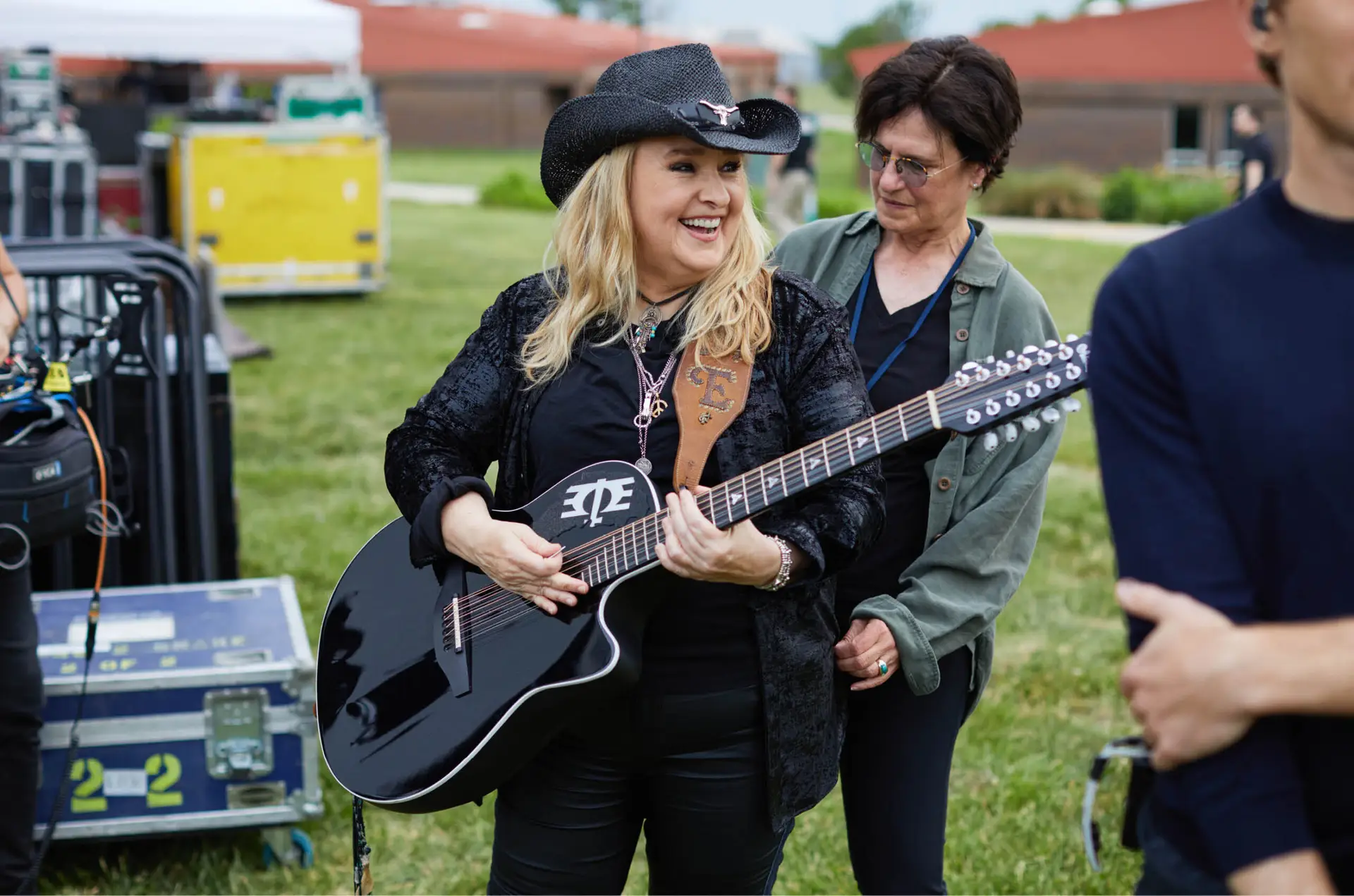
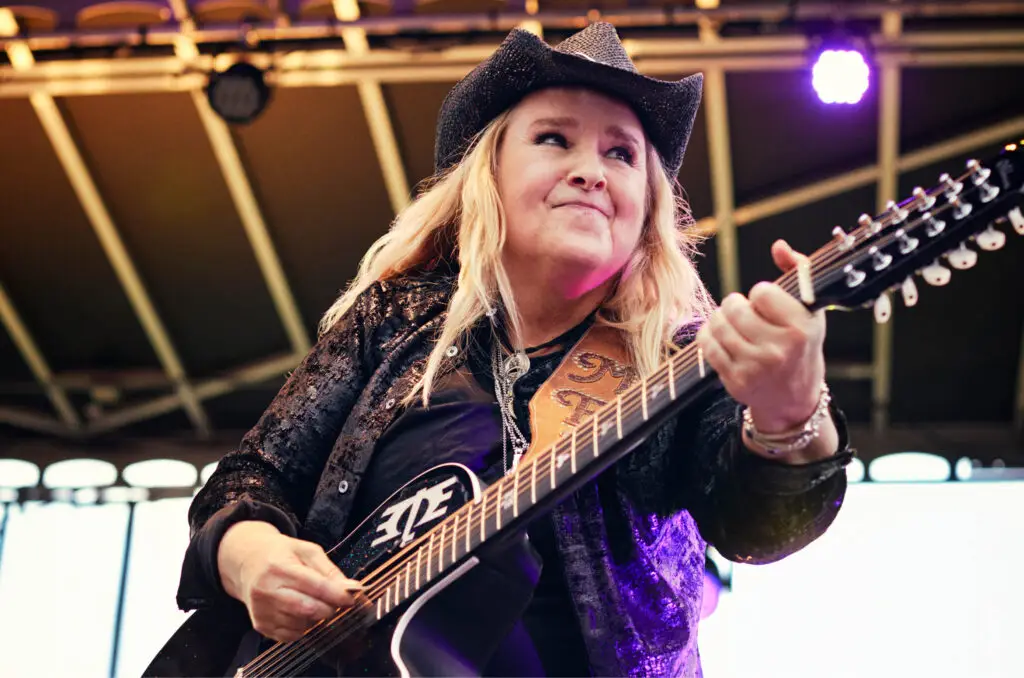
Melissa Etheridge: I’m Not Broken, a new docuseries that’s now streaming on Paramount+, features the Grammy Award-winning rock artist returning to her home state of Kansas to perform a live concert at the Topeka Correctional Facility. Before the concert, Etheridge corresponded with five incarcerated women serving drug-related sentences, drawing inspiration from their stories to create and perform an original song in their honor.
A poignant exploration of healing and transcendence through the power of music, Etheridge, who lost her son Beckett to opioids in 2020, seeks to understand and disrupt the cycle of addiction while connecting with these women often overlooked by society. The docuseries also delves into themes of redemption, generational trauma, grief, and healing.
With female incarceration rates having increased by 700 percent since 1980, Etheridge uses music as a means of empathy, understanding, and hope, forming a bond with the women through their shared experiences and struggles.
Etheridge took some time to talk more about the project with OutClique.
Denny Patterson: Melissa, how excited are you for Melissa Etheridge: I’m Not Broken to premiere on Paramount+?
Melissa Etheridge: Oh, this is a big one for me. I’ve been thinking about doing something like this since I was a very young girl. It’s a long story, but it feels incredible. It’s been years in the making, and I’m so proud of it.
Denny Patterson: The series centers around your efforts to organize a performance for the women incarcerated at the Topeka Correctional Facility. Can you talk about how this project initially came about?
Melissa Etheridge: It began when I was about seven years old. I grew up in Leavenworth, Kansas, and if you know anything about Leavenworth, you’ve probably heard in movies its reference to prisons. We have the federal penitentiary, the army penitentiary, there are at least five prisons within 20 miles of where I grew up. That was just the culture there, and when I was about seven years old, Johnny Cash came to the Federal Penitentiary, which was about two blocks from my house. I read in the newspaper that he was there, and no one else could see him. Only the prisoners. He wasn’t in the city and didn’t do anything else, and I thought, wow, prisons must be a place of great entertainment (laughs). A few years later, I was in a variety show, and we went to all five prisons. The response we received from the audience was so enthusiastic and appreciative, and it showed that these people were so hungry for entertainment, because we weren’t that good. I could see that, and it really impressed upon me at a young age that these are just people. These are just normal people who’ve made certain choices, and there they were. As I got older, and as I became a professional musician, I always wanted to go back and perform at the prison somehow. In the 90s, I had spoken to Tammy Wynette, and we were working on getting something together. She then passed away, but I’ve always had this thought on my mind, and when I changed management about 10 years ago, I told them this was high on my list. However we can, I want to do a concert at the women’s penitentiary. When we finally got a production team involved about four years ago, they were instantly interested in Shark Pig Studios, which was a small company. They started getting everything together and reached out to the warden at the penitentiary, and they were supportive of it. It took a good three years for everything to come together, but we finally got a date to do it. I also started exchanging letters with some women that were at the penitentiary at that time, and they were very brave to let us film their life stories and experiences.
Denny Patterson: I can only imagine how meaningful it was for you to bond with these women through the conduit of music.
Melissa Etheridge: It was an incredible experience, and it really opened my eyes to how much drug and emotional issues there are in prison. There’s not a whole lot of punishing bad people. It’s people that were punishing themselves and trying to get out of pain from early childhood trauma, and that is the majority of what’s behind, especially in a women’s prison. It really had an impact on me when I saw these women, some of whom had never seen a concert. Music is so healing.
Denny Patterson: Melissa Etheridge: I’m Not Broken also explores, like you said, emotional issues, trauma, and substance abuse. You lost your son in 2020 from opioids. By talking with these women, did you gain a better understanding of the cycle and horror of addiction?
Melissa Etheridge: Yes. I’ve got to tell you, any family going through this knows, it doesn’t just oops, automatically or accidentally just happen one day. It’s a long process and a slow downhill ride. It was actually very, very good for me to go in there and meet the hundreds and hundreds and hundreds of women who were affected by drug addiction and how hard it is. It’s so insidious because these women are in a lot of pain from early childhood trauma, and the drugs numb your pain. You then make choices because you want more drugs because you don’t want the pain, and then those choices lead you behind bars. To see so many that were in that situation, and I’ve got to tell you, one of my favorite and most touching parts of the concert was when I told them about my son. These women, who have it so hard and had all their freedoms taken away, they can’t see their children or anything, they showed such compassion for me. They put the little hearts over their heads, showing such empathy, and that almost laid me out right there. It was very, very moving.
Denny Patterson: “I’m Not Broken” is also the name of the original song you wrote in honor of these women?
Melissa Etheridge: Yes, it was something I set out to do from the very beginning. I said, I want to write a song so that in the concert, I can say, hey, this is for you. This is something I created by being inspired by you. And I’m very happy with it. The documentary actually shows me trying to write it over the course of a few months, and it finally comes together because I didn’t want it to be sad, patronizing, or anything like that. I wanted it to be strong, and I wanted them to be able to sing it with me and find strength from its power.
Denny Patterson: You are very well known to reflect and address current events in your work. Has that always been important to you?
Melissa Etheridge: The artists that I have appreciated and loved throughout my life, they were the ones who did that. The Bruce Springsteen’s, the Bob Dylan’s, the Joni Mitchell’s. That’s what they did, so I wanted to do that as well.
Denny Patterson: Is there anything else you ultimately hope audiences take away from this docuseries?
Melissa Etheridge: I hope they’re moved, and I hope it maybe changes hearts and minds about what people might have thought what prisons are for. And as for the people in prisons, maybe viewers will change their minds about how they think about drug addiction and how it can certainly happen to anyone that makes a couple bad choices.
Denny Patterson: Do you have any other new music or upcoming tours we should be on the lookout for?
Melissa Etheridge: I have an album that is a part of the docuseries, the concert was recorded, and it was released on July 12 by Sun Records. It’s called I’m Not Broken (Melissa Etheridge Live from the Topeka Correctional Facility). It’s a big, long title, but it’s the soundtrack to this, and I’m also touring with it. I’ll be touring with Jewel, the Indigo Girls – I’m doing all kinds of shows.
Stay up-to-date and connect with Etheridge by following her on all social media platforms, or visit MelissaEtheridge.com. Melissa Etheridge: I’m Not Broken is now streaming on Paramount+.