By Megan Fitzgerald, PhD
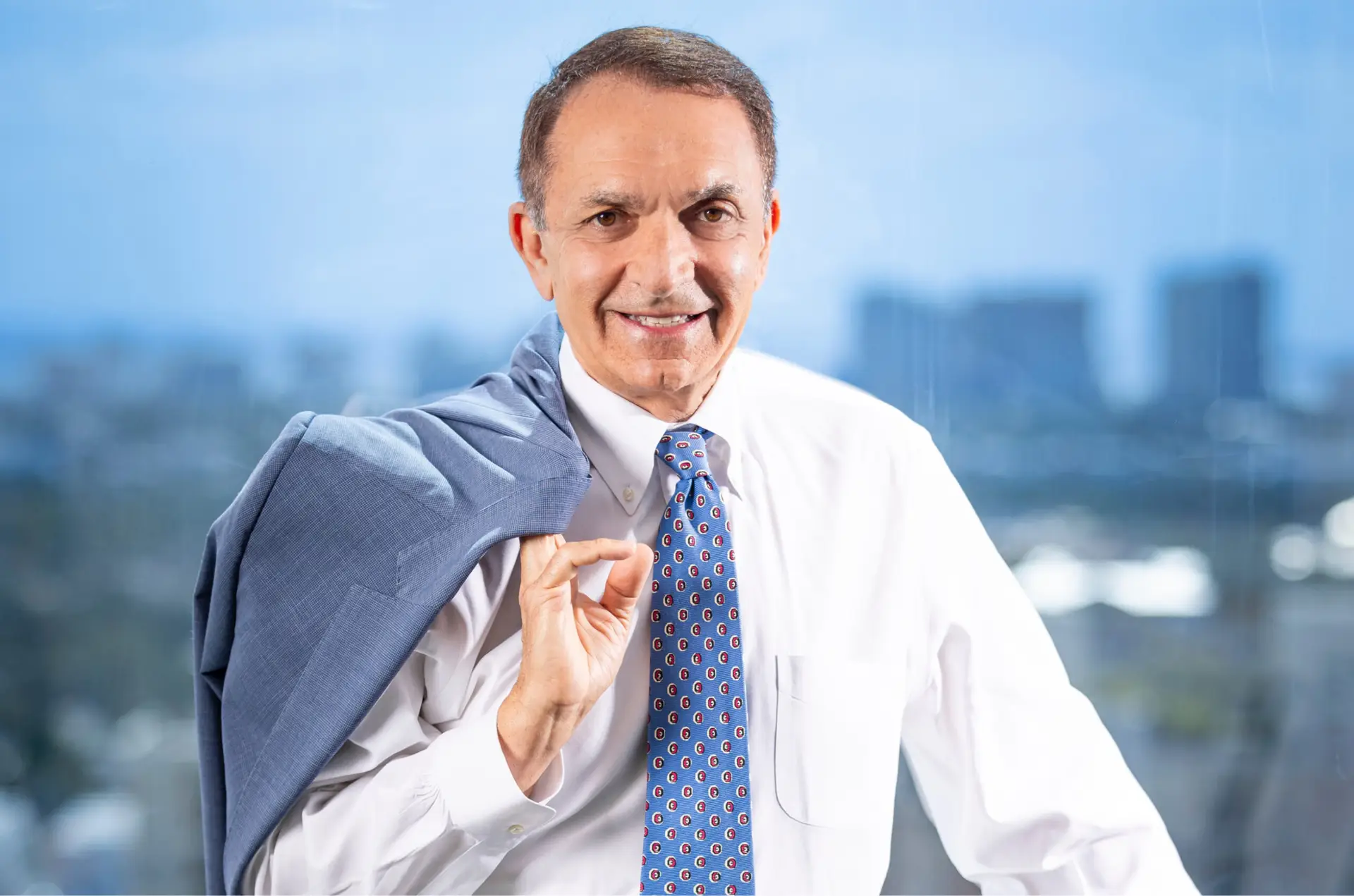
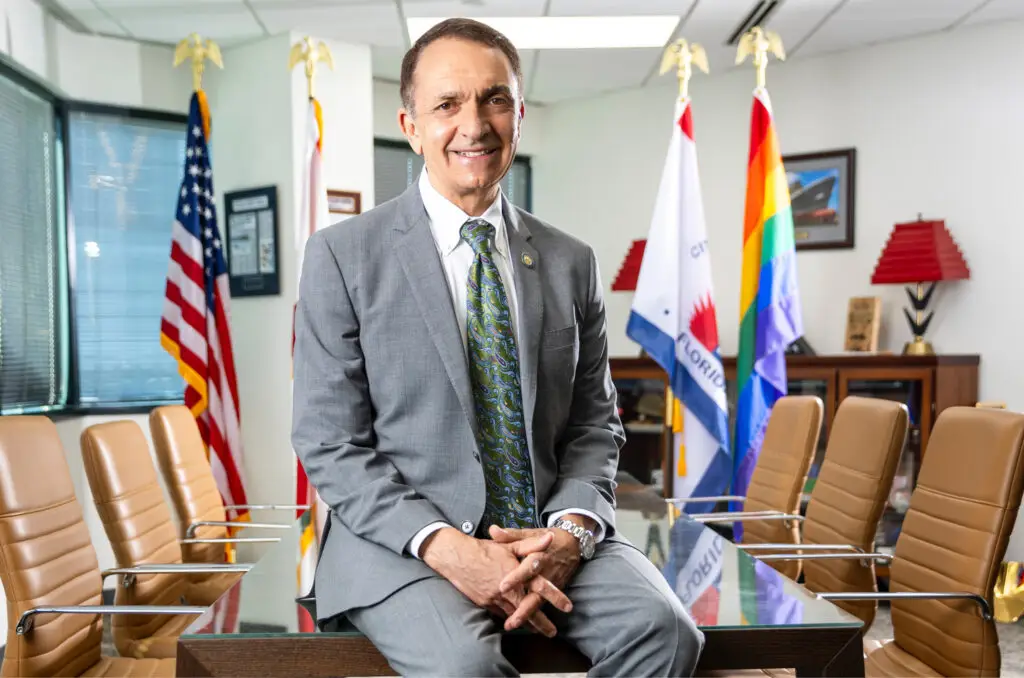
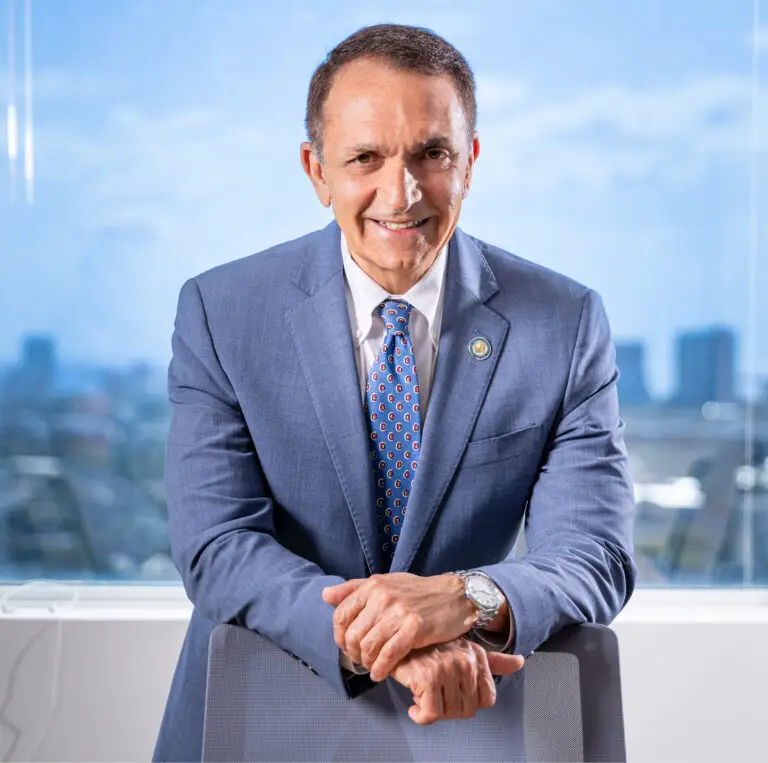
A Connecticut native who has practiced law in Broward County since 1980, he made history in 2018 – becoming Fort Lauderdale’s first openly gay mayor. Known for his affable demeanor, dedication to equal rights, and a passion for public service, he hopes to continue to serve the city he calls home with a final term as mayor. Meet Mayor Dean Trantalis, who is running for reelection in November.
Dr. Fitzgerald: What does it take to be a leader of a city like Fort Lauderdale?
Mayor Trantalis: First, it’s a great honor to be a leader of Fort Lauderdale. It’s an emerging city. It’s a very modern city and it’s becoming a very cosmopolitan city. It’s had its challenges in terms of natural disasters, such as COVID and unprecedented rainfalls and self-inflicted challenges like neglect of our infrastructure. We had large water breaks and sewer breaks that not only brought disrepute upon the city, but also contaminated many of our waterways. We’ve since recovered and learned from those. And I think we’ve become a better city. As a result, we’re much more conscious of our natural resources. The city has moved forward with a program called Fortify Lauderdale, which is intended to fast forward all our infrastructure programs in terms of storm water recovery. We’re also building a brand-new water treatment plant.
We’re just moving forward and trying to build a city that many people want to be a part. We’ve seen some significant development in our central city downtown. We’ve added over 3,200 jobs in Fort Lauderdale just this past year alone. And people want to move to Fort Lauderdale. It’s a great place to live, a great place to work, and even start a career and build a family. So, along with that we’ve done some quality-of-life initiatives that I think are important to the LGBT community in particular. During my time as Mayor of Fort Lauderdale, we adopted an equal rights ordinance on its own—protecting people, based on gender equality and sexual orientation. We also were one of the few cities in Florida to outlaw conversion therapy, and that law remains on our books.
We continue to try to attract diversity within our city. We’re very proud of the diversity that we experience here on a day-to-day basis. People from all over the world come here because they love what we have here. My goal has always been to create new economic opportunities. Fort Lauderdale is known for our hospitality industry and our marine industry. We are also the yachting capital of the world. But that’s not sustainable. We learned through COVID that you cannot rely on one industry to keep you going. So, these last few years I’ve reached out to other industries to try to bring a more diverse economic base to our city. And we’re starting to see more and more of that. We’re starting to see financial services and tech industries, even entertainment. We just had the groundbreaking for a new motion picture studio here in Fort Lauderdale that’s going to bring hundreds, yes, hundreds of new jobs in the filmmaking industry, but also in the trades like carpentry, electricians, and all of that. We will be able to source that employment through the neighborhood providing everybody an opportunity to take part in this growth.
Dr. Fitzgerald: You are often faced with making some big decisions and sometimes not everyone is going to be happy with the result. How do you address that?
Mayor Trantalis: The first thing is to listen to the people. Hear their voices, what opinions do they have, what’s the basis for their opinions. And then you sort through all of that, finding out what’s fact, what’s emotion, and what is the goal. Once you see a clear path to the goal then it’s easy to make that decision and move forward on to what must be done.
Dr. Fitzgerald: How would you describe the role and responsibilities of the mayor of Fort Lauderdale?
Mayor Trantalis: It’s very complex. Technically and legally, the only purpose for a mayor is to run the meetings and to serve as the spokesperson for the city on issues relating to the city. But in reality, there’s much more to it. I mean, it’s what you want to make of it. I’ve made a lot more of this job prior to my predecessors, but my predecessor made more of the job than his predecessor. So, we each build and expand the role of mayor. I’ve often been a mediator when there is conflict. I’ve helped set the tone and direction of the city along with my fellow commissioners, and I keep the atmosphere and the mood of the city as very positive and collaborative. You know, too often, as you said, there are divergent opinions, and that can often be distracting, because sometimes they’re riddled with emotion rather than competing facts. So, you need to cut through all of that to figure out what is real and what’s not. So being the mediator of emotions and opinions is probably one of the most time-consuming parts of this job.
Dr. Fitzgerald: What makes Fort Lauderdale a great place to live?
Mayor Trantalis: I think the greatest thing about Fort Lauderdale is the people that live here. The diversity of our population. People coming from all walks of life, contributing their ideas, their cultures, their foods, their experiences. And then what we’ve done as a city is, we’ve been able to create a vibrant downtown where people can live and work with everything within walking distance and it’s something that we never even thought about 20 years ago when I first became a city commissioner. The downtown wasn’t really an issue. The issue back then was what was happening on the beach. But we’ve done quite a bit on the beach. We’ve created a world class destination. And I think that people come to experience what we have here. I meet people from the Middle East, Canada and South America. They love coming to Fort Lauderdale because it’s a place where they can feel comfortable. It’s very family friendly and they don’t feel out of place here. Everyone has a place to feel comfortable. At the same time, we’ve maintained the integrity of our single-family home neighborhoods, making sure there are no intrusions into their quality of life, and ensuring that they’re safe, that we continue to build infrastructure in and around them in order to secure their comfort level.
I have spent a lot of time trying to bring in people who have come to our city looking to invest in terms of sports and recreational facilities. An example of that is our soccer stadium Inter Miami came to Fort Lauderdale. In our city we have probably one of the best stadiums in the country for soccer and they spent over $170 million building a soccer stadium, building a high school football stadium for the two high schools that don’t have football, and practice fields for the young academy they have for rising soccer stars. We also met with the Panthers who built this magnificent ice-skating complex called the Baptist Health IcePlex here in Holiday Park. It’s an ice-skating rink exclusively for practice for the team, but also includes one that’s completely open to the public for daytime and nighttime use seven days of the week. It’s drawn hundreds and hundreds of kids and their parents, and what better way to get out of the heat than to go into an ice-skating rink? It’s been very, very successful.
After many, many years of trying, we finally were able to complete the redesign and redevelopment of our swimming complex. We have a world-class destination venue for swimming. It’s open to the public seven days a week, and it’s also there for swimming as well as diving competitions. We have the only 27-meter diving platform in this part of the world, so we are very excited about that. We’re also about to complete, probably the best and most sophisticated pickleball venue in the country. It’s going to have 44 pickleball courts as well as a clubhouse for members who wish to join. It’s going to be a magnificent new place, and it’s all paid for by private investors.
We’ve also partnered with the Orange Bowl Committee, and they’re going to invest $1.5 million to redesign part of the tennis courts at Holiday Park. They’re building a small stadium for competition and viewing and also refurbishing all of the tennis courts at Holiday Park
Dr. Fitzgerald: What’s your vision for the city going forward?
Mayor Trantalis: My vision going forward is to continue the pace. Continue the opportunities that we have before us. We must ensure that our infrastructure programs continue unabated. We have a new City Hall that we’re looking to build over the next several years. I want to make sure that some of the projects we got started on are brought to a successful conclusion, and, again, just fashioning the downtown with smart growth policies to ensure the integrity and sustainability of our city going forward.
Dr. Fitzgerald: How would you describe your tenure as mayor so far?
Mayor Trantalis: I’ve really enjoyed being mayor and I want to continue with one more term. This will be my last term, and I want to spend the next four years mentoring younger people into decision-making roles. I think the city is ready for that and it’s time to pass the baton on to others. My role since taking office has been to embrace change, to attack challenges that we have neglected, like our infrastructure, and trying to ensure that people have the quality of life that they expect provided, in some small part, by the community leaders that they elect year after year.
Dr. Fitzgerald: What are you most proud of and why?
Mayor Trantalis: I think what I’m most proud of is having changed the mood of the city since I became elected. People are not looking at Fort Lauderdale as a second or third choice. People are looking at the city as a first-choice option for deciding where they want to live, where they want to start their business or start a family. That attitude didn’t exist before I became mayor. For a while it was a disappointment to people. It was just not keeping up with the 21st century vibes that other cities were experiencing. I think I changed that. With me and the other commissioners and the city managers that we chose over the years, we were able to move that piece forward, and I think it has worked out well.