The Comedian Returns to The Parker May 8
May 8, 2025
By Megan Fitzgerald
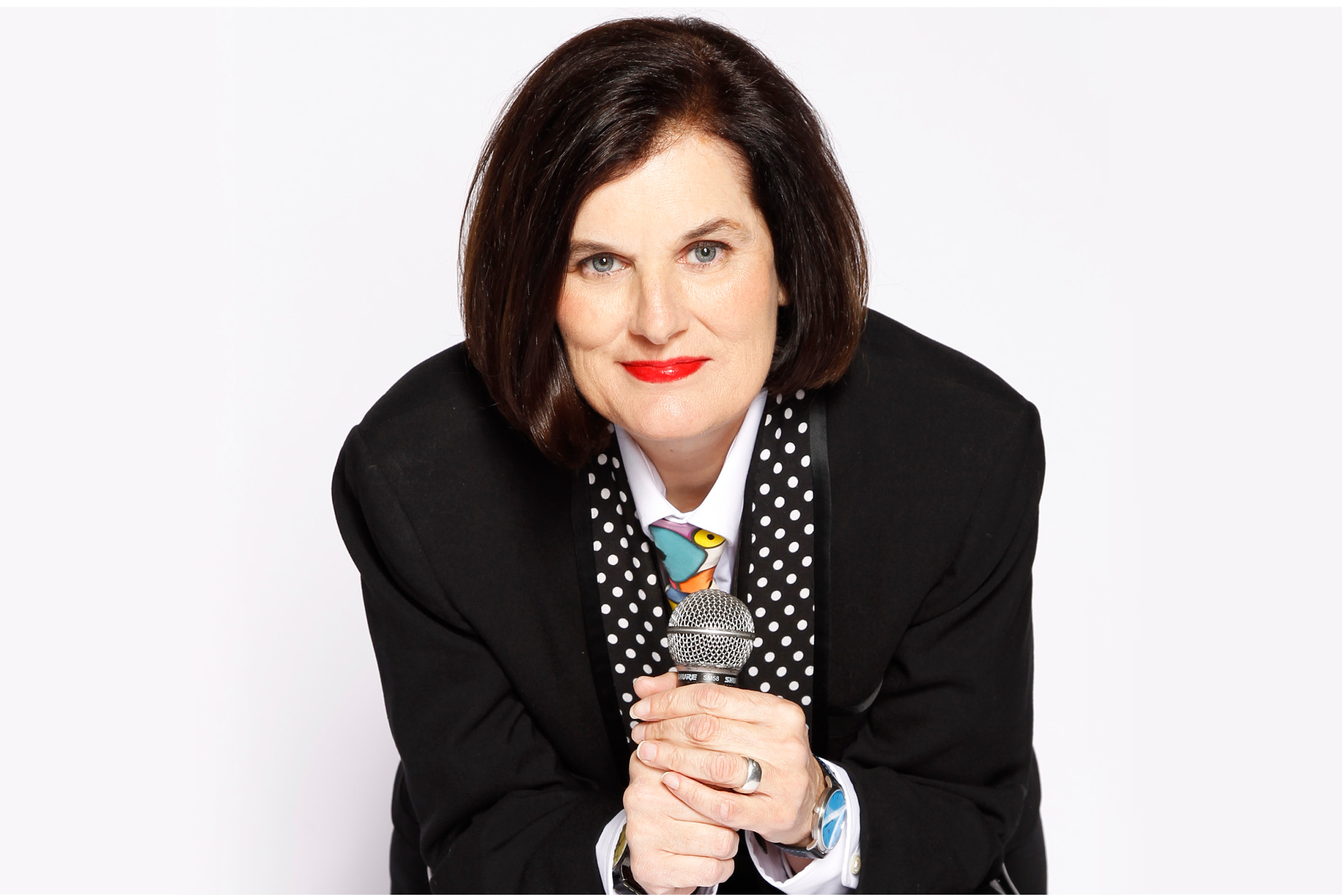
Paula Poundstone, known for her sharp wit, observational humor, and off-the-cuff comedic style, is returning to Fort Lauderdale on May 8, 2025 for a night of laughs at The Parker. Ahead of her show, OutClique Magazine caught up with Paula to talk about her comedy, her upcoming performance, and her unique approach to life and laughter.
- Paula, you’re known for your spontaneous and observational humor. What can fans expect from your show at The Parker?
“Well, I don’t have a set routine. I talk about what’s going on in my life, so I guess that means it’s a little different every time. I talk about things like my house full of animals, the mess we’re in as a country, and just life in general. I really enjoy talking to the audience, too. I ask them where they’re from and what they do for a living, and from that, little biographies emerge that I can play off of. I try to create a unique experience for each show, and I’d say probably about a third of it is unscripted, just based on what happens in the moment. I talk a lot about the mess we’re in as a country, but I’m not a political analyst. I’m just a regular person trying to get by like everyone else.”
- You’ve also been hosting the podcast Nobody Listens to Paula Poundstone. How does it differ from your live stand-up, and do the two projects feed off each other?
“The podcast is definitely a different practice. When I started doing it, I never would’ve had the nerve to do characters or voices like I do on the podcast. But there’s something about not having the audience in front of you—it’s a little disconcerting because you don’t know what lands and what doesn’t. But it also makes me more adventurous. I think the podcast has made me more willing to try things that I wouldn’t on stage. It’s a double-edged sword, though, because while I’m working hard on it, it also takes up a lot of time. The upside is that during the stay-at-home order, the podcast became a highlight of my week. Even though it’s a lot of work, I get to laugh with the other people involved, and I think that comes through to the audience.”
- Over the years, you’ve certainly built an impressive career. How has your approach to comedy evolved? Or do you feel like you’re still the same comedian you were when you started?
“I think I’m the same, really. When I started in 1979, I lived in a rooming house in Boston, and I didn’t have much. I was just trying to get by, but I’ve always loved comedy. I would take notes about things I thought were funny, and I still do the same thing now. I wear a pen clipped to my belt loop and carry a small notebook with me to write down jokes as they come to me. So the process hasn’t changed much. I just think I’ve grown more comfortable and confident as a performer, but I still operate the same way—by capturing ideas as they come.”
- You’ve also written books, including The Totally Unscientific Study of the Search for Human Happiness. How did the process of writing your books compare to the process of performing stand-up, and what does it show audiences about you that they might not get from your live shows?
“When I write something to be read, my goal is to make it sound as much like me as possible. I want the same conversational tone as I use in my stand-up. Writing is a different kind of practice, though. It requires me to slow down and be more reflective. In my books, you get a more thought-out, nuanced side of me that you might not see in my live performances, where I’m more reactive to the audience and in the moment. The books definitely show a different side of my humor, and that’s something I really enjoy.”
- If you had to describe your show in three words, what would they be? What do you hope the audience takes away from it?
“In this together. I really hope people feel like they’re part of the show and not just watching it. The experience of being in the audience, being connected with each other, is something I want people to leave with. When I go on stage, I really try to bring everyone together and have fun with them.”
Author: Megan Fitzgerald, PhD, Associate Professor