By Charles Baran
In mid-August, the Florida Department of Transportation (FDOT) dropped a metaphorical bomb on counties across the state. A new directive demanded the removal, within fourteen days, of all street art and markings from roads and crosswalks that FDOT deems out of compliance with state statute—whether on state or city roads. It’s no secret the FDOT is acting under the direct orders of Governor Ron DeSantis. His name even appeared in the letterhead of an internal FDOT memo dated June 30, 2025, that seems to have set this in motion.
In Fort Lauderdale, FDOT’s August 21 letter targeted four specific locations: Sebastian Street at SR A1A, Breakers Avenue at Riomar Street, Breakers Avenue at Terramar Street, and East Las Olas Avenue at Almond Avenue. Mayor Dean Trantalis convened a special City Commission meeting on August 27 to review the directive and hear public comments.
Trantalis reminded attendees that these installations were not random acts of painting. They had existed for years and were completed with proper procedures and county notifications. “It wasn’t like we went out willy-nilly and started painting things up,” he said.
FDOT is labeling the directive a “public safety” issue. But at the meeting, Milos Majstorovic, the city’s Director of Transportation and Mobility, confirmed there have been no major accidents at the locations since the art was installed. Commissioner Steven Glassman pointed to the national Asphalt Art Safety Study by Bloomberg Philanthropies, which found accident rates drop when markings are present. Two Fort Lauderdale streets—Terramar and Riomar—were even included in the study.
City Attorney Paul Bangel clarified that FDOT only has jurisdiction over “traffic control devices” that do not conform to standards. Whether colorful crosswalks qualify remains in question. The rainbow flag painted on Sebastian Street, for example, is not in a crosswalk at all but on a small side street near the beach.
Federal opposition isn’t new. Since 2011, the U.S. government has discouraged crosswalk art, arguing—without data—that bright colors create a false sense of security for pedestrians. This directly contradicts Bloomberg’s findings. U.S. Transportation Secretary Sean Duffy took it further, saying, “Taxpayers expect their dollars to fund safe streets, not rainbow crosswalks.” Critics argue this is part of a broader effort to erase LGBTQ+ and minority visibility.
The FDOT memo also suggested the policy is tied to automated vehicles: “Uniform and consistent application of pavement surface markings is critical for the overall effectiveness of automated vehicle operation.” But as many pointed out, vehicle technology could easily be programmed to navigate colorful markings.
Regardless of the reasoning, DeSantis is not backing down. “Regardless, whatever the policy was then, it’s not the policy now,” he said. Trantalis called the policy “draconian.”
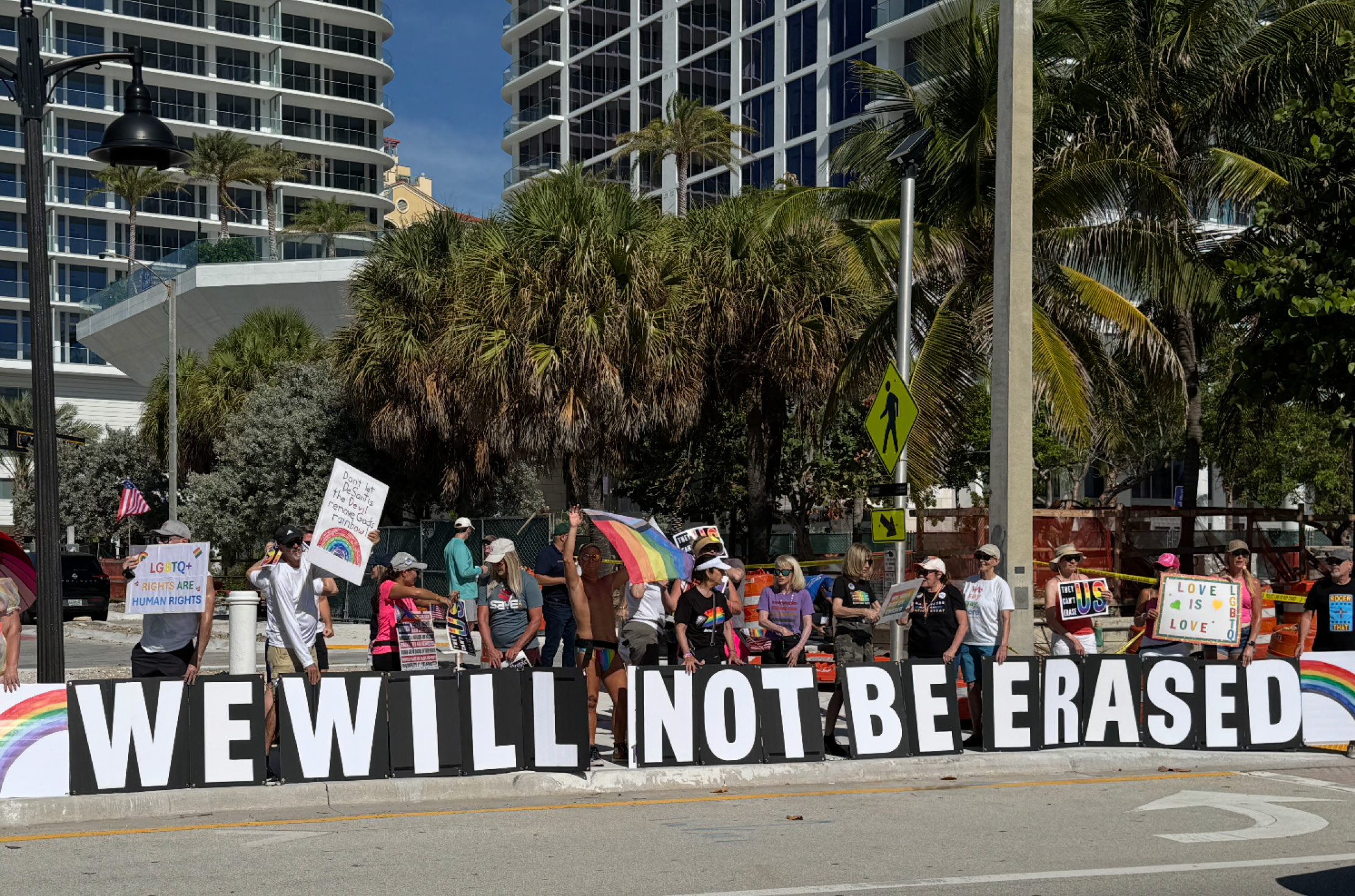
The commission then opened the floor to the public. Speaker after speaker voiced strong opposition to FDOT’s order.
Troy Liggett, president of the Middle River Terrace Neighborhood Association, said residents he spoke with were outraged. “It’s hateful, and it’s hurtful,” he said, urging the city to pursue every legal avenue.
Fred Fejes, FAU professor and LGBTQ activist, stressed that this is not simply about paint. “It’s a matter of visibility and affirmation of the LGBTQ community. Not only here in Fort Lauderdale, but in our society in general.”
Father Rich Vitale of Holy Angels National Catholic Church, whose congregation is largely LGBTQ, spoke to safety beyond traffic concerns. “They came to Fort Lauderdale because they knew they could be themselves with pride. That is what this rainbow crosswalk means. It means when you come to our community, you are safe.”
Fort Lauderdale resident Kate Driscoll delivered one of the most impassioned statements. “We all know that it isn’t about crosswalks. This is about groups of people who over the years have been bullied, disenfranchised, discriminated against, beaten, and even killed. The Pulse crosswalk in Orlando was not just a crosswalk; it was a memorial. Forty-nine people lost their lives because of hate.” She added that marginalized communities have always had to fight for rights. “So, if we want to paint a crosswalk, wear a button, or put up a monument, and it offends fragile egos, that’s too bad—we’re not going away. They may have started this fight, but we are all together now, and we are determined to finish it.” Her words drew thunderous applause.
Not all agreed. Resident Lester Zalewski said the art had deteriorated and become unsightly. “Due to hot and cold weather, they are now all cracked up. They are no longer items of value.” His comments, however, missed the broader point.
Alfredo Olvera, President of the Dolphin Democrats and a State Committee Man for the Florida Democratic Party, framed the directive as part of a larger Republican strategy. “This is a slippery slope. Republicans start testing things to see how far they can get. People didn’t believe Roe v. Wade could be overturned, and here we are. Then it was books. Books kids have been reading for decades suddenly banned because narrowminded people said they were bad. We have to fight.”
Olvera questioned the real motives: “Are painted crosswalks a real threat to safety, or is this about appeasing car manufacturers? I don’t know. Follow the money.”
He also urged action, noting the Republican super-majority in Florida’s legislature. Of 40 state senators, only 10 are Democrats. “The upcoming midterms are a chance to change that,” Olvera said, pointing to potential flips in Broward County, including Jason Pizzo’s Senate seat and District 101, where Hillary Cassel switched from Democrat to Republican.
Olvera’s closing remarks were blunt: “If you are going to vote Republican, you know what you voted for. Don’t come back later and say you didn’t know. And if you don’t vote, you are giving up your power.” He reminded residents that in 2018 DeSantis won by only 33,000 votes. “If one more Democrat in every precinct had voted, he wouldn’t be governor.”
Finally, he stressed the importance of mail-in ballots. “Over 80% of people who request a ballot, vote. But every two years you must reapply. The ballot comes about thirty days before the election. Educate yourself about the candidates. Staying home, doing nothing, waiting for change—it won’t happen.”