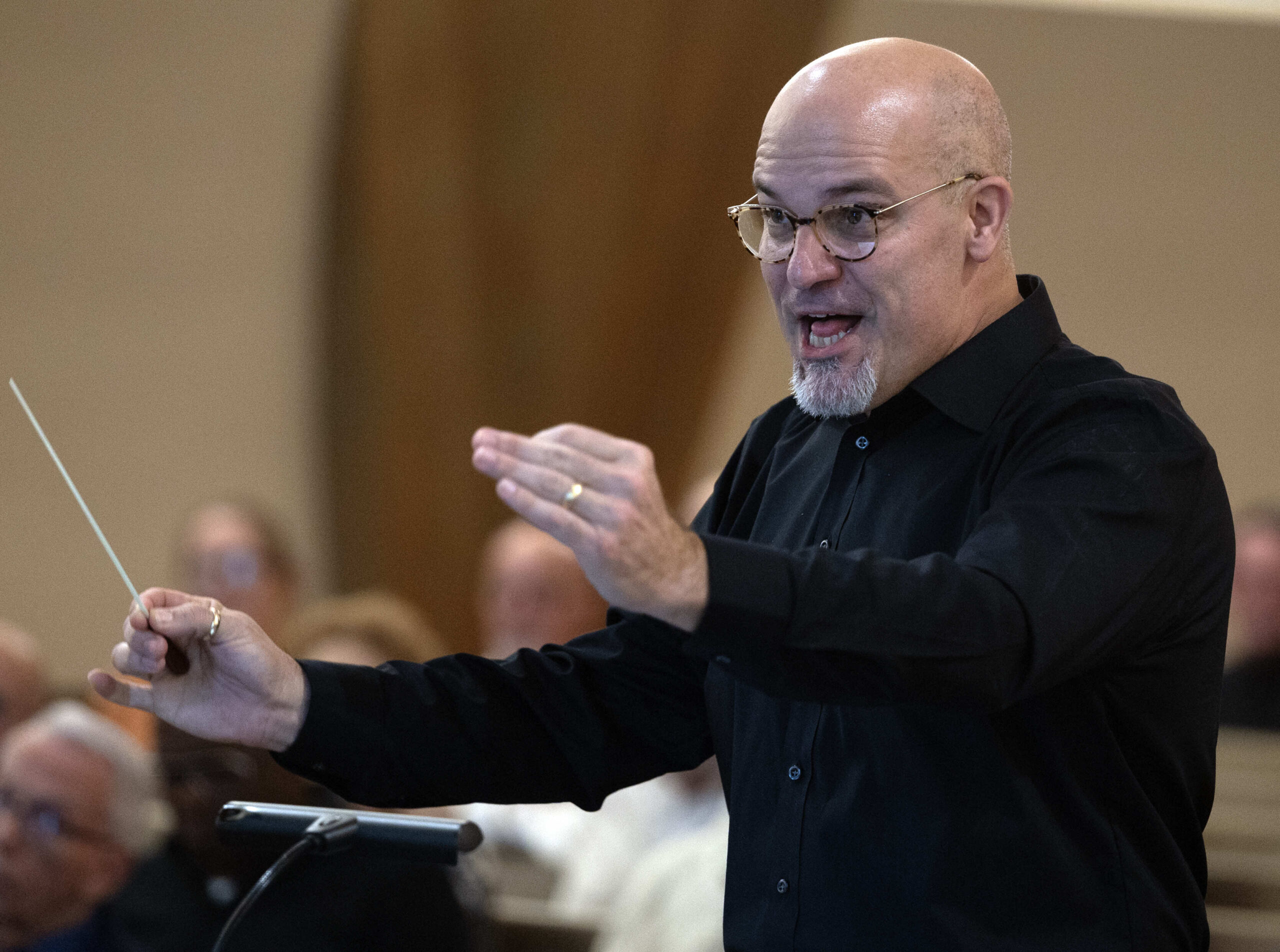
As the Gay Men’s Chorus of South Florida prepares to take the stage for ABBA: Thank You For The Music on March 20, 2026, at The Parker in Fort Lauderdale and ABBA: Mamma Mia, Here We Go Again on March 22, 2026 at Sunshine Cathedral, assistant conductor Anthony Cabrera will step in to lead the performance. In this Q&A, Cabrera reflects on his musical background, his work with LGBTQ+ choral organizations and what lies ahead for the chorus this season.
Can you share some of your musical background and describe how you became interested in conducting?
Music has been part of my life since childhood. My mother often tells the story of my sitting up in my bed, in my sleep, and conducting. The very real experiences at the podium began in high school, when I was the student conductor of the symphonic band.
You work full time as a teacher while maintaining an active conducting career. How do those two roles inform and support each other?
Ultimately, it is all teaching. It is all creativity. It is all inspiring people to perform, whether musically or academically. Both require a deep understanding of people — how they absorb and interpret information — and how to get the best out of them to reach the desired goal one has in mind.
How did you first get involved with the Chorus?
I actually have a long history with GMCSF. When the organization was first formed, as the conductor of another GALA chorus, I wanted to be sure that those involved knew they had the full support of their extended music community. I reached out to Bill Spinoza and let him know, in no uncertain terms, that I would be there to help support the growth of the organization in whatever capacity he needed — mostly sheet music at the time.
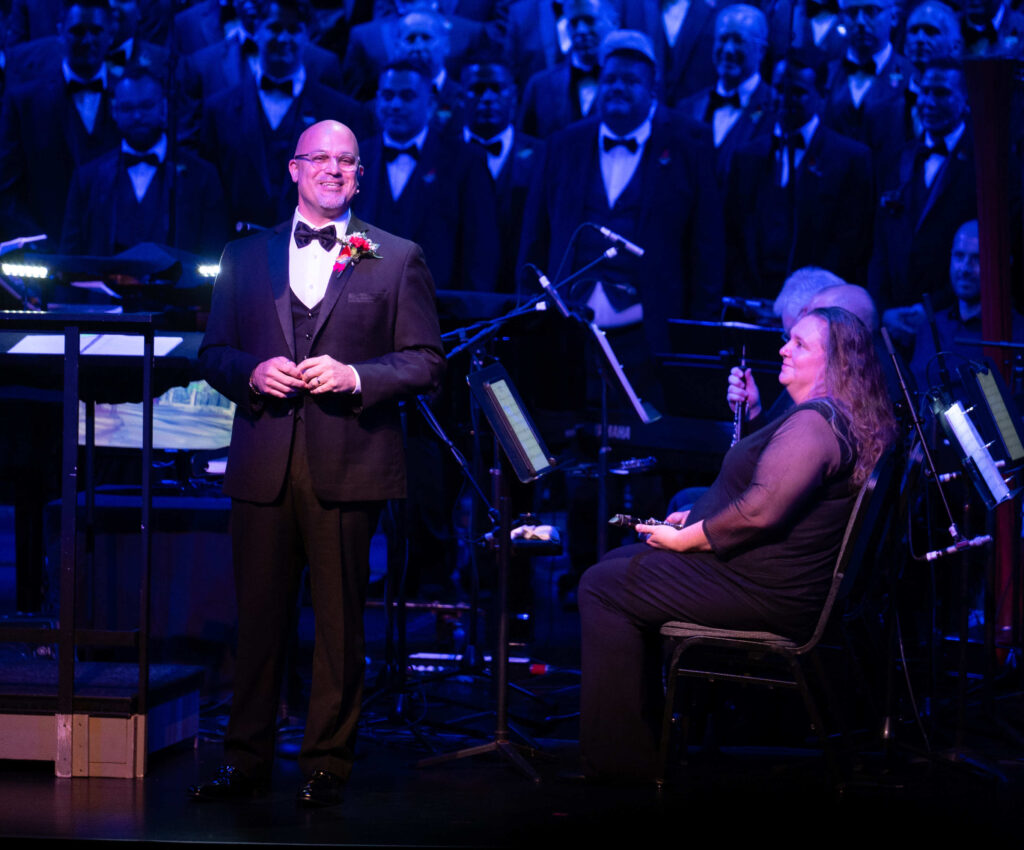
Over time, GMCSF and the Miami Gay Men’s Chorus, for which I was the artistic director for 14 years, collaborated on several concerts — local choral festivals and, finally, a full concert performed in Broward and Miami-Dade called UpRiseSing! (2019). Fast forward to 2023, and I was thrilled to be hired as the assistant conductor of what had become, by then, one of the premier and largest LGBTQ+ choruses in the Southeast.
What has working with LGBTQ+ choral organizations meant to you, both personally and artistically?
It is work with a very specific mission. At the heart of LGBTQ+ choral organizations is not only the building of community that provides support and sustenance — particularly in times of uncertainty and, quite frankly, fear — but also the development of chosen family, the maintenance of shared history and a very loud voice for advocacy and protest.
I have sat, for the better part of seven years now, on the New Harmony Taskforce of GALA Choruses. With that group, I have worked to develop resources — now two published workbooks — that strengthen the internal fabric of choral organizations, enabling them to be effective voices for the LGBTQ+ community in their own cities and towns. I love that I get to be a part of all of that. I love that I get to make music to make it happen.
You have been conducting Tropical Wave for the past five years. How did that opportunity come about?
Working with Tropical Wave is part of my responsibility as the assistant conductor. I initially applied for the artistic director position and didn’t get it. Truth be told, that was a blessing. So I called the office and said I was aware that the chorus was also looking for an assistant conductor and that I would be more than happy to cross the Miami-Dade/Broward line to work for the chorus in that capacity — and here we are.
What have been some particularly meaningful or memorable moments during your time leading Tropical Wave?
A couple of years back, we did a concert centered on sacred music and spirituality. The programming was really about reappropriating what, for so many in our community, is a very sore spot. Having grown up in churches, being people of faith, many of us have been turned away from the very institutions whose teachings we hoped to live out.
The music reflected a feeling that even if the institutions have failed us and told us we should have no part in faith and spirituality, these things belong to each of us as individuals and cannot be taken away. For some, that concert was cathartic. This was a concert that, as a result of conversations afterward, made a difference.
You will be conducting the upcoming ABBA concert. What excites you most about this program?
I am just excited to get this program on stage. For every choral organization, some concerts include the familiar and unfamiliar, and sometimes the audience may walk away with a “meh”: that was a nice song, but there is no connection. There is no way this could happen at this concert.
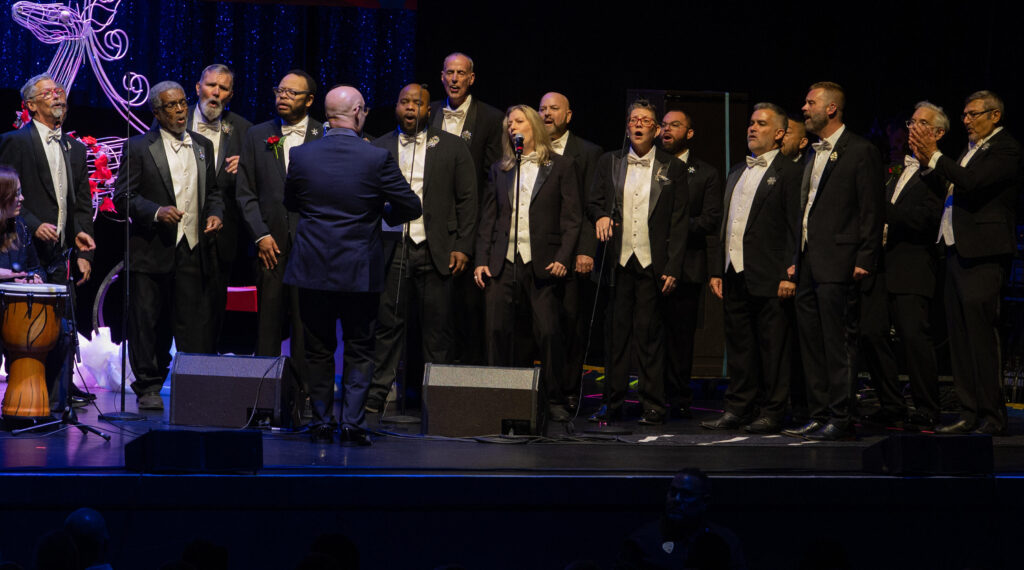
Every song triggers a memory, a feeling, a desire to move. Everyone who attends this concert will have had an experience with an ABBA song, whether it was actually watching Eurovision in 1974 when they introduced the world to “Waterloo,” dancing at the discos in the ’80s or, for a younger generation, through the musical Mamma Mia! To assess the impact of this music, all one has to do is attend a wedding — gay or straight — and watch everyone scream their way to the dance floor for “Dancing Queen.”
Is there an ABBA song or musical moment in the concert that you are especially looking forward to conducting?
I hope I can conduct instead of dancing. This is becoming a greater challenge as the rehearsal process moves on and the pieces begin to come together.
The upcoming Pride concert is titled Invincible. What does that theme represent to you in the context of music and community?
This theme speaks to resilience. While, as individuals, some of us may be more or less resilient — and in some cases some have not been at all — as a community, we are just that: resilient.
At the center of this concert is a work commissioned by GMCSF to commemorate the 10th anniversary of the Pulse massacre. This was a seminal moment in our LGBTQ+ history. As such, GMCSF has chosen to commission a work not only to honor those lost but also to make it very clear that our community will continue to move forward and do so in unity.
Looking ahead, what are you most excited about as the chorus moves into the rest of the season, including the Pride concert?
We are making excellent music. Whether it is ABBA, the jazz concert Tropical Wave will offer in May, Invincible or the number of community outreach presentations, professional sports game national anthems or celebrations of life — whatever comes our way in the next few months, we are making excellent music, and we are doing it together.
March 20, 2026