By Savannah Whaley
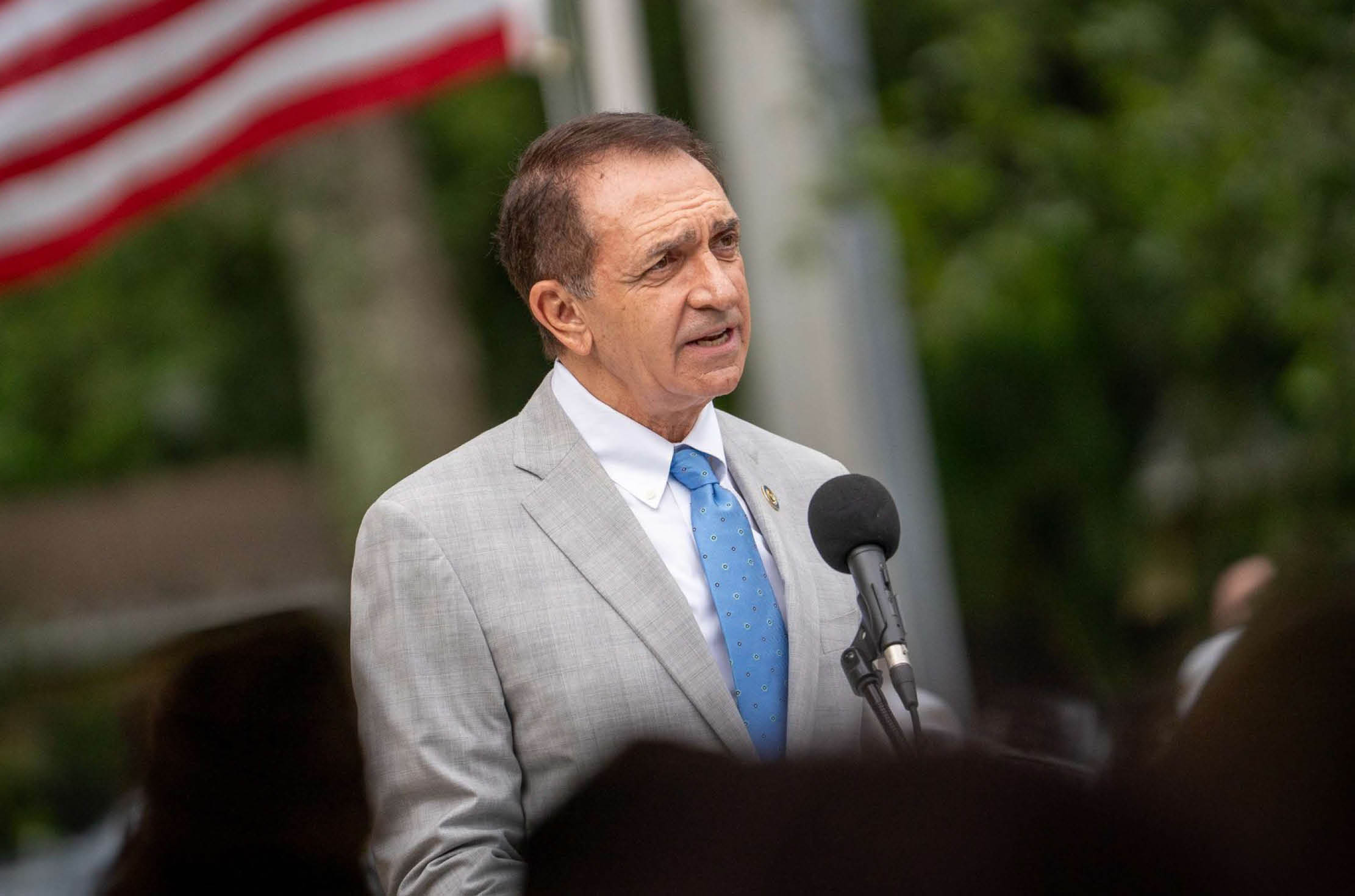
Dean Trantalis is a bodybuilder – a body politic builder creating coalitions and partnerships. After serving on the Fort Lauderdale Commission for eight years, he won election as mayor in 2018 with the largest victory for a first-term mayoral candidate in the city’s history. That was followed by the largest turnout in a city race for his re-election in 2020. Elected for his third and final four-year term in 2024, he continues to build community in actions that reverberate far beyond the city limits such as his longstanding advocacy for LGBTQA+ rights.
“Fort Lauderdale is branded as being a city of diversity where people, no matter who you are, where you come from, what you believe in, the color of your skin, or whatever your interest in life is, there’s a place for you here,” Mayor Trantalis said. “That’s the kind of city that we seek to nurture and the decisions that we make will always focus on hoping to achieve that result.”
The mayor was preparing for the State of the City address he would give in September when he sat down to discuss what’s ahead for the city.
“This past year we had seen quite a bit of change as part of the renaissance that we’re experiencing here in Fort Lauderdale,” Trantalis noted. “Since I became mayor almost eight years ago, we’ve seen dramatic developments in terms of new housing, new affordable housing, and wonderful new amenities to improve the urban experience here in our downtown. We’ve seen a significant amount of investment in our infrastructure. Our mandate has been to manage growth without destroying the quality of life that people have already come here to experience.”
Accomplishments Trantalis can point to since becoming mayor include the transformation of now a thriving downtown, the safeguarding of the city’s neighborhoods, creation of major public amenities, and upgrades to the city infrastructure.
“This next year we have a couple of things that are front burner items,” the mayor detailed. “We had already been contemplating building a new city hall and Mother Nature kind of made that decision for us by destroying the electrical, HVAC, and computer systems so that everything was inactivated as a result of the flood. We tore down the old city hall and the commission now has to decide two things. One, where it wants to locate the future city hall. Two, we now have six proposals that have been submitted to the city as what we call unsolicited proposals. Hopefully in October, we will make a decision to go forward with one of them.”
The coming year will see the completion of a water treatment plant to furnish abundant, clear water and the new public safety building for the police. The city will be building underground storm water systems to help drain neighborhoods of excessive rain and rebuilding sewer pipelines. While infrastructure is important, other enhancements to life in the city will be more visible.
“The Orange Bowl committee has contributed and collaborated with the City of Fort Lauderdale to enhance the tennis facilities at Holiday Park. The Jimmy Everett Tennis Center will now have stadium seating for competition play and also improve many of the clay and hard courts that are there. The school board and the city have agreed to collaborate on certain projects such as sports facilities, playgrounds, and athletic fields that are located on school property. The city is going to work with the school board to enhance those properties and make them more available to the communities where they are located.”
The city also must confront challenges from outside forces such as the state legislature’s Live Local Act that overrides neighborhood zoning ordinances and the Governor’s controversial order to destroy any street art.
“That whole issue regarding traffic control devices and using that to destroy the representation of the LGBT community in various cities is a signal to the rest of us that this is just the beginning of trying to take away home rule,” Trantalis said. “It’s an egregious overstepping of governmental authority. This idea of painting over rainbow sidewalks is more symbolic than real, yet they continue to use it with a vengeance as a political ploy.”
The mayor and the city are fighting to keep Fort Lauderdale’s rainbow street crossings and he encourages others to get and stay engaged.
“I’m proud of the people that go out and demonstrate on weekends to have their voices heard, but in addition to that, they can vote,” Trantalis stressed. “They have to be aware that city government has more of an impact on their day-to-day life than congress or senators or the President. We have a Neighbor Leadership Academy that we invite residents to participate in and get to know the various departments and the workings of the city. We have approximately two dozen advisory boards in everything from community appearance, to planning and zoning, to parks and rec. It’s a platform on which they can have a voice in the decision-making of the city.”
Trantalis’ career is itself a case study. Admitted to the Connecticut and Florida Bar Associations in 1980, he has practiced law in Broward County since 1982 and became involved in a 1990 county-wide referendum to add sexual orientation as a protected class.
“I participated sort of as a minor volunteer at that time,” the mayor recalled. “Unfortunately, the measure was defeated 60 – 40 but the committee itself did not disperse. Between 1990 and ’95, I became more active in that effort and, in fact, I helped lead the effort. In June of 1995, the Broward County Commission voted six to one to add sexual orientation as a protected class. In 1999, we were able to get a domestic partnership ordinance passed. We were the first in 1995 and we were the first in 1999 of any county to be able to secure those rights.”
That experience fueled Trantalis’ interest in politics and after serving two terms as president of the Dolphin Democrats club he ran for the Fort Lauderdale City Commission. Among his many honors are being an inaugural honoree of the Diversity Honors award presented by the Harvey Milk Foundation and, later, being recognized by that Foundation and the Pride Center at Equality Park with a lifetime achievement award.
“The LGBT community has evolved over the years from a bunch of fractious cohorts to where we’ve matured and we find ourselves working together,” Trantalis said. “We see today a community that has come together and is strong together. Other communities should look to Fort Lauderdale as an example of how to achieve social change, political change, and economic changes through collaboration and partnership. We’re a great success story in that regard.”