By Charles Baran
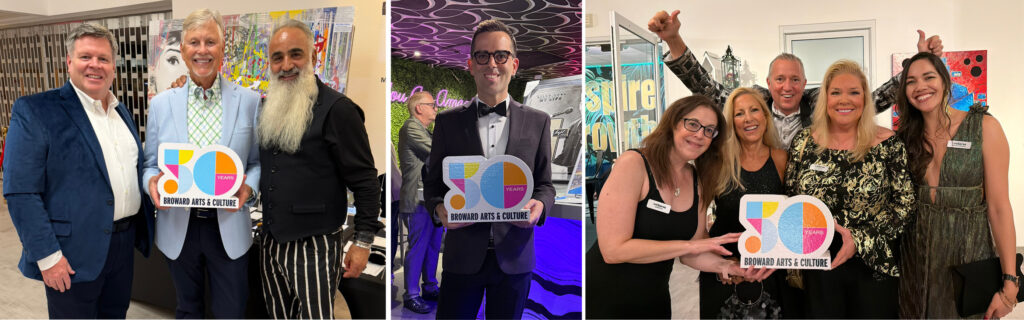
One of the joys of living in South Florida is having a plethora of vibrant arts organizations. We have everything right in our own backyard, from innovative theater to superb concert programming filling our halls with classical masterpieces and improvisational jazz. On top of all that we have dozens of experimental and fine art galleries that feature artists of all types; painters, photographers, and sculptors. Underpinning all this creativity is an exemplary organization that has served the arts and cultural community since 1976, the Broward County Cultural Division. In simple terms, the Broward County Cultural Division, which celebrates its 50th anniversary this year, plays a necessary role in ensuring that the multitude of county-wide arts organizations, and many individual artists, remain financially solvent and strong.
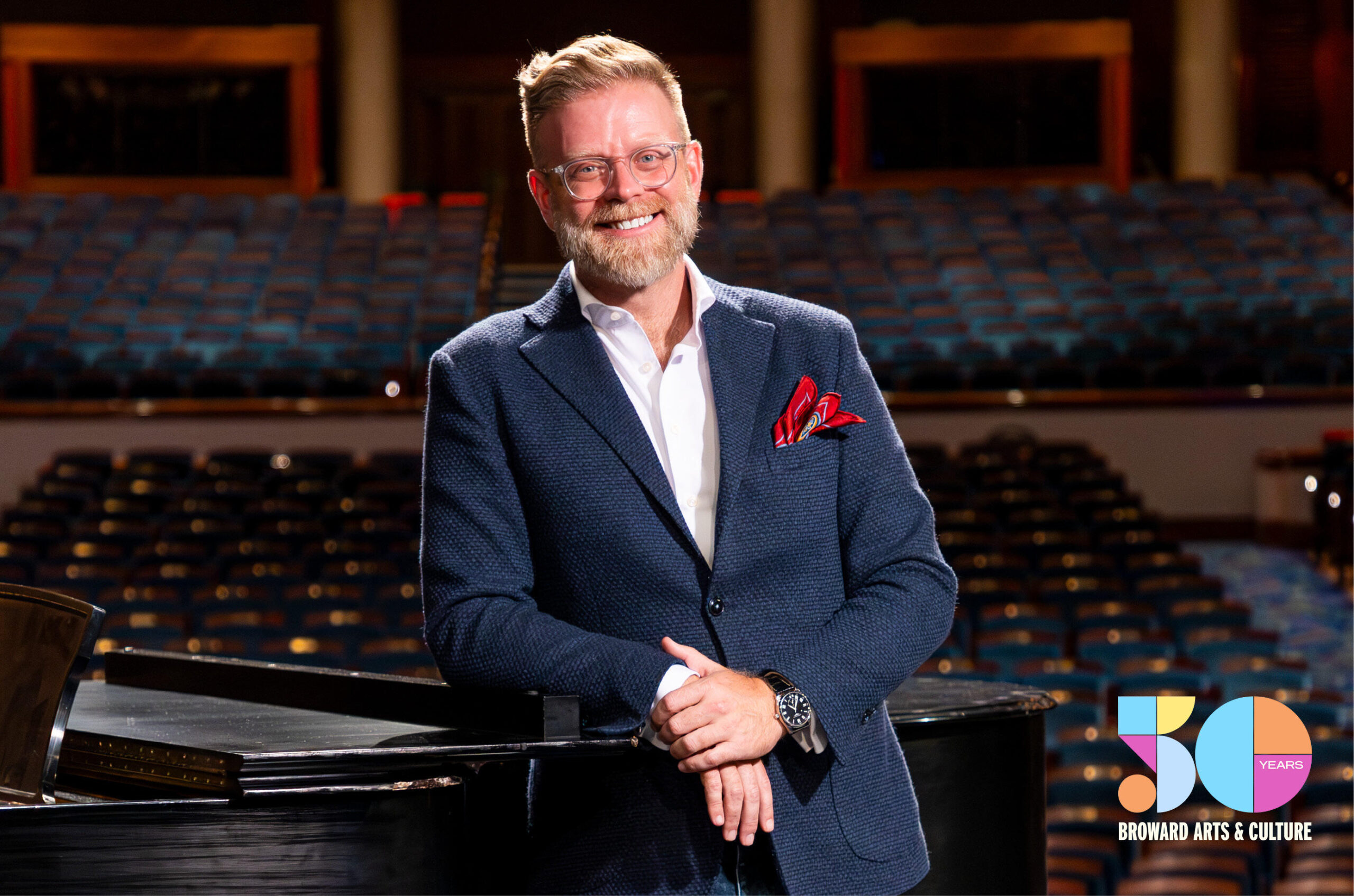
For the past seven years, director Phillip Dunlap has done an outstanding job leading this valuable community resource through everything from budget cuts to a global pandemic. Dunlap is no stranger to the arts. In fact, he’s spent his entire life either in front of an audience as a musician or behind the scenes advocating for the valued arts programming we enjoy season after season. I recently spoke with this passionate community-focused leader about the highlights and future of goals of this stalwart organization.
Charles Baran: Where are you from originally?
Phillip Dunlap: I came here seven years ago from St. Louis, Missouri. I was the Director of Education and Community Engagement for Jazz St. Louis. My position at the Broward County Cultural Division has gotten me into the other side of things, the side that deals with the policy that impacts the organizations I worked at and awards grants that previously I was applying for. And of course, the Florida weather doesn’t hurt either!
Charles Baran: What are the big changes that have taken place during the seven years you’ve served as director?
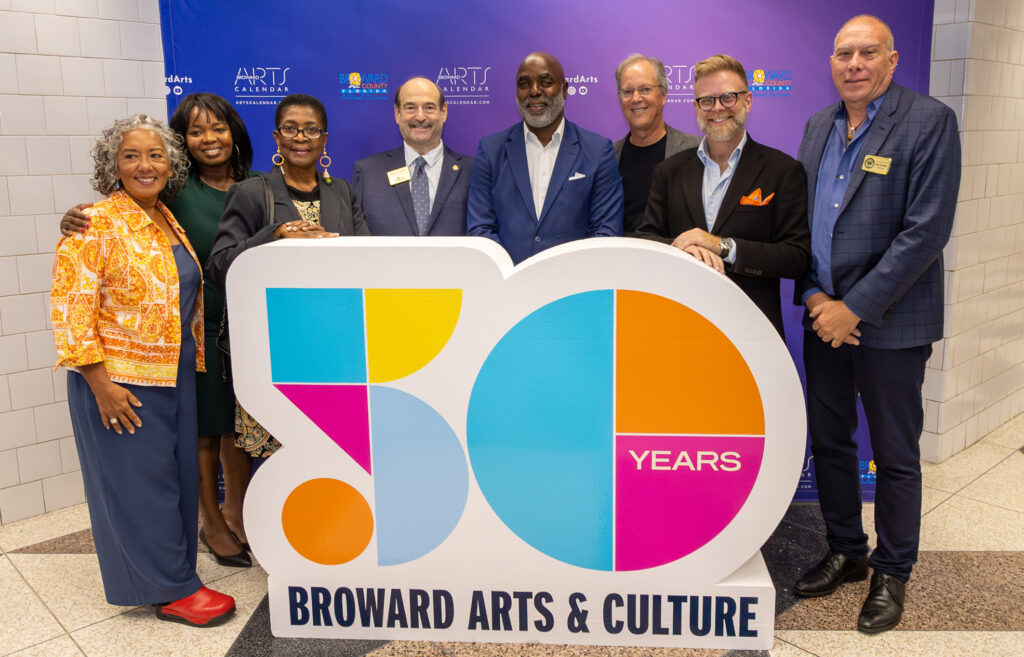
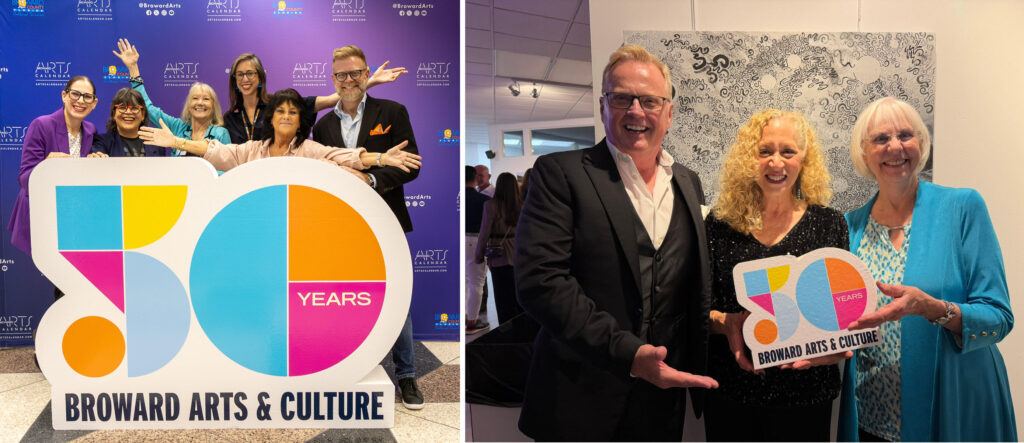
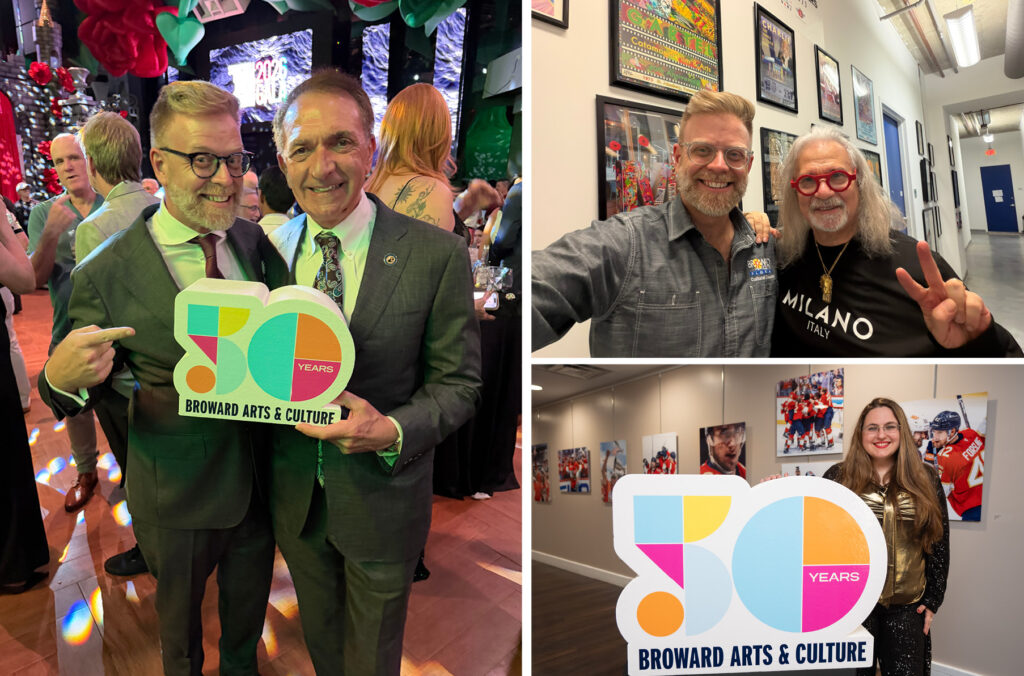
Phillip Dunlap: Well, a couple of the things we’ve been trying to do is be a strong leader in the community, the broader Broward community, whether it’s the residents, or the businesses. I do think the community sees the strong leadership coming from the division. And that’s where our 50th anniversary comes in, serving as a rallying point to celebrate the past 50 years but also looking toward the future.
Charles Baran: Broward County is pretty big. Do you find that the arts and cultural organizations are condensed into this pocket of Fort Lauderdale?
Phillip Dunlap: We cover the entire county. We not only think regionally as in throughout the county itself, but wider. I just had a meeting today with the South Florida Cultural Consortium, which is a partnership between Dade County, Broward County, Palm Beach County, Martin and Monroe Counties. As local arts agencies, we think collectively. But, at the Broward County Cultural Division, we really try to provide our services throughout the entire county. There are 31 cities in Broward County and each city is different. Some cities have a lot of arts and culture and in some cities it’s much more under the surface. There might not be a performing arts center in a certain Broward County city, but that doesn’t mean there aren’t artists that live there. And that doesn’t mean that there aren’t people living in that city that value arts and culture. So, we really have to think about how we reach everybody, whether it’s Margate or Miramar or Fort Lauderdale.
Charles Baran: Let’s talk about public artwork, putting beautiful objects and statues in public parks around the county. That falls under your jurisdiction as well, right?
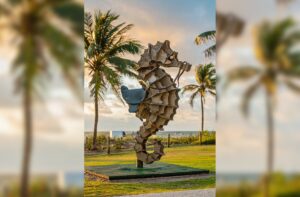
Phillip Dunlap: Correct. Yes, we have a public art program, and actually, the Broward County Cultural Division, as we know it today, was really started out of a public art program created in 1976. Around that time nationally, there was a big push to create these programs with a percentage of budgets for public art.
Charles Baran: There’s a statue that I love in Wilton Manners, it’s that big bunny…
Phillip Dunlap: The Thunder Bunny!
Charles Baran: Was that something that fell under your domain, getting that fabulous statue put there?
Phillip Dunlap: Not really, but long story short, the artist, Hunt Slonem is represented by New River Fine Art, which is down on Las Olas, and they had reached out to us about whether we had any interest in putting it anywhere. We didn’t really have anywhere to put it, from a county standpoint, but we thought, oh, this would look good in Wilton Manors. So, we connected them with the city. And the city worked and coordinated with the art gallery and then got the statue on loan. Then 10 days later, someone unfortunately drove a car into it. Now the city owns it. But what that really started was it set the stage for working with cities on creating public art programs. Wilton Manors was the second city that we worked with in Broward County to help devise and craft a public art ordinance. We did their public art master plan, which brought the community together and sort of looked at what are the community values with regard to art and culture and what’s their vision for public art in Wilton Manors. That was the jumping off point. We’ve also worked with Dania Beach and soon we’ll be working with the city of Hollywood on their public art master plan.
Charles Baran: Under your tenure as director what are you the proudest of?
Phillip Dunlap: There were a couple of things early on. I got here just about a year before COVID, and during COVID, we were successful in securing about $3,000,000 in emergency support funding for the cultural sector. That was a big accomplishment. Another thing that we did during COVID was a complete overhaul of our grant making programs. We really retooled the process, took a bureaucratic system and streamlined it. And we did it in a way that didn’t create more work that disincentivized participation. I’m really proud of that process.
Charles Baran: We have a lot of artists coming into Broward County every month. People are relocating here, artists of all types, photographers, painters. Many will read this article and will be interested in applying for a grant. What is the process?
Phillip Dunlap: We announce and release all of the grant deadlines and all the updated processes each year. The information can be found on our website, Broward.org/Arts/Funding. For organizations, the deadlines are typically in the February time frame. The application goes to a review panel that’s made up of art experts throughout the county. Panel members could be artists, people that work for arts organizations or it could be people that serve on boards of arts organizations. They read and score the applications. The next step is making a recommendation to the cultural council, and then, ultimately, the county administrator. Those that are approved become part of our annual budget. The artist grants have shorter deadlines. Those deadlines go throughout our fiscal years. So instead of having to apply a year in advance and then go through our budget process, we start with a chunk of money and run what we call “application cycles” until we run out of money. This allows for an artist to not have to navigate a deadline a year in advance. We know that artists, the nature of the work that they do, do not necessarily plan out a year in advance. We try to be equitable in our processes. We do application workshops that people can sign up for to learn about the process. I have a great grants team, Janet Ellison and Siri Larkins who are available via phone or email. If anyone has any questions, they can call and ask questions and learn about the process.
Charles Baran: Is there anything specifically you’d like to tell us about that’s coming up in the Broward County Arts and Culture scene in the next couple months?
Phillip Dunlap: We’re publishing a coffee table book celebrating 50 years of public art!
Charles Baran: Oh, fabulous.
Phillip Dunlap: It’s a retrospective, a history of the program and how public art has evolved in Broward County over the past 50 years. On September 24 at the Broward Center, we’ll be hosting a panel discussion and book launch. Then on October 4, also at the Broward Center we’ll have our second annual “Arts Launch Broward,” which is our official kickoff to the arts season. Many of the county’s arts organizations and artists will have tables throughout the Broward Center. The public is invited to spend the day and learn about all the great things that are happening. We will do pop-up performances in different parts of the Broward Center, so you can hear some great music and talk directly to the artists and arts organizations.
Charles Baran: How big is the Cultural Division? How many people are working there?
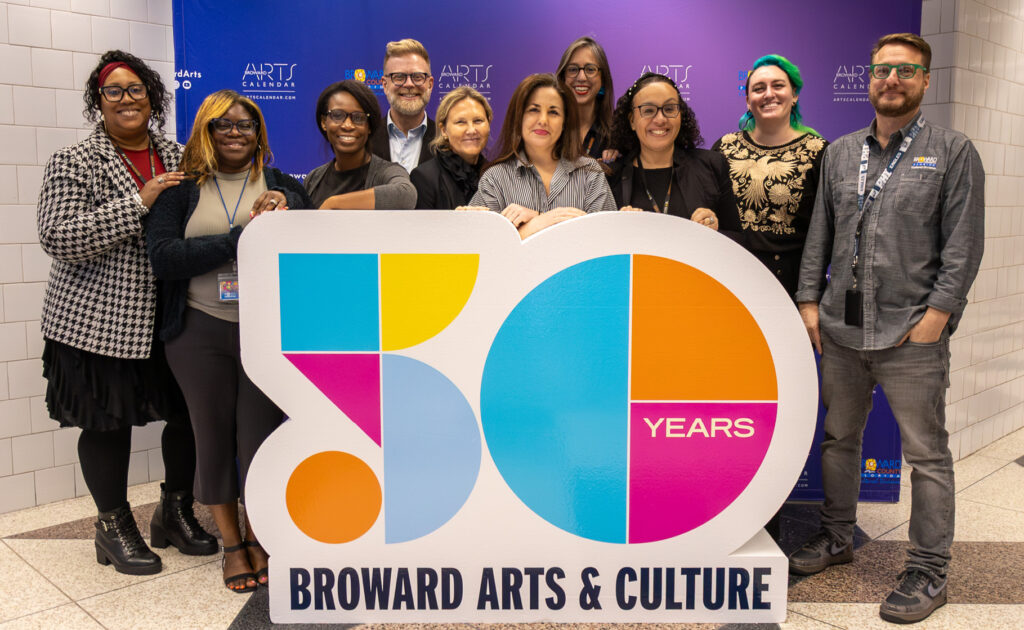
Phillip Dunlap: We have 16 full-time and 2 part-time staff members. We also have a 24-member advisory council. And we also have a Public Art & Design committee. We’re located on the 6th floor of the Broward Main Library downtown.
Charles Baran: What would you like to leave our readers with about the impact that the Broward County Cultural Division is making on the community?
Phillip Dunlap: How we are working to reposition arts and culture in Broward County. What the public sees and enjoys from our cultural sector are the performances, the activations, the artistic interventions. They’re seeing the end product of a lot of work. There is an entire ecosystem that supports the artists in our cultural organizations; stagehands, security guards, fundraisers, accountants, executive directors, box office staff, and ushers. When we see the end product, we get caught up in how it makes us feel, the spectacle of it. But we can’t lose sight of everything underneath of it that makes that work. There’s not generally an argument that we need to fund roads or bridges or water lines or those types of things. But when it comes to arts and culture, a lot of times we call it a luxury. The bottom line is, when a disaster hits and when communities change, what really helps communities recover are our shared rituals; our music, our dance, our arts and culture. It’s that collective action of those things that hold us together. And that’s infrastructure. It’s civic scaffolding. We really have to think about arts and culture in that way, as infrastructure, not as a luxury, but something that really holds us together as a community. That’s what we’re focused on. If we really want to create a sustainable cultural community, we have to look at the physical infrastructure that supports artists and cultural organizations and allows them to exist and do what they do.
Charles Baran: Thank you, Phil, for your time. It’s been great speaking with you.
Phillip Dunlap: Thank you, Charles!