in a Season Finale Full of Firsts
It’s not how you start, it’s how you finish, and the Gay Men’s Chorus of South Florida (GMCSF) crowns its 16th season this June with a spectacular finale that paves the way for an even more successful future.
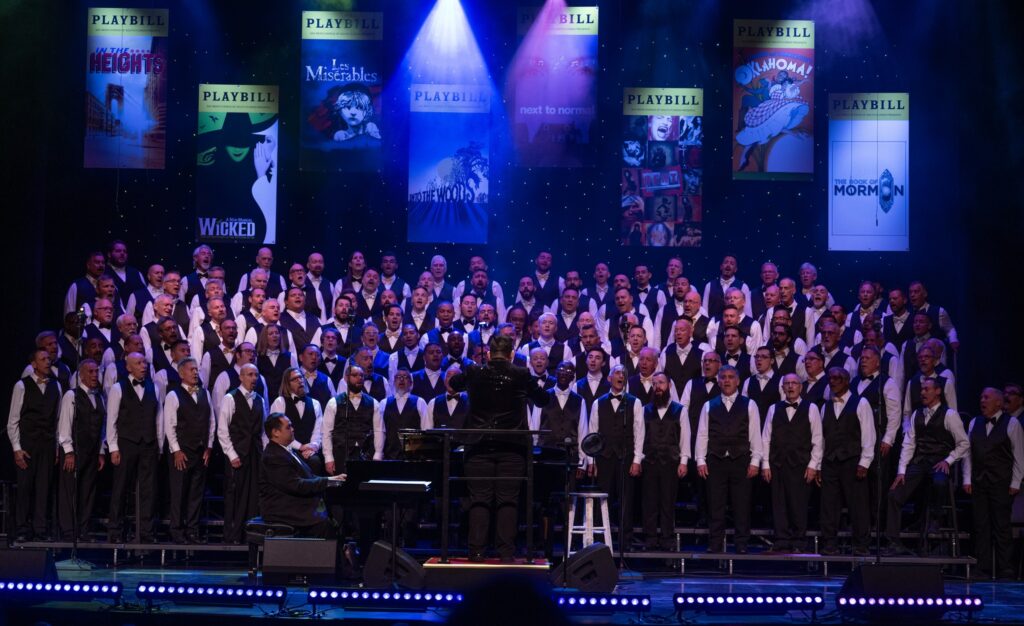
As the curtain rises on Invincible, the audience will be the first to hear a commissioned world premiere of inspiring strength by Saunder Choi: a tenth-year commemoration of the Pulse Nightclub tragedy in which a gunman killed 49 and wounded more than 60 at the LGBTQ+ club in Orlando.
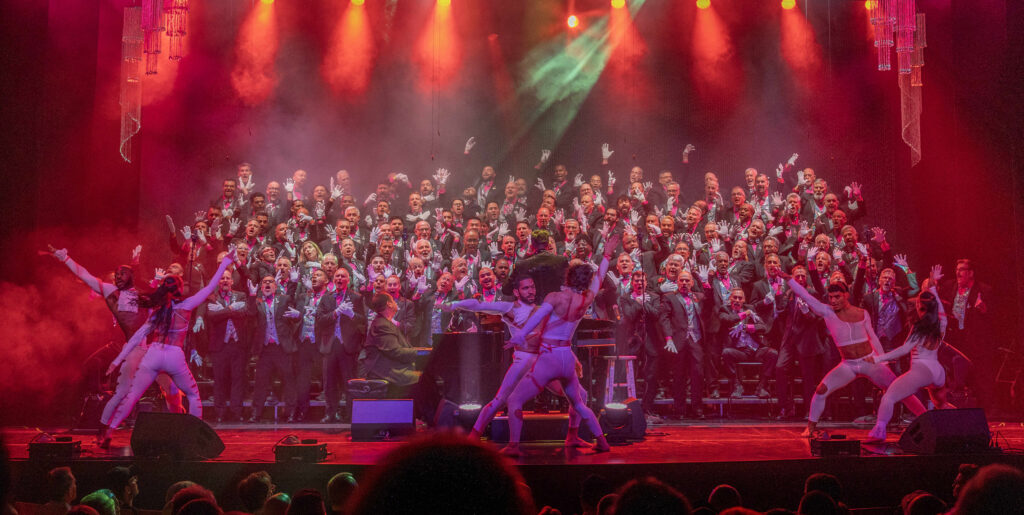
To pull off this ambitious finale, which also includes an uplifting Juneteenth shoutout and the Chorus’s signature slate of joyous pop hits, the ensemble will be joined for the first time by the Symphony of the Americas and gay choruses from Orlando, Tampa Bay and Miami, as well as Seraphic Fire soloists Elisse Albian and Enrico Lagasca.
An evening boasting nearly 200 voices and an orchestra demands the proper setting and GMCSF will make its debut in the large Au-Rene Theater at the Broward Center for the Performing Arts.
Resilience
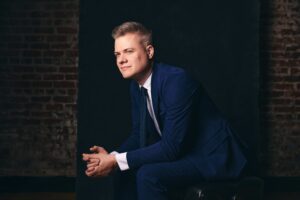
The finale’s themes of resilience, remembrance, and unity hold personal meaning for GMCSF Artistic Director Gabe Salazar. He will return to conducting the chorus after he was left with a paralyzed left arm following a planned surgery. Currently rehearsing with one hand, Salazar knows the power of what occurred on June 12, 2016.
“For me, it’s very special as I came out later in life on the day of Pulse,” Salazar revealed. “I was living in LA at the time and it was my very first Pride and my birthday. I remember waking up so excited about my birthday and being a gay man. Then the shootings happened and it just broke my heart. I was really nervous. It was my first time going to a Pride event and we decided to go out anyway. It was just the most incredible experience I’ve ever had. People were crying, people were holding each other, and just coming together as a community. It was a memory that I’ll always hold special to my heart.”
When someone mentioned that 2026 would mark 10 years since the Pulse tragedy, Salazar knew that it should be the basis for a long-form commissioned work, which the organization had been considering. He also knew who he wanted to compose it.
“Saunder is someone that I’ve known and we kind of ran around the same choral circles in Los Angeles,” he said. “Most composers are usually pianists or an instrumentalist first, and he’s a singer so he knows how to compose really well for choral singers. His works are just beautifully written and, having the music now, it was 100% the right choice. The chorus is already ready. They have bought in and they love it.”
Remembrance
Choi, who believes in music as advocacy, had previously composed an approximately eight-minute piece on Pulse and gun violence in America, “American Breakfast.”
“Gabe invited me to write the piece for this one and I thought that this would be the perfect time to write a requiem,” Choi recalled. “Art has the tendency to help us process trauma in a very healthy manner, but also it’s a time when queer stories are being actively erased by external forces, particularly the government. I’m very passionate about writing choral music for queer spaces, queer stories.”
Instead of composing a more traditional requiem set to the text of a mass for the dead, Choi used Johannes Brahms’ “Ein deutsches Requiem” as a blueprint for his “Amor Eterno: A Requiem for Pulse,” a work in seven movements.
“What makes Brahms’ Requiem different is that it decided to focus on the living,” Choi explained. “A lot of famous requiems start with Requiem Aeternam, eternal rest. But for this one, I thought a nice parallel would be with Amor Eterno, eternal love. Eternal rest, eternal love.”
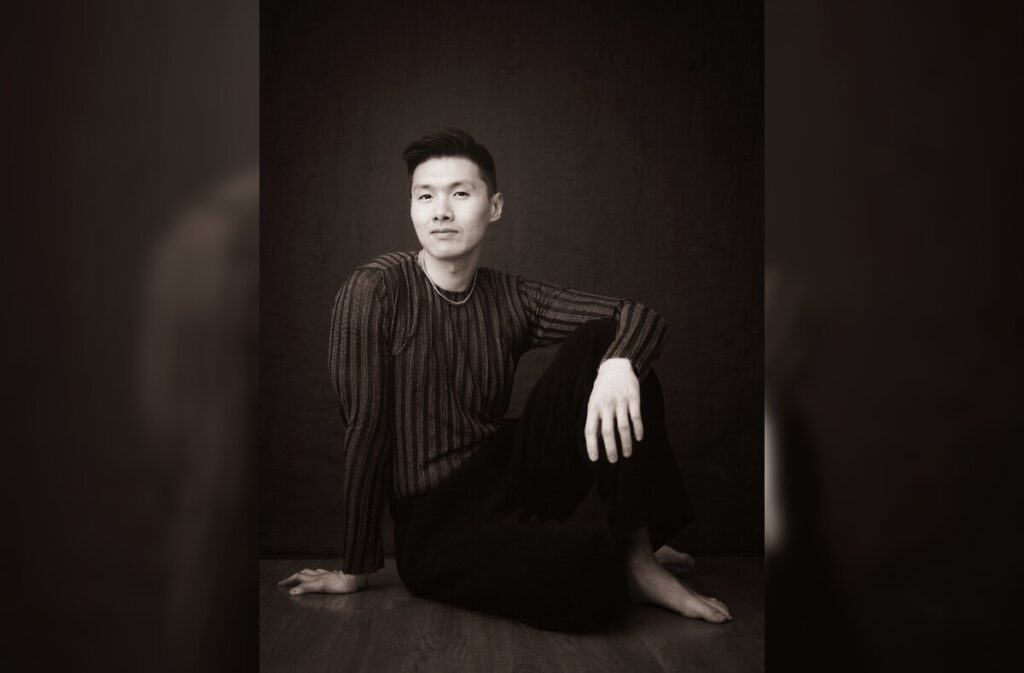
The words came before the music as Choi worked with well-known poets, writers and librettists Brian Sonia-Wallace, Amir Rabiyah, Leo Herrera, and Andrea Assaf. Choi created a Google doc for collaboration with the Brahms’ libretto for each of the seven movements, alongside bullet points of his own thoughts. The collaborators started their work by interviewing some of the victims’ parents.
“The mom of one of the victims kept repeating ‘grieve with love, not hate,’ and at the end of that Zoom call Andrea decided to include that in the libretto and it is the title of Movement V,” Choi shared. “There are other references in the libretto that I think are worth noting, particularly in Movement I of the libretto, Amor Eterno Inolvidable, Eternal Love Unforgettable. Leo decided to include that and eventually I decided to make it the title of the entire work.”
“Amor Eterno” is also the name of a hit for Mexican singer-songwriter Juan Gabriel, who enjoyed a gay following.
“Leo told me that song is the unofficial Mexican funeral song that’s played in a lot of funerals,” Choi said. “I thought that it would be meaningful to include that and have that be a title because of the heavy Latin population in Florida and that the night of the shooting was Latin Night in Pulse.”
The first part of the libretto Choi received was Rabiyah’s text for the third movement, which includes the lyrics “If we are stardust, are we not divine? This is what I sing to myself. Our time is as brief as a series of photos snapped by our blinking eyes.”
Choi recalled, “I received that text in July of last year just before I went on a trip to Fire Island. I actually wrote the first few notes of the Requiem in Fire Island and I’m kind of happy to have written the first thing in a historic gay place.”
Many works written for gay and lesbian choruses are rarely heard beyond those places where LGBTQ+ choruses perform. “Amor Eterno: A Requiem for Pulse” may become an exception.
“I’m a believer that choral music is a tool for communities to get together,” Choi stressed. “My intention for this piece is to shape that arc of grieving to comfort but tell it in a more universal way. Grief, comfort, love, loss, these are all universal aspects that we all share. Regardless of whether you’re part of the LGBTQ+ community or not, we all experience this.”
Unity
Fostering community is certainly a theme throughout the finale’s program that honors ongoing fights for freedom and equality.
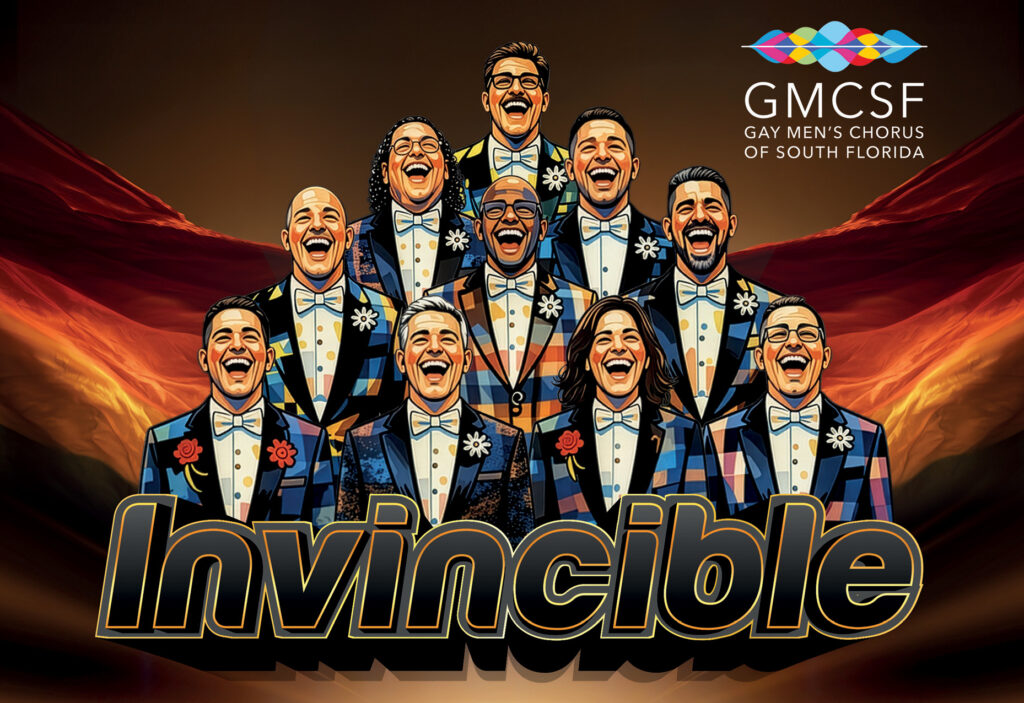
In addition to Kelly Clarkson’s “Invincible” that gives the concert its title, the chorus will once again raise the roof with renditions of other pop hits including Todrick Hall’s “Rainbow Reign,” Gloria Estefan’s “Get on Your Feet,” and the Oscar-winning “Golden” from the movie KPop Demon Hunters.
With the concert taking place on Juneteenth, the chorus will perform Beyoncé’s “Freedom,” “Stand Up” from the movie Harriet, and the unofficial Black National Anthem “Lift Every Voice and Sing.”
“I want it to be something that is purposeful and meaningful and gives respect to that,” Salazar previewed of the Juneteenth tribute. Reflecting on the entire concert, he added, “It’s going to be powerful and moving, but also joyful and celebrate the people that are still here and those who are still fighting for the cause. I want people just to come and enjoy and be ready for a life-changing experience.”
GMCSF is Invincible
The Chorus is going through some changes of its own as it prepares for new leadership, develops new audiences, and navigates an increasingly difficult environment for funding.
Executive Director Mark B. Kent will be leaving in November after 10 years at the helm of the organization and its most successful season in its history.
“We’re pulling strongly now from three counties and our membership has become really, really invested in our mission and our outreach work,” Kent said. “I think that’s helping our singing members to grow in numbers. Our board continues to grow. Our audience size continues to grow. We just sold out the Parker for our March concert and added a second concert at Sunshine Cathedral and we sold that out. On all fronts, we’re seeing great success.”
While GMCSF is flourishing, it faces new challenges after Governor DeSantis signed a law prohibiting municipal and county governments in Florida from funding events that can be interpreted as promoting diversity, equity and inclusion. Such actions are also causing some corporate donors to step back.
“We’ve already lost $80,000 to $90,000 in State funds just a couple of years ago and now we stand to lose about the same amount again in County money,’ Kent reported. “The challenge that we’re all facing right now is being authentic and true to who we are and what we believe in and what we’re passionate about while seeing resources pulled from us by those who don’t want us to make the statements we make.”
GMCSF is able to stage its ambitious finale through the sponsorship of Seminole Hard Rock Hotel & Casino Hollywood, CAN Community Health, The Bears of South Florida, and Emerald Senior Care, with additional support from the Warten Foundation and Funding Arts Broward.
Sensational Season Finale
World premiere “Amor Eterno: A Requiem for Pulse.”
Juneteenth celebration & pop hits
Three guest choruses
Symphony of the Americas
A larger stage
“We were lucky that we got a very generous grant from the Warten Foundation,” Kent said. “This is the first world premiere we’ve done of a piece that is an entire composition and not just a single song. It’s important that we not only support people who like to sing, but that we really celebrate fabulous artists who compose and create amazing choral work. Then we enrich the cultural tapestry in South Florida by bringing choral work to the community, and I couldn’t be more excited.”
The attacks on the LGBTQ+ community are also shaping how the Chorus serves its audience, particularly those too young to have directly experienced the discrimination and bias faced by previous generations.
“They’re hearing in the news the kind of language and rhetoric that basically devalues us,” Kent said. “They see the hate and the dislike that’s behind it. It’s eye-opening and awakening. All of a sudden it recharges our mission because we have to go back and remediate the damage that’s getting done at this time and keep our own community inspired that we are strong, we’re going to persevere, and we’ll still be fabulous no matter what.”
By performing Invincible in a hall with 2,658 seats, GMCSF is solidifying its place as one of our major cultural institutions.
“An organization like ours exists in order to have enough of a presence within the region that we can make a statement, that we can have a voice, not just for ourselves, but for the community, the LGBTQ+ community, our allies, and everybody who believes in the importance of love over hate, and that every human being has the same rights to a joyful life,” Kent said.
As the Chorus and orchestra rehearsed for the finale, Kent reflected on the ensemble’s positioning for the future.
“I would say this season is the most successful in terms of having ambitious goals and a vision to do it. We’ve proven to ourselves that we can do that even when things around us get scarier. When we discovered that we’re really strong as hell, it doubled our commitment to the mission of opening hearts, changing minds and building a firm and common humanity.”